Chapter 19 - What It Cost
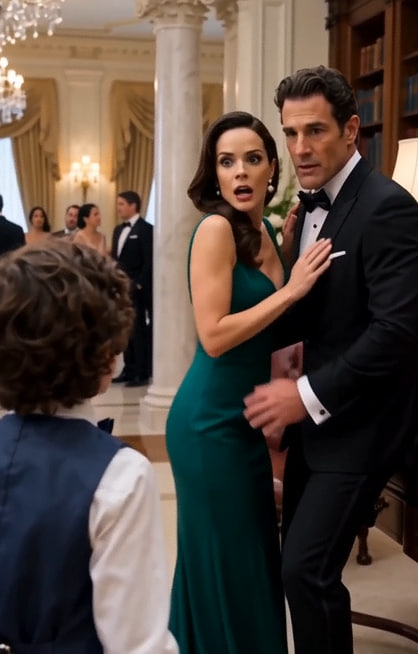
Whitmore House Group survived.
Not easily.
Daniel abandoned two expansion projects and sold a noncore property in Nevada.
The company secured a forty-five-million-dollar facility from a consortium with no equity warrants.
The terms were less glamorous.
They were also real.
At the first employee town hall after his return, Daniel stood before nearly four hundred people.
He did not blame Victor for everything.
That surprised the board.
“I approved expansion faster than our balance sheet could comfortably support,” he said. “Others exploited that weakness, but I created the weakness.”
Sarah watched from the side.
Nora gave the smallest approving nod.
Daniel continued.
“My father also concealed misconduct twelve years ago because he believed protecting the company justified silence.”
A murmur moved through the room.
“We will not repeat that.”
Whitmore released the findings to auditors, shareholders, and regulators as required.
Charles Whitmore’s reputation became more complicated.
Daniel allowed it.
Victor’s Halcyon affiliates were forced into arbitration over share-transfer violations. Several transactions were unwound; others remained subject to financial settlement.
Victor resigned from Halcyon before its partners could vote to remove him.
His criminal case continued.
Daniel did not attend the arraignment.
Rachel did.
Not because she wanted revenge.
Because she was a witness.
When Victor passed her outside the courtroom, he whispered:
“You still think Daniel won?”
Rachel answered quietly:
“No.”
Victor looked surprised.
“Nobody won.”
Then she walked away.
The divorce was finalized the following spring.
The inherited Whitmore voting shares remained Daniel’s separate property under the couple’s prenuptial agreement and New York law.
Rachel received her negotiated share of marital assets, though far less than she once imagined.
The Manhattan apartment was sold.
Her missing Halcyon investment became part of a separate restitution claim.
Money no longer solved the thing she wanted most.
Time with Caleb.
The family court considered her cooperation, her plea, her role in the fraudulent authorization, Caleb’s emotional state, and the absence of evidence that she had physically endangered him.
Daniel became Caleb’s primary residential parent.
Rachel received structured parenting time that expanded as she complied with therapy and court conditions.
The first supervised visit broke her.
Caleb sat across from her in a family-services room.
Rachel tried to smile.
“Hi, sweetheart.”
He did not answer immediately.
Then:
“Are you still with Victor?”
“No.”
“Forever?”
“Yes.”
Caleb looked down.
“Did you love him?”
Rachel could have lied.
She did not.
“I thought I did.”
“More than Dad?”
Rachel’s eyes filled.
“That isn’t a fair question for you to have to ask.”
“But I asked.”
She swallowed.
“I made choices that hurt your dad. And you.”
Caleb touched the repaired chain Daniel had temporarily attached to his locket.
“You said I misunderstood.”
Rachel closed her eyes.
“I know.”
“I didn’t.”
“No.”
She leaned forward, but did not touch him.
“You didn’t misunderstand anything.”
Caleb stared at her.
“Why did you say it?”
“Because I was scared of what would happen if people knew the truth.”
“What happened was worse.”
Rachel’s face crumpled.
“Yes.”
That answer seemed to matter.
Caleb moved his chair slightly closer.
Not forgiveness.
Not yet.
But movement.
Later, Daniel waited outside.
Rachel emerged crying.
He handed her tissues.
She laughed through tears.
“That’s strangely kind.”
“We’re going to be at graduations together someday.”
“You think he’ll forgive me?”
Daniel looked through the window at Caleb.
“I think forgiveness is his choice.”
“And yours?”
Daniel shook his head.
“I stopped treating forgiveness like a court ruling.”
Rachel nodded.
Fair.
That night, Caleb climbed into Daniel’s bed carrying the locket.
The repair shop had fixed the hinge.
But Daniel had not replaced the photograph.
Caleb opened it.
Three smiling faces.
A family that no longer existed in that form.
“Dad?”
“Yes?”
“Should we change the picture?”
Daniel looked at Rachel’s face inside the locket.
He had wondered the same thing.
“Do you want to?”
Caleb shrugged.
“If we leave it, does that mean you still want Mom back?”
“No.”
“If we take her out, does that mean she’s not my family?”
“No.”
Caleb frowned.
“That’s confusing.”
Daniel smiled.
“Most true things are.”
Caleb closed the locket.
“Then I’ll decide tomorrow.”
He put it beside the bed.
Daniel turned off the lamp.
In the darkness, Caleb said:
“I’m glad I dropped it.”
Daniel’s eyes opened.
“The locket?”
“Yeah.”
“Why?”
“Because that’s how I saw the key.”
Daniel looked at the small silver shape on the nightstand.
The object he had once thought symbolized everything his family had lost.
May you like



Maybe Caleb was right.
Maybe it had become proof of something else.







