Chapter 9 - The Screenshot That Didn’t Fit
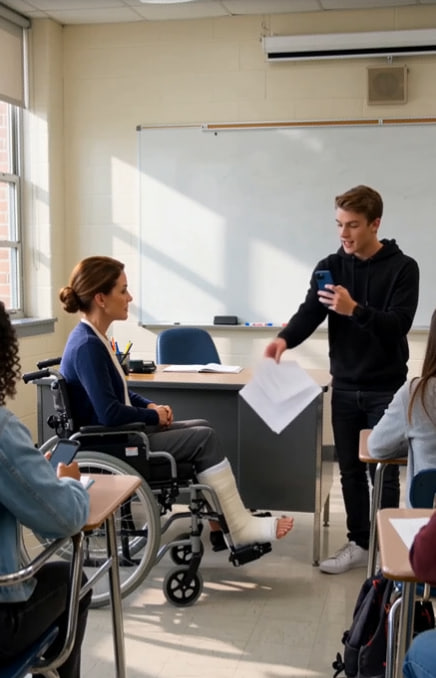
Ava did not forward the screenshot to students.
She sent it to Principal Ellis.
That choice probably saved the investigation from another disaster.
By morning, the district technology office determined the image had been altered.
The original message had existed.
But not in that form.
Tyler had written to Marcus six weeks earlier:
Lawson was easy. Bennett will be annoying if she keeps assigning these essays.
Someone had changed “annoying” to “easier if she keeps acting fragile.”
Principal Ellis called Ava personally.
“You did exactly the right thing.”
Ava felt more frightened than proud.
“Someone is fabricating evidence against him.”
“Yes.”
“Why?”
“We don’t know.”
“Does Tyler know?”
“He will.”
Ava leaned against the hallway wall.
“This is getting insane.”
“It is.”
“People are making fake proof because they think he’s guilty.”
“That happens.”
“Then how is anyone supposed to know what’s real?”
Principal Ellis paused.
“By doing what you did. Stop. Verify. Don’t spread it first.”
Ava closed her eyes.
The lesson sounded simple.
In practice, it required resisting everything the internet rewarded.
Speed.
Certainty.
Outrage.
At the Grant house, Tyler sat across from Dr. Reed in a voluntary interview with both parents present.
The investigator showed him the manipulated screenshot.
Tyler stared.
“I never wrote that.”
“We know.”
He looked up sharply.
“You know?”
“The image is altered.”
For the first time in days, some of Tyler’s hostility disappeared.
“Then why are you showing me?”
“Because false evidence harms the investigation even when it points in the same direction as genuine evidence.”
Martin leaned forward.
“So now you understand what’s happening to him.”
Dr. Reed looked at Martin.
“I understand that your son is now experiencing a version of the harm he caused.”
Martin’s jaw tightened.
Tyler stared at the screenshot.
“Can you find who made it?”
“We’re trying.”
Tyler laughed bitterly.
“So somebody can fake something about me, send it everywhere, and maybe you’ll figure it out later.”
Nobody answered.
The similarity was too obvious.
Dr. Reed asked, “Does that change how you understand what Ms. Bennett experienced?”
Tyler looked at him with open resentment.
“This isn’t therapy.”
“No.”
“Then ask investigation questions.”
“All right. Did you manipulate the video of Ms. Bennett?”
Tyler’s expression closed again.
“My lawyer said I don’t have to answer.”
“You don’t.”
The interview ended soon afterward.
Outside, Laura touched her son’s arm.
He pulled away.
“You think I deserve this.”
“No.”
“You think Ms. Bennett deserves an apology.”
“Yes.”
“That means you think I deserve this.”
Laura stepped in front of him.
“No. Accountability and humiliation are not the same thing.”
Tyler gave a harsh laugh.
“Tell the internet.”
At home, Rachel received the same update.
Someone had fabricated evidence against Tyler.
Her first emotion embarrassed her.
Relief.
For one ugly second, she thought: Good. Now he understands.
Then she hated herself for thinking it.
Claire, sitting across from her, saw the conflict.
“You don’t have to feel sorry for him.”
“I don’t know what I feel.”
“He planned this.”
“I know.”
“He targeted you.”
“I know.”
“He mocked you while you were in a wheelchair.”
“I know.”
Claire softened.
“Then why are you defending him?”
“I’m not.”
Rachel looked at the cast.
“I’m defending the difference between what he did and what people want him to have done.”
That afternoon, Rachel called Principal Ellis.
“Can you tell Tyler’s family that I do not support anyone spreading fabricated evidence?”
Naomi sounded surprised.
“I can.”
“And if the district makes any public statement, I want that included.”
“Rachel, you’re not obligated to—”
“I know.”
Silence.
Then Naomi said, “I’ll make sure counsel hears your request.”
Rachel ended the call.
An hour later, a district statement appeared.
It did not name Tyler.
It did not name Rachel.
It said the district was reviewing multiple digital materials and had determined that at least one widely circulated image had been manipulated.
It urged students and families not to spread unverified content.
The statement angered everyone.
Some accused the district of protecting Tyler.
Others said it proved the case against him was collapsing.
Ava’s second article went live that evening.
EVIDENCE IS NOT REVENGE.
This time, it traveled beyond Westbridge.
A local journalist reposted it with one sentence:
A high school student understands media literacy better than many adults.
Ava hated the praise almost as much as the attacks.
She had not wanted to become a symbol.
Neither had Ms. Bennett.
Neither, she suspected, had Tyler.
At 9:40 p.m., Ava received a message.
From Tyler.
She stared at his name for a long time before opening it.
I know you didn’t make the fake screenshot.
She did not answer.
Another appeared.
Thanks for not posting it.
Ava typed:
That doesn’t change what you did.
Three dots appeared.
I know.
Then:
Do you still have the original video?
Ava’s pulse quickened.
Yes.
Tyler replied:
Good.
She waited.
May you like



Then came the sentence that changed the direction of the investigation.
Because my original edit is not the version that went viral.







