Chapter 19 - What Eleanor Had to Answer For
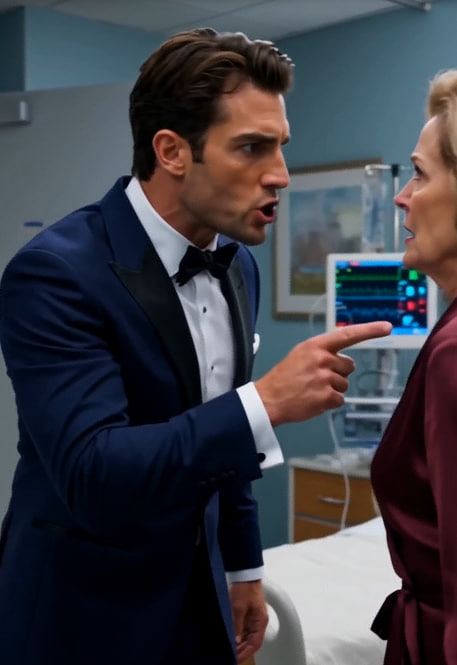
Eleanor entered federal court without pearls, assistants, or photographers arranged by foundation staff.
Marcus watched from the back.
He had not come to enjoy her humiliation.
He had come because consequences should not happen in secret.
For too long, secrecy had been the Vale family’s preferred form of protection.
Eleanor pleaded not guilty initially on counsel’s advice while negotiations continued.
Weeks later, she entered a cooperation agreement and pleaded guilty to conspiracy and fraud-related charges tied to specific North Bridge transactions.
The agreement did not erase her conduct.
It documented it.
She admitted authorizing improper transfers.
She admitted knowingly concealing North Bridge’s conflicts.
She admitted allowing Graham to prepare coercive trust documents.
She admitted pressuring hospital administrators after the incident with Chloe.
She admitted lying about Marcus shoving her.
The guardianship filing was formally withdrawn and later sanctioned as fraudulent.
Graham refused any agreement.
His case moved toward trial.
The evidence grew.
Bank records.
Julia’s recordings.
The original ledger.
Trust-paper forensics.
Daniel’s audit.
Mason Trent’s communications.
Dr. Beck’s testimony.
Even Graham’s attempt to frame Eleanor through the archive fire became another thread tying him to obstruction.
Months later, a jury convicted him on the principal fraud, wire-fraud, and obstruction counts.
Marcus attended one day of trial.
Only one.
Chloe had a school play on the second.
Years earlier, he would have missed it for the “important” event.
He sat in the second row instead while Chloe, wearing cardboard butterfly wings, forgot half her line and grinned at him.
Marcus grinned back.
That night Lena asked, “Regret not seeing the verdict?”
“No.”
“You’ve changed.”
“People keep saying that like they’re surprised.”
“I am.”
He laughed.
The financial recovery took longer.
Civil settlements returned substantial North Bridge assets to Vale entities and the family foundation.
Some transactions could not be perfectly unwound.
Tax penalties and legal expenses were enormous.
Vale Medical Holdings lost market value and reputation.
There was no miraculous restoration.
Marcus’s negligence had cost shareholders money.
He accepted that publicly.
At an annual shareholder meeting, he said:
“I believed delegation excused ignorance. It does not. I signed documents I should have understood. I failed in oversight even where I did not participate in fraud.”
The board eventually offered him a nonexecutive director seat after eighteen months.
Not CEO.
Marcus accepted.
He had started a smaller healthcare investment firm using only personal assets cleared by independent review.
More importantly, he took Chloe to school most mornings.
Eleanor received a prison sentence significantly reduced by cooperation but still substantial.
Before sentencing, she asked through counsel whether Marcus would provide a character letter.
He refused.
Not cruelly.
“I won’t ask the judge to make her consequences smaller because she’s my mother.”
He did provide one factual statement requested by prosecutors concerning her cooperation.
Nothing more.
Eleanor wrote Chloe letters.
Marcus did not deliver them.
He stored them unopened with a child therapist, awaiting the day Chloe was old enough to decide.
One afternoon, almost a year after the hospital incident, Chloe asked about her grandmother.
“Is she still in jail?”
“Yes.”
“Does she have Teddy?”
“No.”
Chloe looked relieved.
“Good.”
Then she asked, “Can I be mad at her and miss her?”
Marcus paused.
“Yes.”
“Can you?”
“Yes.”
“Do you?”
He looked out across their backyard.
Buddy was chasing a tennis ball.
“Yes.”
Chloe nodded.
“Complicated.”
Marcus smiled.
“Very.”
At sentencing, Eleanor finally addressed the court.
She did not blame Graham.
She did not blame Victor.
She did not blame Julia.
“I believed protecting a family meant preventing other people from making choices that frightened me.”
Her voice shook.
“I used money to control. I used reputation to silence. I used legal documents to frighten people. And when my six-year-old granddaughter resisted me in a hospital room, I treated her fear as disobedience.”
Marcus lowered his eyes.
Eleanor continued.
“She was not embarrassing the family.”
A long pause.
“I was.”
After court, Eleanor’s lawyer approached Marcus.
“She asked me to give you this.”
A small object rested in his palm.
The old metal tag from the brass key.
314.
Marcus turned it over.
He had never noticed faint engraving on the reverse.
Three tiny words.
CHOOSE HER FIRST.
Marcus stared.
Julia had engraved them.
The key was never merely a key to a locker.
It had been a reminder.
A warning.
A judgment.
And, perhaps, an instruction Marcus had finally learned to follow.
That evening he took the tag home.
Chloe was waiting at the kitchen table.
“Is Grandma gone?”
“For a while.”
“Was she crying?”
“Yes.”
“Were you?”
Marcus smiled faintly.
“A little.”
Chloe reached for his hand.
“Daddy?”
“Yes?”
“Miss Sarah says I have my big hospital checkup tomorrow.”
“I know.”
“Are you coming?”
Marcus looked at her.
The question was simple.
Once, his answers had depended on schedules, boards, donors, his mother, his company, and whether someone important needed him somewhere else.
This time there was nothing to calculate.
“Yes.”
Chloe narrowed her eyes.
“Promise?”
Marcus looked at the engraved tag in his palm.
“Yes.”
May you like



This promise he could control.
“I promise.”







