Chapter 12 - The Record They Tried to Erase
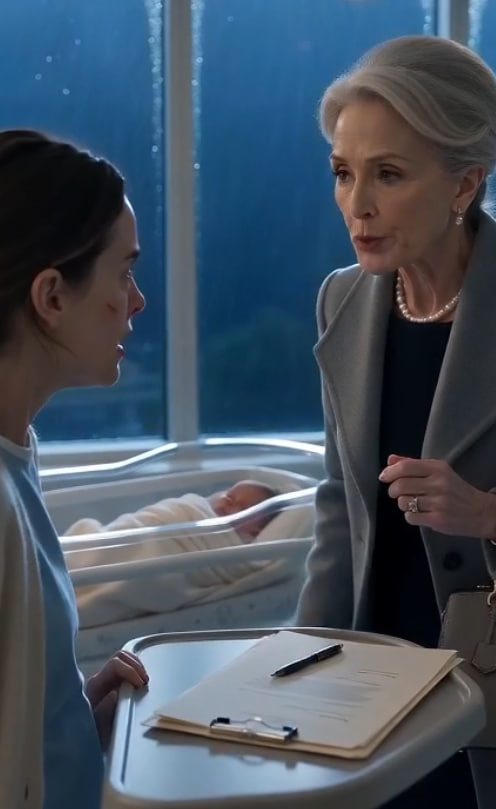
Destroying a maternity record was not simple.
Even Eleanor could not walk into a hospital and shred whatever she disliked.
But records systems had exceptions.
Duplicates.
Administrative copies.
Working files.
Misfiled records.
Eleanor had classified Caleb’s B-417 archive as a redundant family-office duplicate.
If the order processed, the physical file Grace discovered might legally disappear while the core clinical chart remained buried under restricted identifiers.
Rachel sought an injunction.
The hospital’s counsel demanded proof Grace had standing.
Amelia solved that.
She appeared by video before the judge.
“My son is Caleb Ashford. I gave birth at St. Victoria thirteen months ago. I never authorized destruction of his records.”
The order was halted within hours.
Eleanor’s attorneys called it an administrative misunderstanding.
Nobody believed them.
The court required St. Victoria to produce the complete chain of custody.
The results exposed more.
Caleb’s original birth registration had been created normally.
Twenty-six minutes later, Miriam used a senior compliance override to restrict external reporting.
The following morning, Paul Danner submitted a legal request directing the hospital not to release “family-status information” to Western Pacific Trust.
Two weeks later, Eleanor certified to the trust that no qualifying grandchild existed.
The sequence was devastating.
Grace confronted Miriam.
“You knew the trust was being lied to.”
Her mother cried.
“I knew they were delaying disclosure.”
“That is a lie you tell yourself.”
“Yes.”
Grace had never heard her mother surrender arguments so completely.
Miriam continued.
“I thought Eleanor would report Caleb after Amelia stabilized.”
“She was stable.”
“I know.”
“You thought three-point-six million dollars bought temporary silence.”
Miriam closed her eyes.
“Yes.”
Grace looked at her mother’s hands.
They seemed smaller now.
“Why didn’t you tell me when I married Ethan?”
“Because by then the first lie had become too large.”
“You watched me marry into that family while knowing Eleanor could use the hospital system to manipulate records.”
“Yes.”
Grace’s voice broke.
“You stood beside me at my wedding.”
“I know.”
“And smiled.”
Miriam began sobbing.
Grace turned away.
“I can’t forgive you because you’re crying.”
“I know.”
“Stop saying you know.”
Miriam wiped her face.
“All right.”
That was somehow worse.
The hospital records also revealed Ethan accessed Caleb’s file three weeks before Nora was born.
Not one year earlier.
He had known Caleb existed, but he had never seen the altered reporting codes until recently.
Grace confronted him.
“You told me you helped hide Caleb.”
“I did.”
“You didn’t know how deeply.”
“No.”
“Why did you finally open the file?”
“Dad’s old trust administrator called me.”
“Who?”
“Samuel Reed.”
Rachel found Samuel in Arizona.
Retired.
Seventy-two.
He had administered Jonathan’s trust before Western Pacific took over.
Samuel remembered Jonathan’s concerns clearly.
“Jonathan did not trust Eleanor with permanent voting control,” he said.
“Why appoint her trustee at all?” Grace asked.
“Because he thought Ethan and Amelia needed time.”
Grace almost laughed.
More delayed consequences.
Samuel had called Ethan after seeing a trade publication mention Eleanor’s planned sale.
“I asked whether Jonathan had grandchildren.”
Ethan answered yes.
Samuel became alarmed.
“Then I told him the trust should have shifted.”
That call started Ethan’s investigation.
Samuel also possessed an email Jonathan had sent six years earlier.
When the first grandchild arrives, Eleanor’s temporary control ends. No discretion. No family-counsel delay.
Clear.
Direct.
Rachel smiled grimly.
“There’s our knowledge element.”
Jonathan had copied Eleanor on the email.
She could not credibly claim ignorance.
Then another blow came.
Dr. Simon Vale hired counsel and refused voluntary interviews.
But his foundation returned the $1.5 million Northline grant.
A refund did not erase the psychiatric note.
Eleanor continued using it in family court.
At a status hearing, Leah exposed the creation timestamp.
“Dr. Vale wrote this note before he evaluated my client.”
Eleanor’s lawyer argued it was a draft template.
The judge was not amused.
She ordered an independent psychiatric evaluation only because the allegation had become central.
Grace felt humiliated.
“I have to prove I’m sane because she bought a doctor.”
Leah corrected her.
“You’re not proving sanity. You’re neutralizing an allegation.”
Grace hated the difference.
But she did it.
The independent psychiatrist found no evidence of psychosis, dangerous postpartum impairment, or delusional thinking.
Eleanor’s custody case weakened further.
Then Susan Feld, the guardian ad litem, formally recommended dismissal of the guardianship petition.
Grace finally exhaled.
Eleanor responded that afternoon by filing a new claim.
Not custody.
A petition asking probate court to disqualify Ethan as trust adviser permanently due to fiduciary misconduct.
That part had merit.
Ethan knew it.
“If Caleb is recognized, I may never control his voting block.”
Grace looked at him.
“Maybe you shouldn’t.”
He met her eyes.
Pain passed across his face.
Then he nodded.
“Maybe I shouldn’t.”
It was the first time Grace saw genuine change in him.
But Rachel had no time to celebrate it.
Owen entered with a new set of bank records.
Northline had wired $8.5 million that morning.
“To whom?” Grace asked.
“Calder Peak.”
“Why?”
“Closing deposit.”
Grace stared.
The sale was moving ahead early.
May you like



Three days early.
Eleanor had stopped waiting.







