Chapter 15 - The Red Book
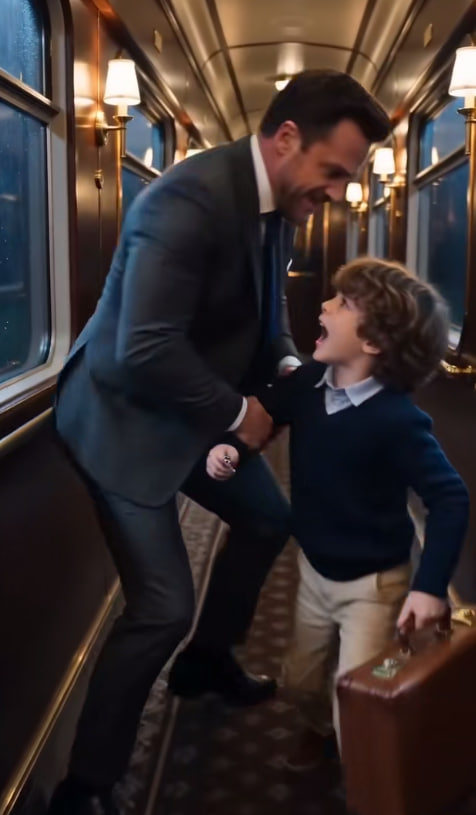
Thomas’s red railroad notebook was in the simplest place imaginable.
Noah’s bedroom.
Not hidden in a wall.
Not buried in a bank vault.
On the bottom shelf between picture books.
Claire stared at it.
“You’ve had this for two years?”
Noah shrugged.
“Grandpa gave it to me.”
“Did you ever open it?”
“It’s boring.”
Claire laughed once.
Of course.
Thomas had hidden financial evidence inside something no thief expected a seven-year-old to value enough to keep but dislike enough not to discuss.
The first twenty pages contained locomotive drawings Thomas made for Noah.
Then came handwritten notes.
Ravelin.
North Junction.
Martin.
Richard.
Diane.
But the most important entries concerned Continental.
Thomas had met Continental executives before his death.
They had proposed acquiring Whitmore’s freight division years earlier.
Thomas refused.
His note read:
Martin continues pushing sale despite obvious conflict. Need review of side compensation.
Another:
R.H. says restructuring creates “clean exit.” Why does outside consultant care about sale he does not advise on?
Claire turned pages.
Thomas had nearly assembled the conspiracy.
He ran out of time.
Then one entry surprised her.
Spoke to Margaret. She thinks I am protecting Claire too much. She may be right. Family control cannot mean Claire never has to justify decisions.
Claire stared.
Her father had not seen her as flawless.
Even while protecting the railroad from Martin, he had worried about Claire’s leadership.
The governance criticism she faced now echoed him.
Another entry:
Claire trusts Martin because I trusted Martin. That is my failure. Must tell her before I die.
Claire closed her eyes.
Thomas had died before that conversation.
Or perhaps Claire had been too overwhelmed to hear it.
The red book contained bank-account numbers unavailable elsewhere.
Daniel used them to obtain targeted records through legal process.
The accounts revealed $22 million in diverted Whitmore funds over six years.
Martin benefited most.
Richard second.
Diane through fees.
A fourth participant emerged.
Continental’s vice chairman, Paul Vance.
He had promised Martin $24 million after acquisition.
The conspiracy was no longer a family dispute.
It was a corporate fraud investigation involving multiple institutions.
Federal authorities entered formally because of interstate wire transfers and bank conduct.
Claire’s lawyers warned her.
“This will get slower now.”
She almost laughed.
“How could it?”
“Federal investigations can be thorough.”
“Meaning slow.”
“Yes.”
Claire had to live with uncertainty.
Then the board restored her as a director.
Not CEO.
Samuel Reed remained interim chief executive.
Claire objected privately.
Eleanor Pierce responded.
“You asked us to improve governance.”
“I did.”
“Then stop assuming improvement ends when it becomes inconvenient to you.”
Claire hated how often the correct answer hurt.
She agreed.
Richard’s criminal case regarding Noah and Claire moved separately.
His lawyers sought to suppress some train evidence, challenging security access.
Officer Lewis’s documentation held.
Maya’s testimony held.
The corridor footage held.
Richard’s situation worsened.
So he tried one final personal weapon.
Through divorce discovery, he released messages showing Claire once wrote to Bennett:
Sometimes I wish I could sell everything and take Noah somewhere nobody knows the Whitmore name.
The press called it evidence Claire wanted to abandon the company.
Margaret confronted her.
“Did you mean it?”
“Yes.”
“When?”
“After Dad died.”
“Why?”
Claire looked exhausted.
“Because I was grieving, Noah was grieving, and everyone wanted me to become my father the day after we buried him.”
Margaret softened.
“Why didn’t you?”
“Sell?”
“Yes.”
Claire looked at the red notebook.
“Because grief passes. Decisions remain.”
The quote reached the press later through Margaret.
Public sentiment shifted slightly.
Not because Claire became perfect.
Because she finally sounded human.
Then Daniel arrived with the last page of Thomas’s notebook digitally enlarged.
A sentence Claire had overlooked because ink had faded:
If Martin moves before I can act, the corporate seal copy is on The Whitmore. Silver opens both.
Claire stared at Noah’s key.
The silver key opened Compartment Seven.
The writing-room drawer.
And apparently one more place.
Bennett’s face changed.
“The corporate seal.”
May you like



If Martin had access to an old Whitmore corporate seal, he could have authenticated board certifications and share documents.
The forgery mechanism might still be aboard the train.







