Chapter 12 - The Original Lie
The phrase “fix the originals” changed the investigation.
Prosecutors obtained warrants for Diane’s business accounts and communications.
They also searched an off-site storage unit paid for through Mercer Administrative Services.
Inside were old Bennett Homecare records.
Trust statements.
Copies of Rebecca’s hospital chart.
And a red folder labeled:
R.B. GUARDIANSHIP.
Miriam watched investigators inventory it.
Rebecca did not attend.
She had learned not to put herself everywhere just because she was desperate to know.
Inside the folder was the original unsigned parental surrender.
Rebecca’s name was typed beneath the signature line.
A yellow sticky note remained attached.
RAY — SHE WILL NOT SIGN. WHAT NOW?
Another page carried handwriting later identified as Raymond Sloane’s.
USE KNOX. MATCH HOSPITAL SPECIMEN.
It was devastating.
The forged surrender had been created using a signature specimen taken from Rebecca’s hospital consent forms.
The hospital records were not merely supporting evidence.
They had supplied the model for the forgery.
Sloane’s criminal lawyer immediately began discussions with prosecutors.
Diane learned and erupted.
“He told me what to do!”
Her lawyer answered, “Then he may testify to that.”
“He designed it!”
“Then you should prepare for him to say you requested it.”
Diane understood the oldest rule of conspiracies.
When evidence appears, everyone becomes an individual.
At the family-court evidentiary hearing, Miriam introduced the red-folder documents.
Sloane invoked his Fifth Amendment rights on several questions because of the criminal investigation.
Gerald Knox testified.
He admitted notarizing Rebecca’s signature without her presence.
“Did Rebecca authorize you?” Miriam asked.
“No.”
“Did she ever tell you she wanted Diane to become Lily’s permanent guardian?”
“No.”
“Who asked you to notarize it?”
“Raymond Sloane.”
“And who paid you?”
“Diane Mercer.”
Diane stared at him as though betrayal were something only other people could commit.
Then Amelia Ross testified remotely.
She described Rebecca’s hemorrhage.
Her postpartum depression.
The original negative toxicology.
The repeat negative test.
And the missing printout.
Sloane’s replacement counsel cross-examined.
“Doctor, Rebecca Bennett was psychologically unstable after birth, correct?”
“She was depressed and traumatized.”
“Did she express paranoia?”
“She expressed fear of her sister.”
“Was that paranoia?”
Ross looked into the camera.
“Considering what we know now, apparently not.”
Rebecca’s lawyer allowed the silence to sit.
Then Diane testified.
It was her decision.
Her new attorney advised against it.
She insisted.
At first, she was convincing.
Rebecca had been sick.
Erratic.
Unable to care for a newborn.
Diane had stepped in.
She described sleepless nights with Lily.
Emergency-room visits.
School meetings.
Birthday cakes.
None of it was false.
That made it powerful.
“I was the one raising her while Rebecca filed papers,” Diane said.
Miriam approached.
“And you were also paying yourself from Lily’s trust.”
“For legitimate care expenses.”
“Six hundred twenty thousand dollars?”
“Over years.”
“You pledged her trust assets to support your company.”
“An investment strategy.”
“You intercepted thirty-two letters.”
“To protect her.”
“You changed her name using a forged court order.”
Diane’s face tightened.
“To create stability.”
“You paid Alan Voss after Rebecca’s toxicology result was altered.”
“No.”
Miriam displayed the ledger.
“Your handwriting?”
“Yes.”
“Your company?”
“Yes.”
“Your payment?”
“Yes.”
“But unrelated?”
“Yes.”
Miriam picked up the red folder.
“What does ‘she will not sign’ mean?”
Diane looked toward her lawyer.
“Answer,” Judge Patel said.
“I don’t remember.”
“Do you remember writing it?”
“No.”
Miriam placed the photograph of newborn Lily and Rebecca on the screen.
“Did Rebecca want Lily?”
Diane looked away.
“Not consistently.”
“That was not my question.”
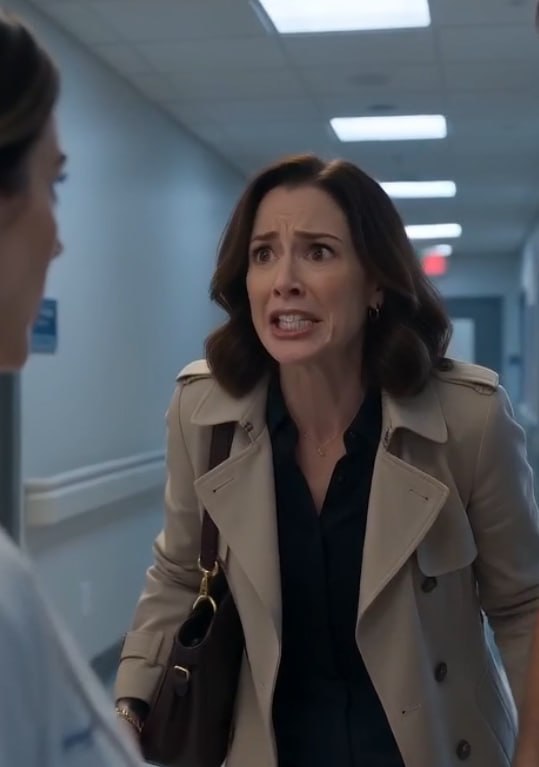
Diane’s composure cracked.
“You weren’t there!”
Rebecca flinched.
Diane pointed across the courtroom.
“She couldn’t get out of bed! Mom and I did everything!”
Rebecca whispered, “I was recovering from surgery.”
“You were useless!”
Silence.
Diane realized what she had said.
Miriam stepped closer.
“So when Rebecca became medically vulnerable, you took control.”
Diane’s eyes filled.
“I saved that child.”
“Did you save her?”
Miriam looked at the trust records.
“Or did you save yourself?”
Diane’s anger vanished.
For the first time, everyone saw what lay beneath it.
Fear.
Not fear of Rebecca.
Fear of losing everything.
Judge Patel recessed.
Rebecca left the courtroom trembling.
Lily had not been present.
But Paige had been.
She found Rebecca outside.
“There’s something you need to know.”
Rebecca looked up.
“What?”
“Lily asked me this morning whether she can start calling you Mom.”
Rebecca stopped breathing.
“Did you tell her to?”
“No.”
“What did you say?”
“That she should use whatever word feels safe.”
Rebecca covered her face.
Nine years of lawsuits had never given her what one cautious question just had.
But before she could absorb it, Miriam stepped outside.
Her expression was grim.
“Federal investigators found evidence Diane transferred money yesterday.”
“How much?”
“Eight hundred thousand dollars.”
“Where?”
“An account in the Cayman Islands.”
Paige frowned.
“The assets were frozen.”
“These funds came from Mercer Administrative Services.”
Miriam looked at Rebecca.
“And the transfer reference says relocation.”
May you like



Diane was preparing for something.
No one yet knew what.







