Chapter 19 - What Belongs to Whom
Adrian stared at the forensic accounting report.
“I never opened these accounts.”
Maya pointed to signatures.
“They were established under your name.”
“Forged?”
“Some appear genuine.”
Adrian looked closer.
Then remembered.
Years earlier Charles had brought documents to his office.
Routine estate planning, he said.
Adrian signed without reading.
Rachel watched him.
“You signed blank trust-transfer forms?”
“They weren’t blank.”
“Did you read them?”
“No.”
She closed her eyes.
The old Adrian would have defended himself.
The new one said:
“That was reckless.”
“Yes.”
“And it helped them.”
“Yes.”
The accounts had been used as pass-through vehicles.
Money entered under Adrian’s beneficial ownership.
Then left days later.
Most went elsewhere.
But tax records could make him appear complicit.
Federal investigators questioned him for hours.
He waived any claim of privilege over many family records.
He agreed to amend tax filings if necessary.
He resigned from all Mercer Urban management positions while the investigation continued.
That surprised Rachel.
“You resigned?”
“Yes.”
“You fought for the company for months.”
“I was fighting because I thought losing it meant losing who I was.”
“And now?”
Adrian looked toward Noah drawing at the kitchen table of their rented condo.
“Now I know exactly what I lose if I keep thinking that way.”
The trust litigation resolved gradually.
Claire Caldwell’s branch received recognition and a negotiated distribution reflecting decades of concealed beneficial interests.
Victor’s forty-percent share became subject to claims from the trust for stolen assets.
The court later imposed a constructive trust over much of his property.
Rachel, acting with independent counsel, recommended restructuring Mercer Urban so no Mercer family member had unilateral control.
An outside board was appointed.
Employees kept their jobs.
Several projects were sold to reduce debt.
The company became smaller.
Less glamorous.
More transparent.
Adrian accepted it.
Victor was sentenced after emotional victim-impact testimony.
Rachel stood in court.
“You did not imprison me because you hated me. You imprisoned me because you were afraid of losing money, status, and freedom.”
Victor stared at the table.
“That makes what you did more frightening, not less.”
She paused.
“Noah loved you.”
Victor’s face broke.
Rachel’s own voice shook.
“You struck an eight-year-old child because he heard the truth through a door.”
Victor covered his eyes.
She continued.
“I will not teach my son that remorse erases consequences.”
Victor received a lengthy state sentence, with additional financial penalties and restitution exposure.
Before deputies removed him, he looked at Adrian.
“I’m sorry.”
Adrian said nothing.
Victor nodded.
He understood.
Martin’s prosecution was broader.
Financial crimes alone could send him to prison for years.
The homicide case drew national attention.
His defense argued Charles may have accidentally taken propranolol.
Prosecutors presented Sophie’s calls, Victor’s testimony, Martin’s pharmacy records, toxicology, the audio threat, and the ledger notation.
The jury deliberated three days.
Guilty.
Martin showed no emotion when the verdict was read.
Evelyn cried silently.
Sophie left before sentencing.
Lieutenant Hale pleaded guilty to corruption and obstruction charges related to later conduct, while Laura’s decades-old crash cover-up produced additional legal consequences complicated by statutes of limitation.
Sam Brock received reduced punishment for cooperation but still served prison time for his role in Rachel’s confinement.
Walter Greene pleaded guilty to aiding unlawful restraint and financial offenses.
No one escaped completely.
Not even Adrian.
Federal prosecutors declined criminal charges against him after concluding evidence did not establish knowing participation in Ravenhill fraud.
But he paid substantial taxes, penalties, and civil settlements tied to improperly characterized transfers.
He sold the Cape May house.
Rachel asked why.
“Because Dad’s money bought it.”
“Noah loves that house.”
“I know.”
“Selling it doesn’t purify anything.”
Adrian paused.
“You think we should keep it?”
“No.”
She smiled faintly.
“I think you should stop treating money like it carries morality by itself.”
“So what do we do?”
“Sell it because we choose to. Then decide what the money does next.”
They donated a significant portion to organizations providing legal aid and emergency housing for victims of domestic confinement and coercive control.
Not for publicity.
No Mercer name on a building.
No press release.
Months passed.
Rachel began trauma therapy.
Noah did too.
Adrian joined them sometimes.
He and Rachel remained married, but rebuilding happened slowly.
Separate rooms became shared dinners.
Shared dinners became walks.
Walks became conversations without lawyers or police.
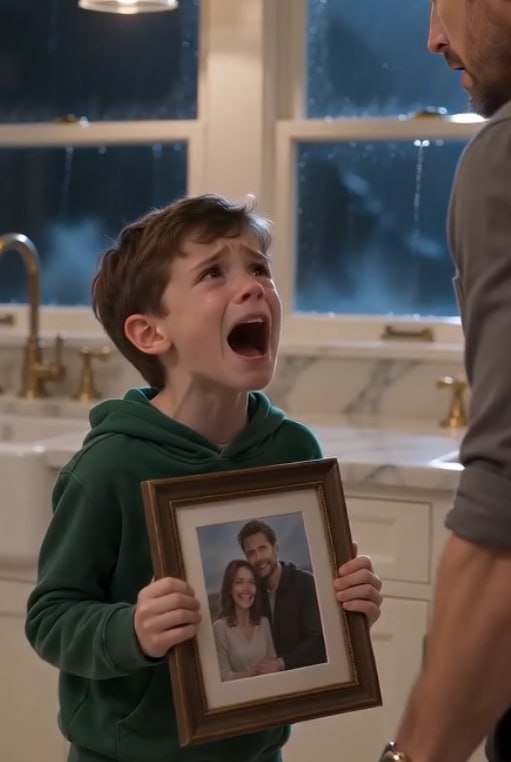
One evening Rachel placed the repaired Cape May photograph on the table.
The tape Noah had used was still visible.
“You kept it.”
“Of course.”
Adrian touched the torn line through Rachel’s image.
“I used to think repairing something meant making the damage invisible.”
Rachel looked at him.
“And now?”
“Maybe it means not pretending it was never torn.”
Rachel reached across the table.
This time, she took his hand first.
Then Noah ran into the room.
“I found something!”
He held a small brass service key.
The original dumbwaiter key.
Adrian stared.
“Where?”
“In my old coat.”
Rachel’s face changed.
For a second the old fear returned.
Then Noah asked:
“Can we throw it away?”
Adrian looked at Rachel.
She shook her head.
“No.”
He understood.
They would not hide it.
They would keep it as evidence of what happened.
Not power.
Not shame.
Truth.
May you like



And one final task remained.
The mansion.







