Chapter 3 - Thirty-Seven Days
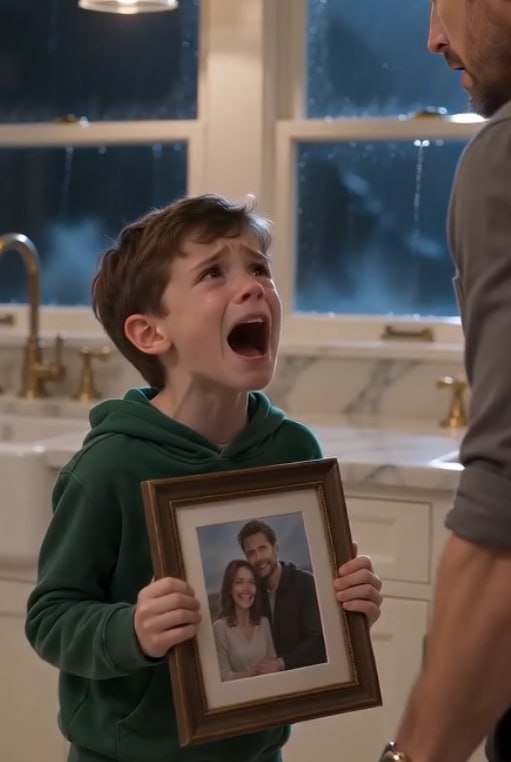
Rachel spent the night under police protection at St. Catherine Medical Center.
Doctors diagnosed dehydration, malnutrition, a fractured rib that had begun healing badly, and traces of benzodiazepines in her blood.
Noah refused to leave her.
He slept curled in a chair beside her bed with the torn half of the Cape May photograph clutched against his chest.
Adrian stood at the window.
“You should sleep.”
Rachel watched him.
“You still believe Martin.”
“No.”
“You want to.”
He turned.
“He helped raise me.”
“So did Victor.”
The words landed hard.
Adrian looked at Noah.
“I should have seen something.”
“Yes.”
He expected comfort.
Rachel gave him none.
“You should have.”
Adrian absorbed it.
“How long did you know?”
“That your family was hiding money? Almost a year.”
“Why didn’t you tell me?”
“I tried.”
“When?”
“Three days before I disappeared.”
Adrian frowned.
“You told me you thought the company books were wrong.”
“I told you Victor’s real estate subsidiary was moving payments through shell contractors.”
“And I said internal audit would review it.”
“You called Victor first.”
Adrian remembered.
He had considered it routine.
Victor had laughed and blamed accounting delays.
Rachel’s eyes hardened.
“Two days later, Martin came to see me.”
“What did he say?”
“He said marriage creates loyalty obligations.”
“That sounds like Martin.”
“He also told me curiosity could cost Noah his inheritance.”
Adrian went still.
“You never told me that.”
“You were defending him.”
Silence.
Rachel looked toward their sleeping son.
“So I stopped asking you for permission to be afraid.”
She explained.
Rachel had been a forensic accountant before marrying Adrian. After Noah was born, she left full-time practice but continued consulting for nonprofit boards.
Charles Mercer had once asked her to review records for the Mercer Family Foundation.
That was where she found irregularities.
Millions had been transferred from the foundation into limited liability companies tied to redevelopment projects.
Some were legitimate.
Others were not.
“Your father signed documents giving Victor authority over six entities,” she said.
“Victor was executive vice president.”
“These companies weren’t on Mercer Urban’s consolidated statements.”
Adrian stared at her.
“How much?”
“Forty-three million dollars that I could trace.”
His face changed.
“That’s impossible.”
“There’s that word again.”
Adrian rubbed his forehead.
“What does that have to do with ownership?”
Rachel hesitated.
“Your father didn’t found Mercer Urban Holdings.”
“Of course he did.”
“He reorganized it.”
“My grandfather started Mercer Construction.”
“Yes.”
“Then my father expanded it.”
“Using money that wasn’t his.”
Adrian stared.
Rachel reached toward the bedside cabinet.
“My bag?”
“You didn’t have one.”
She closed her eyes.
“They took it.”
“What was inside?”
“A copy of a trust instrument dated 1989.”
Adrian felt cold.
“What trust?”
“The Eleanor Mercer Irrevocable Family Trust.”
Eleanor had been Adrian’s grandmother.
“She died in 1994.”
“Her trust didn’t.”
Rachel explained that Eleanor Mercer had transferred controlling interests in several family properties into an irrevocable trust for her grandchildren before Charles took control.
The beneficiary provisions were unusual.
The controlling interest was to pass equally to Charles’s children, but Charles held management power while alive.
Adrian frowned.
“Then Victor and I would already own equal shares.”
“Not exactly.”
“Why?”
“The trust had an exclusion clause.”
Rachel watched him carefully.
“If a beneficiary committed fraud against the trust or concealed trust assets, that person could be removed.”
“Victor?”
“I thought so.”
Adrian caught the wording.
“Thought?”
Rachel looked toward the hallway.
“Your father amended corporate records after your grandmother died. Not the trust. He couldn’t change that. But he made the company records look like he personally owned assets that actually belonged to the trust.”
Adrian’s mouth went dry.
“That could invalidate decades of transactions.”
“Yes.”
“Lenders. Investors. acquisitions…”
“Yes.”
“Why would Father do that?”
“For control.”
“And Victor?”
“He discovered it years ago.”
Adrian sat slowly.
“And used it?”
Rachel nodded.
“Your father paid him to stay quiet.”
“With company money?”
“Mostly.”
A knock came.
Detective Brooks entered.
“We found Victor’s SUV.”
“Where?”
“Near the Delaware River.”
Rachel stiffened.
“Is he dead?”
“No body. Driver’s door open. Blood on the steering wheel.”
Adrian stood.
Brooks watched his reaction.
“Could be an injury. Could be staging.”
Rachel whispered, “Staging.”
Brooks nodded.
“That’s my impression too.”
She placed a plastic evidence sleeve on the table.
Inside was Victor’s phone.
“Found under the passenger seat.”
Adrian stared.
“Anything useful?”
“We’re obtaining a warrant.”
The phone suddenly lit.
A message preview appeared before the screen locked.
UNKNOWN NUMBER:
YOU SHOULD HAVE FINISHED HER WHEN YOU HAD THE CHANCE.
Rachel stopped breathing.
Brooks immediately covered the screen.
Adrian felt rage rise through him.
“Who sent it?”
“We’ll find out.”
Rachel gripped the blanket.
“No.”
Adrian looked at her.
“What?”
“That message isn’t about me.”
Brooks frowned.
Rachel’s eyes moved toward Noah.
“Victor had thirty-seven days to kill me.”
The room went quiet.
“He didn’t,” she said. “Because he needed something from me.”
“What?”
“The original trust document.”
Adrian’s pulse quickened.
“You said they took your bag.”
“The document wasn’t in my bag.”
“Where is it?”
Rachel looked at sleeping Noah.
“I hid it somewhere your father would never search.”
Noah stirred.
His hand opened.
The torn photograph slipped onto the floor.
Rachel stared at it.
Then she whispered:
“The picture.”
Adrian picked it up.
“What about it?”
Rachel’s eyes filled with sudden horror.
“The frame.”
May you like



The silver frame Victor had smashed in the kitchen.
“The trust document was hidden inside the backing.”







