Chapter 16 - Gabriel’s Worst Deal
The agreement was genuine.
Gabriel had signed it nine years earlier.
Naomi felt betrayed all over again.
The contract gave a Richard Vale investment company an option to acquire selected Mercer Maritime properties if Gabriel failed to complete a refinancing package by a specified date.
The refinancing had closed.
So why was Richard claiming the option survived?
Because Gabriel and Richard later signed a one-page extension.
That signature also appeared genuine.
Maya read it.
“This is dangerous.”
“How dangerous?”
“Richard’s company could claim specific performance or damages.”
“Meaning?”
“Tens of millions.”
Naomi closed her eyes.
The final confrontation with Gabriel’s legacy had become unavoidable.
For months she blamed others for attacking what he built.
Now an agreement he signed might finish the job.
Adrian reviewed the documents.
“I knew about the original option.”
Naomi stared.
“Of course you did.”
“Not the extension.”
“Why did Dad agree to the original?”
“North Atlantic saved Mercer Maritime during a recession. Richard demanded collateral access.”
“So Dad sold future leverage to survive.”
“Yes.”
Naomi laughed bitterly.
“Everybody was afraid of losing the company.”
Adrian nodded.
“Including Gabriel.”
The extension dated five years earlier.
Naomi remembered that year.
Gabriel acquired three fuel depots.
Aggressive expansion.
He probably needed Richard’s continued support.
Again.
Control required debt.
Debt created dependence.
Gabriel’s empire was less invincible than Naomi had believed.
Maya investigated whether Richard’s claim was enforceable.
One clause required annual written reaffirmation.
None existed.
Richard’s lawyers produced emails.
Gabriel wrote:
Your option remains part of our understanding.
Bad.
Then another file emerged from the satellite phone archive.
Gabriel to Claire Benton, estate attorney:
Richard claims option survives. I disagree. If he sues, use Section 8(c). He never satisfied annual valuation condition.
Maya found Section 8(c).
Richard’s fund was required to obtain an independent appraisal every year to preserve the option.
No appraisals.
The claim weakened dramatically.
But not enough to vanish without litigation.
Richard was using legal uncertainty to bargain in his criminal case and civil exposure.
Naomi refused.
“Let the court decide.”
Maya warned, “This could take years.”
“So?”
“You’ve spent months saying uncertainty harms the company.”
Naomi looked at her.
“Then what’s the settlement number?”
Richard demanded $12 million.
Naomi laughed.
Mercer offered $1 million nuisance value.
Richard rejected.
Mediation followed.
During the session Naomi finally met Richard face-to-face.
He was sixty-four.
Tall.
Gray beard.
Exactly as Lucas remembered.
He looked at her with unsettling calm.
“Your father respected me.”
“You tried to gut his company.”
“He tried to gut mine first.”
Naomi frowned.
Richard explained.
Years earlier Gabriel threatened to move all Mercer Maritime banking relationships unless Richard loosened lending restrictions.
They spent decades using leverage against each other.
“You both called it business,” Naomi said.
“Yes.”
“And Damian?”
“A talented man who became greedy.”
“You paid him.”
Richard smiled faintly.
“You inherited your father’s habit of reducing complex systems to villains when convenient.”
The insult landed because it contained truth.
Naomi leaned forward.
“Fine.”
She surprised him.
“Tell me your version.”
Richard described himself as financier, not mastermind.
He claimed the shell structures originally existed to route international consulting payments legally.
Damian converted them into theft.
Richard then used the weakness opportunistically.
Bianca joined later.
Naomi listened.
Then asked one question.
“When did you know the financial statements were false?”
Richard hesitated.
That silence mattered.
“Exactly.”
Naomi stood.
“You can tell yourself you didn’t start every crime.”
She gathered her papers.
“But you financed the environment where lying paid.”
The mediation ended without settlement.
Two weeks later the civil court dismissed Richard’s specific-performance claim because annual conditions were not satisfied.
A limited damages theory survived.
Eventually the parties settled for $2.4 million without admission.
Painful.
Manageable.
The last great financial weapon failed.
That evening Naomi returned to the Asteria for the final night before transfer to its buyer.
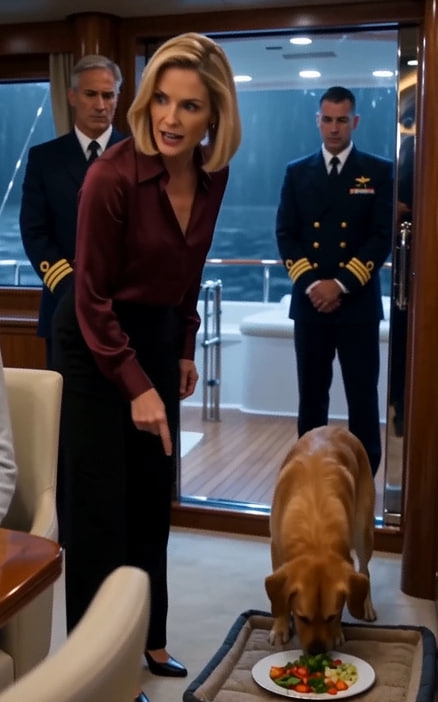
The dining salon was empty.
Atlas lay beneath the table.
Naomi sat where Bianca had humiliated her.
Marta brought dinner.
Naomi laughed.
“Please don’t put it on the floor.”
Marta smiled.
“I was considering it.”
They both laughed.
Then Naomi saw Bianca standing at the doorway.
Her plea hearing was the next morning.
She had asked permission to collect personal belongings.
Naomi had agreed.
Bianca looked around.
“So you really sold it.”
“Yes.”
“Gabriel would hate that.”
“Maybe.”
Bianca stepped inside.
“Do you ever worry you’re destroying him piece by piece?”
Naomi considered.
“No.”
She looked at Gabriel’s old chair.
“I think I’m finally letting him be dead.”
Bianca’s eyes filled.
That sentence broke whatever anger remained between them.
Not forgiveness.
Something quieter.
Acceptance that no one could inherit Gabriel’s authority intact.
Tomorrow Bianca would face court.
Soon Damian and Richard would too.
The conspiracy was ending.
But Naomi still had one unanswered question.
Why had Gabriel hidden the key on Atlas instead of simply giving Naomi the documents?
The satellite phone contained one final file.
It would unlock at midnight.
Naomi waited.
At 12:00, the screen lit.
May you like



GABRIEL — LAST.
She pressed play.







