Chapter 3 - The Milk
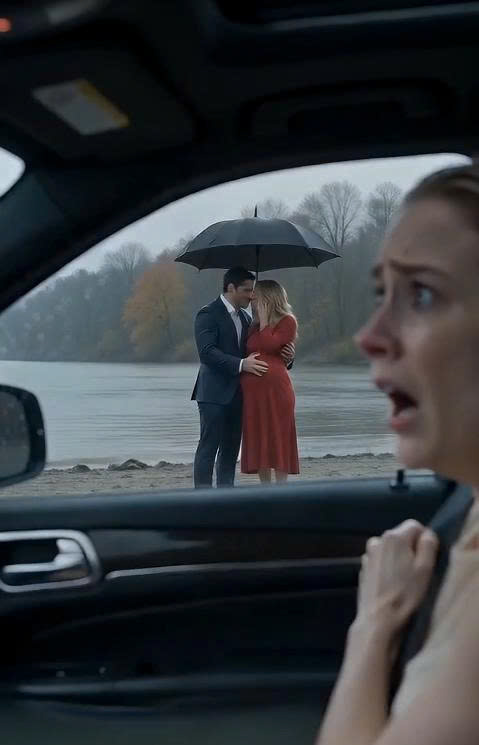
Grace arranged a controlled medical examination before Rosalind contacted homicide detectives.
Blood.
Urine.
Hair.
Nail samples.
The physician asked what medications Rosalind took.
“None regularly.”
“Sleep aids?”
“No.”
“Anti-anxiety medication?”
“No.”
The doctor looked at Grace.
Then back at Rosalind.
“Have you experienced daytime fatigue?”
“Yes.”
“Memory gaps?”
Rosalind hesitated.
“Sometimes.”
“Dizziness?”
“Yes.”
“Confusion?”
“Especially mornings.”
“How long?”
“Maybe two years.”
Tobias looked at the floor.
Rosalind saw him.
“You knew.”
“I suspected.”
“You knew enough to watch my kitchen.”
“I needed proof.”
The doctor collected a larger hair sample.
“Hair testing may show exposure patterns over months, depending on the substance.”
Rosalind stared at her reflection in the stainless-steel cabinet.
For two years, she had thought something was wrong with her.
She forgot meetings.
Misplaced documents.
Woke groggy.
Once she fell asleep during a board dinner.
Garrett had been tender afterward.
“You work too hard.”
He persuaded her to reduce her operating role.
He began attending more shipyard meetings on her behalf.
Rosalind closed her eyes.
“He was making me look incompetent.”
Grace said nothing.
The police meeting happened two hours later.
Detective Lena Morales listened without interrupting.
Rosalind told her about the seat-belt wire.
Garrett.
Penelope.
Tobias standing.
The pier.
The milk.
Morales looked at Tobias.
“You understand that pretending to have a disability for years may complicate credibility.”
“I do.”
“Did you receive disability benefits?”
“No.”
“Insurance payments conditioned on continuing paralysis?”
“No.”
“Any trust distributions specifically because you could not walk?”
“No.”
“Why maintain the appearance?”
“Because people spoke freely around me.”
Morales stared at him.
“That is not going to make a jury automatically like you.”
“I’m not asking them to.”
Rosalind almost smiled.
Tobias had become harder in fifteen years.
Morales agreed to keep Rosalind’s survival tightly held while a search warrant was pursued.
Emergency crews had recovered the SUV.
No body.
Garrett assumed the river carried Rosalind downstream.
Morales did not correct him.
The seat-belt mechanism was preserved before the vehicle was moved.
Investigators found the cut remnants of the wire Tobias described.
That mattered.
So did residue near the brake system.
Someone had tampered with a brake-fluid line.
Rosalind whispered:
“So the car was supposed to go into the river.”
Morales nodded.
“Preliminary only.”
“And if I survived the crash…”
“You couldn’t unbuckle.”
The room went silent.
Two separate mechanisms.
One to send her into the river.
One to keep her there.
Not an impulsive crime.
A plan.
That evening, Grace gained emergency access to copies of Rosalind’s estate documents.
Garrett was the primary beneficiary of her personal estate.
That was normal.
What was not normal was a codicil added nine months earlier.
It granted Garrett temporary voting authority over Rosalind’s Mercer Shipworks shares if she died while any dispute existed regarding her siblings’ competence or trust rights.
Rosalind stared.
“I never signed this.”
The signature looked like hers.
It had been notarized.
Witnessed.
Filed with the family-office records.
Tobias looked at Grace.
“Who notarized?”
“Monica Vale.”
Rosalind’s blood ran cold.
Garrett’s cousin.
A notary and attorney at Vale Maritime’s outside law firm.
Grace continued.
“The document may be invalid. We will challenge it.”
“But if I were dead?”
“Garrett could try to use it before anyone challenged him.”
“Why mention Tobias’s competence?”
“Because of the wheelchair.”
Tobias leaned back.
Garrett had turned his supposed disability into a governance weapon.
Rosalind’s personal trust otherwise transferred her voting shares temporarily to a three-person fiduciary committee upon death until estate administration concluded.
The forged codicil tried to bypass that.
Then Grace found the insurance policy.
Twelve million dollars.
Issued six months earlier.
Garrett was beneficiary.
Electronic consent supposedly from Rosalind appeared in the file.
Rosalind had never seen it.
“What medical exam?”
“Accelerated underwriting,” Grace said. “Existing records and financial justification. No traditional exam.”
Rosalind stared.
“Who applied?”
“The broker says Garrett handled logistics as your spouse and attorney-in-fact for limited insurance matters.”
“I never gave him that power.”
Grace opened another file.
“Yes, you did.”
Rosalind’s stomach dropped.
Three years earlier, after one of her episodes of severe exhaustion, Garrett had persuaded her to sign a limited durable power of attorney.
“He said it was for emergencies.”
“It includes insurance transactions.”
Rosalind felt shame.
Not because she had trusted her husband.
Because he had used every act of trust as infrastructure.
Morales’s phone rang.
She listened.
Then looked at Rosalind.
“We have another problem.”
“What?”
“Your husband reported you missing as presumed drowned.”
“That’s expected.”
“He also gave detectives prescription bottles from your bathroom.”
Rosalind frowned.
“What prescriptions?”
“Clonazepam and zolpidem.”
Rosalind stood.
“I have never been prescribed either.”
Morales nodded.
“Labels have your name.”
The doctor entered minutes later with preliminary toxicology.
Rosalind’s urine was positive for a benzodiazepine-class sedative.
She stared at him.
“I didn’t take anything.”
The room became silent.
Garrett had not merely drugged her.
May you like



He had planted prescriptions to make the drugging look voluntary.
And if Rosalind had died in the river, toxicology might have supported his story of a depressed, medicated woman losing control.







