Chapter 20 - Before the Memory Card
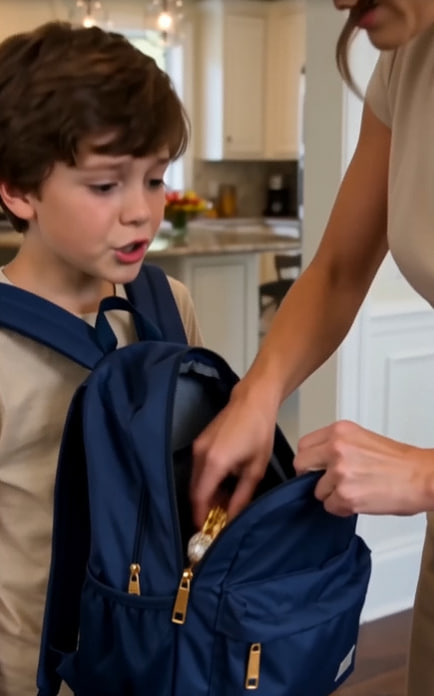
Two more years passed.
Noah was twelve when he asked to visit Claire’s grave alone with Ethan.
It was early autumn.
The cemetery sat on a low hill outside the city, shaded by old maples.
Noah carried no flowers.
He brought a folded piece of paper.
They sat on the grass.
“What did you bring?”
“A school assignment.”
“What kind?”
“Personal history.”
Ethan smiled.
“That sounds dangerous.”
Noah rolled his eyes.
“My teacher says we have to write about one event that changed our family.”
Ethan looked at the paper.
“You chose Mom?”
“No.”
“The Mercer thing?”
“No.”
Ethan already knew.
“The bracelet.”
Noah nodded.
“Do you want me to read it?”
“If you want.”
Noah handed him the page.
The title was:
BEFORE THE MEMORY CARD.
Ethan stopped at those words.
He read.
When I was seven, an adult put a bracelet in my backpack and said I stole it.
The important part of the story is not that a memory card proved I was telling the truth.
The important part is that I knew what happened before anybody proved it.
Ethan’s eyes burned.
He continued.
My dad did not believe her exactly, but he did not believe me fast enough either. That hurt me.
Later he learned that adults can be wrong even when they look sure.
I learned that being believed and being true are not the same thing.
Ethan had to stop.
Noah looked nervous.
“Too dramatic?”
“No.”
“You’re crying.”
“I’m aware.”
“Do you want me to finish?”
Ethan handed it back.
Noah read aloud.
Our family found out that my grandfather did something wrong in business, my uncle hid it, Vanessa wanted revenge and money and control, and a lawyer used everybody’s secrets because he wanted power.
That sounds like a movie.
But what I remember most is my backpack on the floor.
Books everywhere.
I thought if Dad did not believe me, then maybe telling the truth did not matter.
I know now that it matters before anyone believes you.
People still need evidence when they make big decisions. You cannot just believe everything because somebody says it.
But listening is different.
My dad says he learned that from me.
I think he should have learned it earlier.
Ethan laughed through tears.
Noah grinned.
The final paragraph was shorter.
I used to think the memory card saved me.
It did not.
It saved the adults from making a bigger mistake.
I was already telling the truth.
Noah folded the paper.
Neither spoke for a while.
Wind moved through the trees.
Finally Ethan said, “Your mother would love that.”
“How do you know?”
“Because she wrote almost the same thing about evidence.”
Noah looked toward Claire’s grave marker.
“Did she know what Vanessa would do?”
“No.”
“Did she know you’d mess up?”
Ethan smiled.
“She knew my weaknesses.”
“That means yes.”
“Fair.”
Noah placed the essay beside Claire’s stone for a moment.
Then picked it up again.
“I have to turn it in.”
“Practical.”
On the drive home, they stopped at a small café.
Noah ordered hot chocolate despite claiming he was too old for it.
Ethan did not comment.
When they reached the mansion, Rosa was in the front hall arranging mail.
She had retired formally the year before and still came by twice a week because, in her words, “retirement is boring.”
“You’re late,” she said.
“We went to see Mom.”
Rosa looked at Noah.
“Good visit?”
“Yes.”
He showed her the essay.
She read it.
Then hugged him so tightly he complained.
That evening, Noah went upstairs to pack for school.
Ethan entered the dining room.
The blue rug remained.
The chandelier cast warm light over the hardwood.
He stood where he had stood years earlier.
He could still reconstruct the scene if he tried.
Vanessa.
The bracelet.
Noah crying.
The memory card beneath the table.
His own hesitation.
But the room no longer belonged to that moment.
It belonged to birthdays now.
Homework.
Foundation dinners.
Science projects.
Burned toast carried in from the kitchen.
Ordinary life had reclaimed it inch by inch.
Noah entered carrying his backpack.
Not navy.
Not green anymore.
Black, with a reflective stripe.
He dropped it beside a chair.
“Dad.”
“Yes?”
“Can you sign this?”
A field-trip form.
Ethan picked up a pen.
Then paused.
“What?”
Noah asked.
Ethan smiled.
“Reading before signing.”
Noah laughed.
“Good idea.”
Ethan read the entire page.
Emergency contact.
Lunch requirements.
Museum rules.
Permission for transportation.
Then he signed.
Noah watched.
“You really changed.”
“Somewhat.”
“You’re still annoying.”
“Apparently permanent.”
Noah took the form.
Then opened his backpack.
He placed it inside himself.
Ethan watched but did not check.
Noah zipped it.
No suspicion.
No fear.
No one asking him to prove what belonged there.
Before leaving the room, Noah stopped.
“Dad?”
“Yes?”
“If there hadn’t been a memory card, what would you have done?”
The question had lived somewhere inside Ethan for years.
He could have offered comfort.
He chose truth.
“I don’t know.”
Noah absorbed that.
“I wish I could say I would have figured it out immediately.”
“But you don’t know.”
“No.”
A long silence.
Then Ethan added, “That is why I’m grateful it fell.”
Noah nodded.
“So am I.”
“But I’m more grateful you kept telling me what happened.”
The boy looked down at his backpack.
Then back at his father.
“I was really loud.”
“You needed to be.”
Noah smiled.
They walked out of the dining room together.
Behind them, nothing glittered on the floor.
No bracelet.
No evidence.
No object waiting to decide whose voice mattered.
The truth had existed before the memory card.
It had existed inside a frightened seven-year-old saying exactly what he saw.
May you like



The adults had simply taken longer to become worthy of hearing it.
THE END







