Chapter 19 - His Name in Open Court
The courtroom was full when Diane Ward changed her plea.
Caleb did not have to attend.
He chose to.
Ruth sat on his right.
Elena sat three rows behind because she remained a witness.
Diane entered in a dark suit.
No handcuffs visible from the gallery.
No dramatic breakdown.
She looked like the nonprofit executive who had once stood beside governors.
Power did not always look monstrous.
Sometimes it looked prepared.
The judge reviewed the agreement carefully.
Diane would plead guilty to a combination of federal and state offenses, including conspiracy, fraud, identity theft, obstruction, kidnapping-related conduct, and a homicide-related count reflecting her role in the events leading to Mara’s death.
She would receive decades of imprisonment across coordinated sentences, subject to statutory rules and credit.
The judge asked:
“Did you knowingly participate in a scheme to falsify the identities of children under Harbor Bridge supervision?”
Diane said:
“Yes.”
Caleb gripped Ruth’s hand.
“Did that scheme include Caleb Thomas Rowan?”
Pause.
“Yes.”
“Did you know Caleb Rowan was the biological son of Mara Rowan?”
“Yes.”
“Did you know Grant Ward was his maternal uncle?”
“Yes.”
“Did you participate in records falsely portraying Caleb as an unrelated foster child?”
“Yes.”
Each answer returned a piece of Caleb’s history.
The judge continued.
“On October 18, 2019, did you direct Grant Ward to prevent Mara Rowan from leaving Chicago with Caleb?”
Diane’s lawyer whispered to her.
Diane answered:
“Yes.”
“Did you contact Owen Fisk and direct him to assist?”
“Yes.”
“Did you understand that force might be used?”
Diane looked toward Caleb.
For the first time, their eyes met.
“Yes.”
“After Mara Rowan was struck, did you instruct Grant Ward not to contact emergency services from his phone?”
“Yes.”
Caleb stopped breathing for a moment.
There it was.
Not theory.
Not Grant’s version.
Not Ruth’s suspicion.
Diane’s own admission.
The judge asked:
“Did you then participate in concealing Caleb’s true identity?”
“Yes.”
“Why?”
The plea agreement did not require a philosophical answer.
But the judge waited.
Diane swallowed.
“To protect the organization.”
Caleb’s face hardened.
The judge said:
“From a four-year-old?”
Diane’s voice became quieter.
“From what he represented.”
“What did he represent?”
“Proof that Mara had been telling the truth.”
Caleb looked down.
He had spent years being treated like a problem.
Now the woman responsible admitted why.
His existence contradicted their lie.
Victim-impact statements followed at sentencing.
Ruth spoke about seven years of searching.
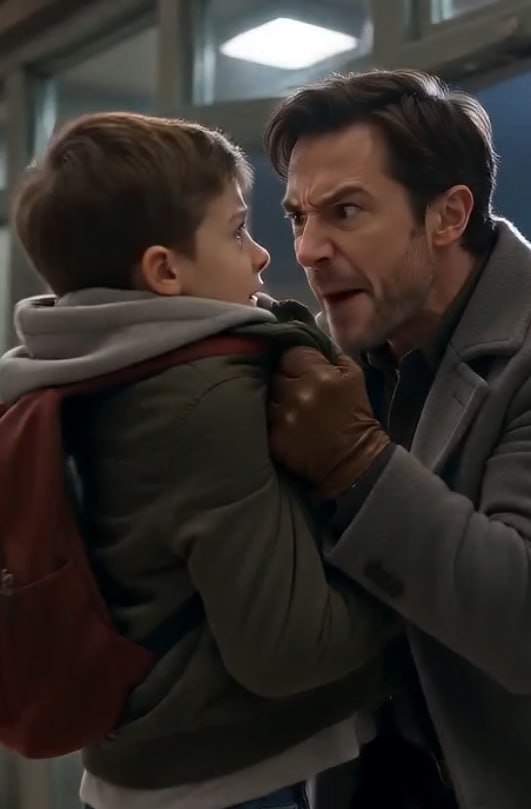
Elena spoke about finding an eleven-year-old boy being assaulted because he had questioned a false name.
Caleb chose to speak last.
He stood on a small step at the microphone.
“My name is Caleb Thomas Rowan.”
Diane looked at him.
“I used to think a name was just what people called you.”
The courtroom was silent.
“Then I found out people can use names like cages.”
Ruth began crying.
Caleb continued.
“You gave me names so nobody could find me. Grant gave me lies so I wouldn’t look.”
He swallowed.
“My mom wrote that I was born in a snowstorm. Grant told me Indiana. My mom said Ruth was waiting. Grant said nobody wanted me.”
Caleb looked at Diane.
“You didn’t just steal money.”
His voice shook.
“You stole answers.”
Diane lowered her eyes.
Caleb continued.
“But you didn’t erase everything.”
He touched his chest.
“I remembered her hand.”
Silence.
“I remembered her telling me not to let go when the trains got loud.”
Elena wiped her eyes.
Caleb finished:
“And when I couldn’t remember, she left enough truth for other people to help me.”
He stepped away.
Diane received a sentence that meant she would spend much of the rest of her life in prison.
Appeals remained possible.
Civil cases remained.
Government investigations continued.
Justice did not arrive as a clean door closing.
It arrived as layers.
Afterward, reporters crowded the courthouse.
Ruth refused interviews.
Caleb left through a private exit.
Elena walked with him.
“Do you feel better?” she asked.
“No.”
“Good.”
He looked at her strangely.
“You’d worry me if one court hearing fixed everything.”
Caleb smiled faintly.
“What happens now?”
“School.”
“That’s terrible.”
“Homework.”
“Worse.”
“Therapy.”
“Okay, now you’re threatening me.”
Elena laughed.
At Ruth’s house that evening, a package waited.
It came from federal evidence storage.
The criminal proceedings had advanced far enough that certain personal property could be returned.
Inside was Mara’s photograph.
Caleb and Mara at Union Station.
And one small brass object sealed in a clear evidence envelope.
Locker key 214.
The key that had fallen from Grant’s coat.
Caleb stared at it.
Ruth asked:
“Do you want to keep it?”
He did not answer immediately.
That key had opened the suitcase containing three false lives.
Noah Pierce.
Eli Bennett.
Caleb Ward.
But it had also opened the first door toward the truth.
Caleb lifted it carefully.
“Yes.”
Not because it belonged to Grant.
May you like



Because Grant had dropped it.
And in dropping it, he had finally lost control of what Caleb was allowed to know.







