Chapter 9 - The Shoe Box
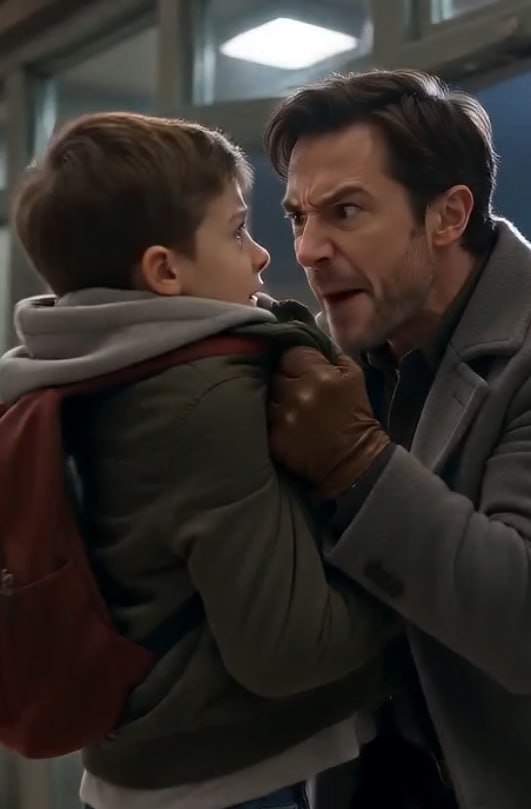
Police returned to Grant’s house with a new warrant.
The basement contained seventeen storage tubs.
Old clothes.
Tax records.
Children’s toys.
Harbor Bridge paperwork.
Caleb watched none of the search.
He waited with Ruth and Elena at the advocacy center.
Bell called at 4:06 p.m.
“We found shoes.”
“How many?” Elena asked.
“Grant kept everything.”
One cardboard box was labeled:
C. — 2019.
Inside were tiny sneakers.
Blue.
Size eleven.
The insoles had been removed.
No flash drive.
Caleb’s shoulders dropped.
Then a forensic technician noticed one shoe had been cut and resewn along the padded tongue.
Inside was a cavity.
Empty.
Grant had found it.
But the stitching contained a microscopic fragment of black plastic.
Consistent with a broken USB casing.
Mara had hidden the drive exactly where Caleb remembered.
Grant discovered it later.
Which meant Diane may eventually have obtained it.
Investigators searched financial records.
Five weeks after Mara’s death, Diane paid $120,000 to a Chicago data-recovery company through a shell corporation.
The company still existed.
Its owner, Felix Tran, remembered the job.
“A damaged encrypted USB drive.”
“Who brought it?” Bell asked.
“A man.”
Grant’s photograph.
“That’s him.”
“Did you recover the files?”
“Most.”
“Did you keep copies?”
Felix looked offended.
“No.”
“Did you see what was on it?”
“Enough to know I didn’t want to.”
“What did you see?”
“Spreadsheets. Child names. State billing. Scans of passports.”
Elena leaned forward.
“Passports?”
“Applications, I think.”
Seven years ago.
The false-passport operation predated Caleb’s attempted removal from Chicago.
This was not something Grant invented recently.
Mara had found evidence Harbor Bridge was manufacturing identities long before her death.
Felix continued.
“There were audio files.”
Bell’s head lifted.
“What kind?”
“One woman talking. Another woman. A man.”
“Did you identify them?”
“No.”
“Did you deliver recovered data to Grant?”
“Yes.”
“What happened to the broken drive?”
Felix thought.
“He told me to destroy it.”
“Did you?”
“No.”
Elena stopped breathing.
Felix smiled nervously.
“Tech people hate throwing away storage.”
The damaged USB had sat in a labeled evidence drawer in his workshop for seven years.
Federal agents seized it.
The physical device was broken.
But the memory chip remained.
Specialists recovered fragments.
One audio file survived.
Mara’s voice:
“Diane, these children are real people.”
Diane answered:
“They’re case numbers.”
“No. They are children.”
“You’re being dramatic.”
“You created identities for closed placements.”
“To correct billing gaps.”
“You used those identities to bill Medicaid.”
Silence.
Then Grant’s voice:
“Mara, stop.”
Caleb listened later under therapist supervision.
His hands shook when Grant spoke.
Mara answered:
“Do you know what she’s doing?”
Grant said:
“I know what happens if you report it.”
“That’s not what I asked.”
Diane’s voice became colder.
“You were hired to reconcile accounts, not moralize.”
Mara replied:
“I’m taking this outside Harbor Bridge.”
The recording ended.
It did not prove murder.
It proved motive.
It proved Grant knew.
It proved Diane knew Mara was going to authorities.
And it proved Mara had been telling the truth.
Power shifted.
The Illinois agency responsible for major child-welfare contracts suspended Harbor Bridge from accepting new placements.
Banks froze several corporate accounts under court orders.
Diane held a press conference anyway.
She blamed “a vindictive former employee whose personal family grievances are being treated as accounting evidence.”
Mara was dead and could not answer.
So Caleb did something impulsive.
He asked Elena for her phone.
“No.”
“I want to see what Diane said.”
“You do not need to watch every public statement.”
“I need to know.”
Against her better judgment, Elena showed him a short clip.
Diane said:
“Mara Rowan struggled with severe instability in the final months of her life.”
Caleb’s face changed.
“She’s calling Mom crazy.”
“Yes.”
“She can just say that?”
“She can say things. That doesn’t make them true.”
Caleb handed the phone back.
But later, when Elena left the room, he borrowed Ruth’s tablet.
He searched Diane Ward.
Then he found a livestream page.
Comments were open.
Caleb created an account.
He typed:
I AM CALEB ROWAN. MY MOTHER DID NOT ABANDON ME.
He pressed send.
Within minutes screenshots spread.
Reporters noticed.
Harbor Bridge noticed.
And Grant noticed.
That night a direct message appeared on Caleb’s account.
FROM: GWard19
You want the truth about your mother?
Ask me what she did before she died.
Caleb stared at the screen.
Then another message arrived.
Don’t tell Ramirez.
She doesn’t know everything.
Caleb knew he should show Elena.
Instead he typed:
What did Mom do?
Grant answered:
She betrayed us first.
May you like



And Caleb made his first major mistake.
He kept the conversation secret.







