Chapter 5 - Harbor Bridge
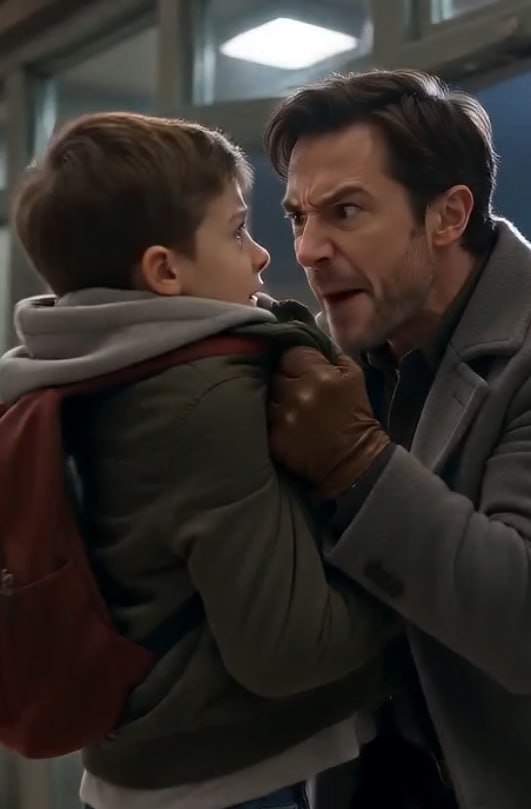
Caleb was moved before Grant could reach him.
This time the address was stored outside the ordinary case-management notes.
His new placement was with retired teacher Arthur Bell and his wife June in Oak Park.
No one told Caleb the street name until the car arrived.
He noticed.
“You think I’ll tell Grant.”
Tasha looked back from the passenger seat.
“I think you’re eleven and under enormous pressure.”
“That means yes.”
“It means security isn’t an insult.”
Caleb turned toward the window.
Adults loved changing words.
Lies became protection.
Control became safety.
Abandonment became placement.
He was beginning to hate vocabulary.
Meanwhile the state placed Rebecca Sloan on administrative leave pending investigation.
Victor Sloan immediately withdrew as Grant’s attorney, citing a potential conflict.
Grant hired another lawyer by evening.
Money moved quickly when frightened people had enough of it.
The investigation into Harbor Bridge moved faster.
State auditors entered headquarters with subpoenas.
They found discrepancies across eight years of billing.
Children who had supposedly received therapy while hospitalized somewhere else.
Transportation charges on days no vehicle had moved.
Duplicate identities.
Closed cases still generating monthly payments.
And nine children whose Social Security numbers belonged to entirely different people.
Caleb was not the only ghost.
He was simply the first ghost who had spoken.
Elena and Detective Bell interviewed former Harbor Bridge employees.
Most remembered Diane as brilliant and demanding.
Almost all remembered Grant.
“Diane’s fixer,” one former case coordinator called him.
“What does that mean?” Elena asked.
“If a placement went bad, Grant moved the kid. If a foster parent complained, Grant handled it. If records needed correcting, Grant knew who to call.”
“Was he employed by Harbor Bridge?”
“Officially? Sometimes. Contractor. Transportation. Emergency placement. Then he became a licensed therapeutic foster parent.”
“Wasn’t his relationship to Diane a conflict?”
The woman laughed.
“At Harbor Bridge, Diane was the conflict policy.”
Caleb’s case produced something worse.
A monthly reimbursement ledger.
Harbor Bridge had billed approximately $4,700 per month for Caleb’s therapeutic placement, specialized behavioral management, counseling, transportation, and school support.
Grant received only part of that as foster reimbursement.
The rest stayed within agency programs.
“Was Caleb medically complex?” Bell asked Tasha.
“No.”
“Behavioral diagnosis?”
She checked.
“Reactive attachment disorder. Severe aggression. Elopement risk.”
Elena remembered the quiet boy in the security office.
“Who diagnosed him?”
Tasha scrolled.
“Dr. Leonard Voss.”
Bell searched.
“He was Harbor Bridge’s contract psychologist.”
“Was?”
“Lost his license three years ago for insurance fraud.”
Elena felt sick.
Caleb had been labeled difficult to justify expensive services.
The labels also helped Grant stop adoption inquiries.
Families had shown interest in Caleb over the years.
Three.
Every inquiry had been discouraged.
One prospective family received a warning that Caleb had “fire-setting behaviors.”
Another was told he sexually harmed younger children.
None of it appeared supported by school records.
Grant had kept him isolated.
At the Oak Park house, Caleb learned that too.
Leah Morgan sat with him on the porch.
“There were people who asked about adopting you.”
Caleb looked at her.
“No.”
“Yes.”
“Grant said nobody wanted me.”
Leah’s face tightened.
“He lied.”
Caleb stood so abruptly his chair scraped backward.
“How many?”
“Three documented inquiries.”
“How many?”
“Three.”
He walked to the railing.
“Did they meet me?”
“One family met you at a picnic when you were six.”
A memory surfaced.
A woman with curly hair giving him a red kite.
Grant taking the kite away afterward.
He had said she felt sorry for him.
Caleb gripped the railing.
“Why didn’t they take me?”
“Harbor Bridge reported that moving you would be clinically harmful.”
“Was it?”
“We’re still reviewing.”
Caleb knew the answer.
Grant had wanted him.
Not because he loved him.
Because he needed him.
That night Caleb dreamed of the station again.
Mara’s yellow scarf.
Her hand.
A voice saying:
Stay beside me.
Then another voice.
Male.
Grant.
You’re making this worse.
Caleb woke screaming.
June Bell sat outside his door but did not enter until he said she could.
That mattered.
The next morning Elena arrived with a photograph.
Not evidence she was supposed to show casually.
Leah had approved it.
It came from Mara’s apartment file.
Mara stood beside Grant at a family barbecue.
Both younger.
On the back, someone had written:
Grant, Mara, Diane — Mom’s birthday.
Caleb stared.
“He was really her brother.”
“Half-brother,” Elena said.
“So he was my uncle.”
“Yes.”
Caleb’s eyes hardened.
“Then he knew where I came from.”
“Yes.”
“Who my family was.”
“Yes.”
“Who my mom was.”
“Yes.”
Caleb looked at the picture for a long time.
Then he noticed Diane.
She stood behind Mara with one hand on her shoulder.
Everyone was smiling.
“They were a family.”
“Once.”
Caleb flipped the picture over.
There was an address.
RUTH ROWAN
EVANSTON
His finger stopped.
“Who’s Ruth?”
Elena answered carefully.
“Mara’s aunt.”
“Alive?”
“Yes.”
Caleb looked up.
“Does she know about me?”
Elena did not lie.
“She spent seven years thinking you disappeared.”
Caleb’s face went white.
“She looked for me?”
“Yes.”
“How long?”
Elena swallowed.
“She never stopped.”
May you like



And suddenly Grant’s biggest lie was no longer that nobody wanted Caleb.
It was that nobody had ever searched.







