Chapter 20 - Just a Bowl
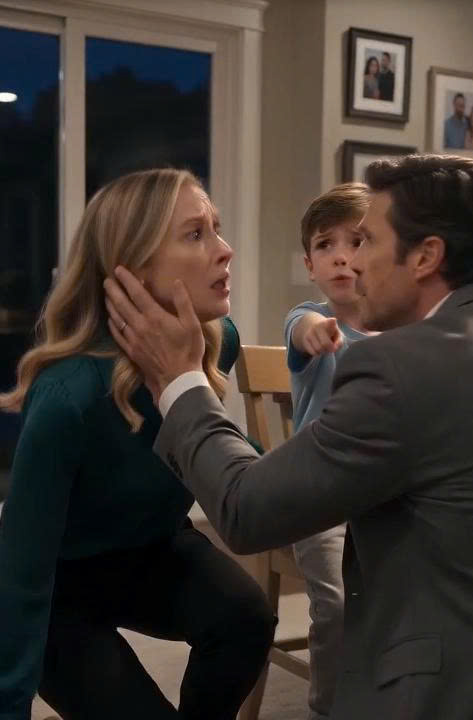
One year and three weeks after Vanessa shoved Noah’s face into dinner, Daniel cooked rice.
Badly.
It stuck to the bottom of the pot.
Noah came into the kitchen and looked inside.
“Mom used to make it better.”
Daniel laughed.
“Your mother made everything better than me.”
“Except singing.”
“Definitely singing.”
The house looked different.
Not because Daniel renovated it.
Because he removed things.
Vanessa’s furniture was gone.
Her oversized mirrors were gone.
The framed wedding photographs were gone.
Daniel kept the kitchen camera.
For a while.
Then one Saturday Noah asked whether they still needed it.
Daniel said, “It makes me feel safer.”
Noah thought about that.
“Does it make you feel safe or make you feel like something bad is always going to happen?”
Daniel stared at his seven-year-old son.
Therapy had apparently created a tiny philosopher.
They compromised.
The camera remained near the exterior door.
Not over the dining table.
The place where they ate no longer needed to be watched.
Daniel carried two plates to the table.
Chicken.
Vegetables.
Rice.
Noah stood beside the cabinet.
“I want the blue bowl.”
Daniel paused.
“You sure?”
“Yes.”
Daniel reached for it.
Noah shook his head.
“I can get it.”
He climbed carefully onto the small step stool.
Daniel did not help.
Noah took the bowl.
The ceramic made a quiet sound against the table when he set it down.
For one second Daniel saw rice in Noah's hair again.
He heard the scream.
DAD! HELP ME!
He saw Vanessa’s face.
Nathan’s gray suit.
Emily’s blue folder.
Courtrooms.
Bank records.
His own hand striking Vanessa.
Every mistake.
Every lie.
Every moment he had arrived too late.
Noah spooned rice into the bowl.
Daniel sat across from him.
Noah stared at it.
A minute passed.
Daniel said nothing.
No encouragement.
No pressure.
No pretending.
Finally Noah picked up his fork.
He took one bite.
Chewed.
Swallowed.
His shoulders remained tense.
Then he took another.
Daniel looked down at his own plate because he understood Noah did not need to be watched while being brave.
After several bites Noah said, “It tastes bad.”
Daniel looked up.
“What?”
“The rice.”
Daniel laughed.
Noah laughed too.
“Seriously, Dad. It's sticky.”
“That's because I made artisanal rice.”
“You burned it.”
“Artisanal.”
Noah took another bite.
Something ordinary returned to the room.
Daniel felt it.
So did Noah.
The bowl stopped being evidence.
The table stopped being a crime scene.
Rice stopped being punishment.
It became badly cooked dinner.
Exactly what it should have been.
After they ate, Noah carried his bowl to the sink.
Daniel said, “Leave it. I'll clean.”
“I can do it.”
Noah rinsed the bowl.
Then he looked toward the place where the camera used to hang.
“Do you miss Mom?”
Daniel leaned against the counter.
“Every day.”
“Did she know Nathan would do all that?”
“No.”
“But she knew something.”
“Yes.”
Noah considered this.
“She was smart.”
“Very.”
“Are you smart?”
Daniel smiled.
“Occasionally.”
Noah dried the bowl.
“Why didn't you listen to her?”
The question no longer felt like an accusation.
That made answering harder.
“Because I thought I knew who I could trust.”
“Vanessa?”
“Nathan too.”
“And you believed them?”
“Yes.”
Noah placed the bowl in the cabinet.
“What about me?”
Daniel looked at him.
“I should have believed you sooner.”
“You didn't.”
“No.”
Silence.
Daniel had learned not to fill every silence.
Noah finally said, “I believe you now.”
Daniel's throat tightened.
“About what?”
“When you say you'll listen.”
That was forgiveness.
Not complete.
Not ceremonial.
Not guaranteed forever.
But real.
Daniel crouched.
Noah hugged him.
A year earlier, Daniel had believed fatherhood meant protecting Noah from danger.
Now he understood another part.
Sometimes the danger had already happened.
Protection then meant staying.
Listening.
Taking responsibility.
Letting the child be angry.
Letting healing take longer than the adult wanted.
And never making love dependent on forgiveness.
Months later Nathan Reed was sentenced in federal court after pleading guilty to conspiracy and wire fraud charges connected to the vendor schemes and Kestrel transaction.
The judge described the conduct as “a sustained abuse of fiduciary trust.”
Vanessa received a separate sentence after pleading guilty in the child-abuse case and to financial-conspiracy charges.
Her cooperation mattered.
So did what she did to Noah.
Both truths entered the sentence.
Daniel attended neither hearing.
He did not need to watch them lose.
For too long, revenge had sounded like the only language powerful enough to answer betrayal.
He learned otherwise.
Consequences were enough.
Mercer Harbor recovered most of the misappropriated funds through insurance, restitution actions, and settlements.
The company abandoned the Kestrel sale.
Two years later an independent valuation placed it above $180 million.
Noah’s trust remained intact.
Daniel never returned as chief executive.
When reporters asked why, he answered:
“I spent years believing control and responsibility were the same thing.”
Laura Chen became chair and hired a professional CEO.
Daniel oversaw development projects, spent fewer nights at the office, and never again allowed a company emergency to automatically outrank a promise to Noah.
He still failed sometimes.
He was late once.
He forgot a school costume.
He burned rice repeatedly.
But when Noah said something hurt, Daniel listened before defending himself.
That became their new rule.
Not written in a trust.
Not notarized.
Not recorded by a camera.
Just practiced.
On Noah’s ninth birthday, Catherine Wells gave him a copy of Emily’s handwritten letter.
Not the audit pages.
Not the financial evidence.
A different letter.
Emily had written it shortly before entering hospice.
Noah read one sentence aloud.
“Your father loves too hard and sometimes listens too late.”
Daniel covered his face.
Noah laughed.
“She knew you.”
“She did.”
The letter continued.
“But when he finally understands something, he changes.”
Noah became quiet.
Daniel looked at him.
“Well?”
Noah folded the paper carefully.
“She was right.”
About a week later they ate dinner at the same oak table again.
Noah used the blue bowl.
Rice stuck to one side.
Daniel reached toward it.
Noah looked at him.
“What?”
“Nothing.”
“You're staring.”
Daniel smiled.
“Sorry.”
Noah tapped the bowl with his fork.
A year earlier, the same sound would have tightened both their bodies.
Now it was just ceramic.
“Dad?”
“Yes?”
“It's just a bowl.”
Daniel felt tears rise before he could stop them.
Noah rolled his eyes.
“Why are you crying?”
“I’m not.”
“You definitely are.”
Daniel laughed and wiped his face.
Outside, evening light filled the glass doors where headlights had once appeared.
That night, Daniel had believed he arrived in time because he burst through the door before Vanessa could hurt Noah again.
He had been wrong.
He had arrived late.
Months late.
Maybe longer.
The miracle was not that Noah had screamed loudly enough.
The miracle was that after everything, Noah still believed his father could learn to hear him.
Daniel lifted his fork.
Noah lifted his.
Neither mentioned Vanessa.
Neither mentioned Nathan.
Neither mentioned courts, companies, millions of dollars, recordings, injunctions, or betrayal.
They ate.
The blue bowl sat between them.
No longer a symbol of terror.
No longer evidence.
No longer the thing Vanessa had used to humiliate a seven-year-old boy.
Just a bowl.
And this time, Noah decided for himself when his face came near it.
Only when he leaned forward laughing so hard at one of Daniel’s terrible jokes that he nearly spilled his dinner.
Daniel laughed too.
May you like



And nobody in the room was afraid.
THE END







