Chapter 11 - The First Time He Chose Her
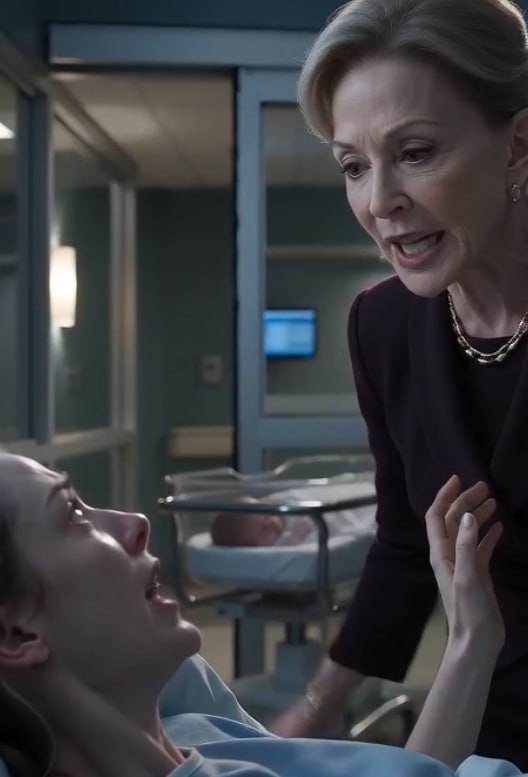
The recording continued.
Malcolm sounded irritated.
“You haven’t done anything.”
“I met Genevieve.”
“That was the assignment.”
“No. You want access to Arthur through her.”
“And?”
Julian’s voice hardened.
“She isn’t part of this.”
Malcolm laughed.
“Everyone is part of it.”
“I’m out.”
The recording ended.
Genevieve sat motionless.
Sarah watched her.
“He refused.”
“At first.”
“Yes.”
“But later he married me.”
“Yes.”
“And later he went back.”
“Yes.”
The truth became more painful because it was not simple.
Julian had initially rejected Malcolm’s plan after meeting her.
Then financial pressure pulled him back years later.
Genevieve met him during supervised visitation.
“Why did you refuse?”
Julian held Clara carefully.
“Because you were kind to a waiter.”
She frowned.
“What?”
“The charity auction.”
He smiled sadly.
“A donor yelled at a waiter for spilling wine. You helped him clean it up.”
Genevieve remembered.
Barely.
“I went home and told Malcolm I was finished.”
“When did you start working with him again?”
“After my investment losses.”
“Before or after I became pregnant?”
Julian looked down.
“Before.”
“How long before?”
“Four months.”
Genevieve absorbed it.
“So while we were trying to have a baby, you were planning to control my shares.”
His eyes filled.
“Yes.”
She wanted to hate him cleanly.
He would not give her that convenience.
“Did you ever plan to leave me?”
“No.”
“Did you plan to take Clara permanently?”
“No.”
“You threatened to.”
“I know.”
“Why?”
“Because you wouldn’t sign.”
He looked sick saying it.
Genevieve whispered, “That is the answer I will remember.”
Julian cried.
She did not comfort him.
At Bellamy, the special committee discovered that several directors had conflicts tied to NorthStar.
Two resigned.
Malcolm’s influence had penetrated deeper than expected.
Arthur publicly acknowledged his failures.
Not through a press conference.
At the board meeting.
“I allowed loyalty to replace oversight.”
He looked toward Genevieve.
“My son warned me. My granddaughter paid for my refusal to listen.”
The board accepted his permanent retirement.
Arthur relinquished chairmanship.
Genevieve was offered the position.
She declined.
Everyone was stunned.
“Why?” Sarah asked.
“Because I have a newborn.”
“You could still—”
“No.”
Genevieve smiled.
“For once, I don’t need power just because someone offers it.”
She agreed to remain a shareholder representative with limited duties.
Professional management would run the company.
Another pattern broken.
Meanwhile, Detective Reed found evidence connecting Malcolm to the hospital plan more directly.
A deleted email recovered from Julian’s laptop:
M.P.: MAKE CERTAIN SHE SIGNS BEFORE DISCHARGE. AFTERWARD SHE WILL HAVE TOO MANY PEOPLE AROUND HER.
Julian:
WHAT IF SHE REFUSES?
M.P.:
THEN USE THE CAPACITY ROUTE.
The exact structure of the coercion had been Malcolm’s strategy.
But Julian had escalated it.
The threat involving Clara was his.
Eleanor’s assault was hers.
Responsibility separated.
That mattered.
Then Malcolm offered prosecutors a deal.
He would plead guilty to financial crimes and conspiracy if they dropped investigation into Thomas and Rebecca’s boating accident.
Genevieve was asked for input.
“No.”
The prosecutor explained they could not promise the old case would ever produce charges.
“I understand.”
“You may get certainty on current offenses.”
“I understand.”
“Then why reject it?”
“Because he’s asking you to sell an unanswered question that doesn’t belong only to me.”
The prosecutor studied her.
“We make the decision.”
“I know.”
“And we may still accept.”
“I know.”
Genevieve had learned another distinction.
Influence was not control.
The government rejected Malcolm’s proposed condition.
His current prosecution proceeded.
The boating investigation remained open.
Then Frank Delaney changed his story.
He admitted Malcolm had not merely ordered a search of Thomas’s boat.
Malcolm had told him:
“If the steering gives him trouble, maybe he finally learns not to push.”
Genevieve stared at the interview transcript.
Sarah warned:
“Delaney is cooperating to protect himself.”
“But he admitted touching the steering.”
“Yes.”
“Could he have loosened it?”
“Yes.”
“Can we prove intent?”
“Not yet.”
Genevieve looked at her parents’ photograph.
For seventeen years she had believed weather killed them.
Now the truth was close enough to touch.
But not yet strong enough to hold.
Then investigators found the mechanic.
The man who inspected Thomas’s boat after the crash.
He was eighty-one.
And he remembered something police never put in the report.
May you like



“The fitting wasn’t loose from vibration,” he said.
“It had been backed off by hand.”







