Chapter 19 - What Clara Inherits
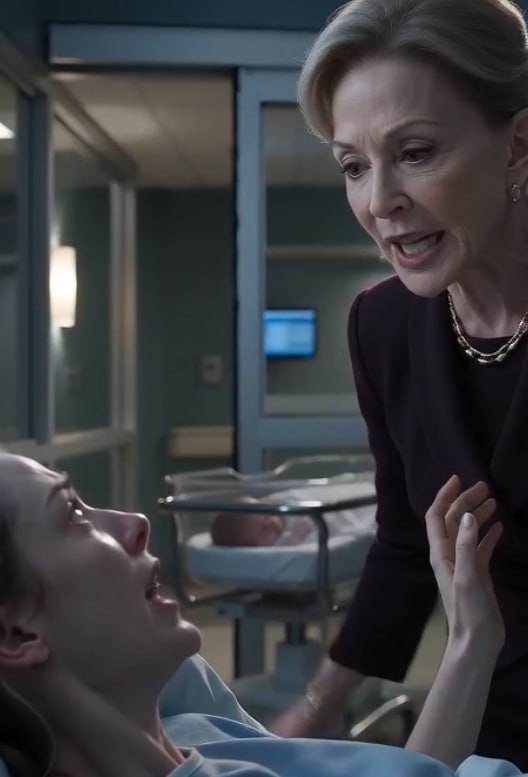
One year after Clara’s birth, Genevieve held a small birthday party.
No ballroom.
No Bellamy corporate venue.
Just the garden behind her townhouse.
Sarah came.
Arthur came.
Denise came.
A few friends.
No journalists.
Eleanor was not invited.
Julian remained incarcerated.
He sent Clara a letter through approved channels.
Genevieve read it first.
Dear Clara,
I loved you before you were born, but loving you did not automatically make me a good father.
Genevieve stopped.
She continued.
I once used your mother’s love for you to frighten her. You may learn about that someday. If you do, I hope nobody tells you I was simply a bad man and therefore nothing about me matters. I also hope nobody tells you I loved you and therefore what I did should be forgiven.
Both would be lies.
Genevieve’s eyes filled.
She placed the letter in a secure box.
Not for Clara now.
For later.
When age and context made truth useful rather than burdensome.
Arthur watched her.
“You’re keeping it?”
“Yes.”
“You could destroy it.”
“I’m done destroying records because they hurt.”
Arthur understood the reference.
Thomas’s files.
His greatest failure.
After the party, Genevieve reviewed the restructured Bellamy trust.
Clara would benefit someday.
But Genevieve changed what she legally could.
At adulthood, Clara would receive financial education before gaining significant discretionary authority.
Independent trustees would be required.
Spouses could not automatically become successor fiduciaries.
Capacity determinations required independent examinations by professionals without financial ties to interested parties.
No single physician could trigger emergency control.
Sarah smiled.
“You turned trauma into drafting.”
Genevieve laughed.
“That may be the most lawyerly thing you’ve ever said.”
“Occupational hazard.”
The family wealth remained enormous.
But Genevieve no longer saw it as proof of safety.
Money could fund education.
Healthcare.
Freedom.
It could also buy silence, access, influence, lawyers, and false certainty.
Structures mattered.
Character mattered more.
Arthur transferred much of his remaining personal voting influence into an independent stewardship trust.
“You’re really giving up control,” Genevieve said.
“Yes.”
“Does it hurt?”
“Terribly.”
She laughed.
“Good.”
He laughed too.
Then became serious.
“I wish Thomas could see you.”
Genevieve looked toward Clara.
“I wish he could see her.”
They stood quietly.
The boating case had finally closed.
Not with the dramatic murder conviction Genevieve once imagined.
With documented truth.
Delaney had sabotaged the boat under pressure from Malcolm to interfere with Thomas.
Malcolm knew of dangerous interference and failed to stop it.
Corrupt payments distorted the investigation afterward.
Rebecca and Thomas died because greed, intimidation, recklessness, and concealment intersected with a storm.
No miracle evidence transformed complexity into simplicity.
Genevieve had learned to live with that.
That evening she opened the drawer.
The dark pen remained inside.
She carried it to Clara’s nursery.
For a moment she considered throwing it away.
Then she removed the ink cartridge.
She placed the empty pen body inside a small archival box beside copies of the hospital documents and a transcript of the recording.
Sarah had advised preserving key records.
Genevieve added a note.
This object was used to try to force my consent.
It failed.
She closed the box.
Not a shrine.
Evidence.
Memory without worship.
Then her phone rang.
Sarah.
“Genevieve.”
Something in her voice changed the air.
“What happened?”
“Julian’s attorney filed something.”
Genevieve’s body tightened instinctively.
“What?”
“A motion.”
“For custody?”
“No.”
Sarah paused.
“He’s withdrawing his future claim to control Clara’s trust interests permanently.”
Genevieve stared.
“Why?”
“He attached a letter.”
Genevieve opened it.
Julian had written:
I once believed being Clara’s father entitled me to power over what belongs to her.
It does not.
If I ever earn a relationship with my daughter, I want it to exist because she is safe with me—not because a document gives me authority over her money.
Genevieve sat down.
She cried.
Not because she wanted him back.
She didn’t.
Not because consequences had vanished.
They hadn’t.
May you like



She cried because change was possible without requiring reconciliation.
That was another truth she wanted Clara to inherit.







