Chapter 11 - Six Meals That Never Happened
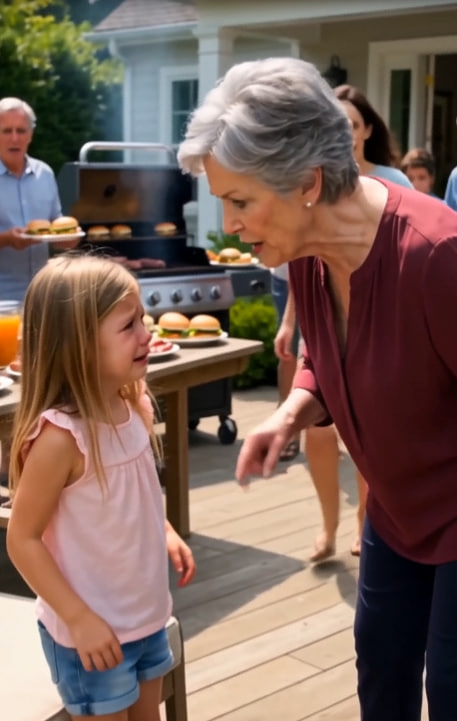
The meal log was almost too perfect.
Friday, 6:30 p.m. — casserole, half portion.
Saturday, 8:00 a.m. — eggs and toast.
Saturday, 12:15 p.m. — turkey sandwich and apple.
Saturday, 6:00 p.m. — casserole and milk.
Sunday, 8:30 a.m. — oatmeal.
Sunday, 1:00 p.m. — hamburger.
Six meals.
Times included.
Portions described.
Shawna had even written Keely complained but ate with encouragement beside Saturday lunch.
Vanessa did not accuse her of fabricating it.
She asked questions.
That was more effective.
“Do you ordinarily keep meal logs for grandchildren?”
Shawna apparently said yes.
Vanessa asked Daniel.
He had never seen one.
Melissa had never seen one.
Tessa had never heard of it.
Then the investigator asked Shawna to provide earlier examples.
She could not.
Still, inability to produce old logs did not prove fabrication.
The most useful evidence came from somewhere embarrassingly ordinary.
My mother’s home security system.
Shawna had exterior cameras.
One faced the back patio.
Another captured part of the kitchen through a glass door whenever it opened.
She initially said recordings automatically deleted after seven days.
But Daniel remembered helping her configure the system.
“She pays for thirty-day cloud storage.”
Vanessa obtained the recordings through Shawna’s attorney after requesting preservation.
The video did not show everything.
But it showed enough.
Saturday around noon, Shawna carried one plate to the patio.
Her own.
No child beside her.
No sandwich.
At 6:07 p.m., she carried a casserole dish from the kitchen to the outside trash.
Sunday morning, Keely appeared in the backyard alone for several minutes, drinking from the garden hose.
When I saw that clip, I nearly vomited.
My daughter had been thirsty enough to drink from the hose while food sat inside.
Vanessa warned me.
“The clip doesn’t tell us why she drank from it.”
“I know.”
“Don’t infer more than it proves.”
“I know.”
But my heart did not care about evidentiary discipline.
Keely looked so small on the screen.
At 12:48 Sunday, Shawna lit the grill.
At 1:10, relatives began arriving.
At 1:47, she handed Keely the burned hamburger.
The “meal log” said Keely ate it at 1:00.
The timestamp alone contradicted that.
When confronted, Shawna said she had written approximate times.
Maybe.
But other evidence accumulated.
No turkey sandwich appeared in any footage.
No plate for Keely.
No breakfast dishes visible Saturday morning except Shawna’s mug and one plate.
Again, not definitive alone.
Together, they formed a pattern.
I wanted a dramatic moment when Vanessa called and declared the truth proven.
Real life refused to cooperate.
Instead there were more interviews.
More waiting.
More careful language.
The child-welfare finding finally arrived ten weeks after the barbecue.
The allegation that I withheld food from Keely was unsubstantiated.
The concern regarding Shawna’s inappropriate food restriction was substantiated under the agency’s child-maltreatment standard.
I read the letter three times.
Then I sat on the kitchen floor.
Not victorious.
Exhausted.
Keely found me there.
“Why are you sitting?”
“My legs got tired.”
She considered that reasonable and sat beside me.
“Can we have cereal?”
“It’s four in the afternoon.”
She grinned.
I smiled back.
“Yes.”
The agency’s decision did not mean Shawna was going to prison.
It did not magically sever every family relationship.
It did not erase court proceedings.
But it mattered.
The system had looked at the evidence and refused her version.
That evening Daniel came over.
“I got my letter too.”
The concerns involving his sons were documented, though the agency concluded they were currently safe because Daniel and Melissa had removed Shawna’s caregiving access.
He stared at my copy.
“So now what?”
“The visitation case continues.”
“Do you think she’ll drop it?”
“No.”
Neither did he.
Shawna appealed the agency finding.
Of course she did.
At the same time, another problem surfaced.
My workplace received an anonymous email.
It accused me of abusing my daughter.
My supervisor, Karen, called me into her office.
I felt eighteen again.
About to be judged before speaking.
Karen closed the door.
“I’m showing you this because it concerns your child and makes claims about your conduct.”
She turned the screen.
The email contained phrases Shawna had used publicly.
emotionally unstable
uses food as punishment
violent tendencies
It also included the photograph from my childhood.
The refrigerator rule was cropped out.
I stared at it.
Karen said, “Is there anything work-related here?”
“No.”
“Any allegation involving conduct toward employees or clients?”
“No.”
“Then HR will retain it and treat it as unsolicited personal harassment.”
I blinked.
“That’s it?”
“That’s it.”
“You’re not worried?”
“About what?”
“That I’m…”
I could not finish.
Karen’s expression softened.
“Claire, you’ve worked here seven years. You took your daughter for medical care, notified me about the family emergency, and used approved leave.”
I swallowed.
“Thank you.”
“Whoever sent this expected an anonymous accusation to outweigh seven years of observable behavior.”
She deleted nothing.
Forwarded everything to HR.
Documented it.
My mother had miscalculated.
Again.
Yet I was shaken for days.
Not because the accusation succeeded.
Because it reminded me how deeply I believed Shawna could define me if she reached the right audience.
Dr. Brooks, Keely’s therapist, had once told me safety came through repetition.
Maybe identity did too.
I was not whatever Shawna called me.
I was what I repeatedly did.
I fed my daughter.
I showed up.
I corrected mistakes.
I told the truth even when the truth included my own ugly moment.
That week, I finally began therapy myself.
My therapist, Elise Grant, asked why I had waited.
“I thought Keely was the one who needed help.”
“And you?”
“I’m functional.”
Elise smiled slightly.
“That wasn’t my question.”
On our third session, she asked me what I believed would happen if I stopped defending myself to Shawna.
I knew the answer immediately.
“She’d win.”
“What would winning mean?”
“People believing her.”
“All people?”
“Enough.”
“And then?”
I opened my mouth.
Nothing came.
I had lived my entire life terrified of a consequence I had never defined.
Before I could answer, my phone vibrated.
Daniel.
Call me now.
I stepped into the hallway.
He answered in a whisper.
“I found the original meal log notebook.”
“What?”
“At Mom’s.”
“You went inside?”
“No. She gave me a box of Dad’s remaining things through Robert.”
My heartbeat accelerated.
“The notebook was in it?”
“Yes.”
“And?”
“The page she gave CPS isn’t old.”
“How do you know?”
“Because the notebook still has the torn edge.”
I gripped the phone.
Daniel continued.
“The pages before and after are Dad’s handwriting.”
I stopped breathing.
“She tore a blank page from Dad’s old notebook.”
“Yeah.”
“And wrote the meal log on it.”
“That’s what it looks like.”
My mother had not merely invented six meals.
May you like



She had written them on my dead father’s paper to make the lie look old.
---







