Chapter 17 - The First Request
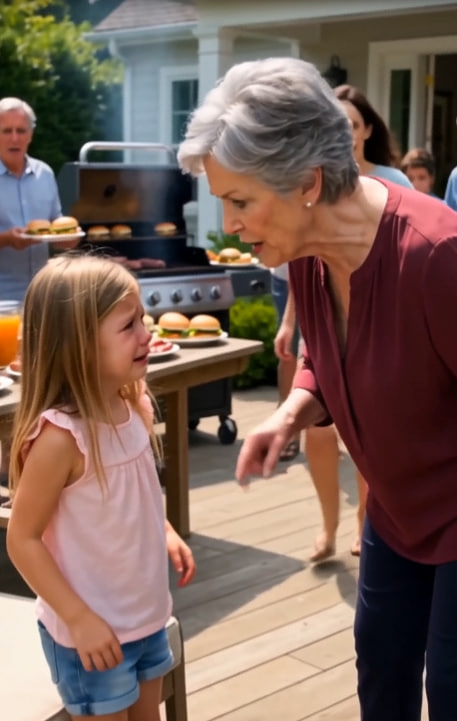
A full year passed after the barbecue.
On the anniversary, I expected to feel something dramatic.
Instead, I forgot until Tessa texted.
One year since Burgergate. You okay?
I stared at the message.
Then laughed.
Burgergate.
Only Tessa.
I looked across the breakfast table.
Keely, now six, was eating pancakes with strawberries.
Three pancakes.
Exactly what she had requested after urgent care that first night.
Syrup ran down her fork.
“Why are you smiling?” she asked.
“Because I like breakfast.”
“Breakfast is the third-best meal.”
“What are the first two?”
“Snack and dessert.”
“Those aren’t meals.”
“They are if you believe.”
I laughed.
She no longer hid food.
The pantry basket remained, but sometimes I forgot to refill it.
Keely simply asked for something else.
Safety had become boring.
That was its greatest achievement.
Two days later, Dr. Porter emailed my attorney.
Shawna had a request.
Not for visitation.
Not even a call.
She wanted permission to send Keely a birthday card when she turned seven.
No gift.
No guilt language.
No promise.
No request for reply.
Rebecca asked my thoughts.
“I want Hannah to weigh in.”
Dr. Brooks did.
“A card can be low pressure if the content is appropriate and Keely has a choice about whether to read it.”
So we created conditions.
The card would be reviewed first.
Keely could refuse it.
No references to being kept apart.
No asking Keely to contact Shawna.
No emotional responsibility placed on the child.
Shawna agreed.
The card arrived two weeks before the birthday.
It read:
**Dear Keely,
I hope seven brings you dinosaurs, pancakes, books, sunshine, and lots of reasons to laugh. I am working on being kinder and safer with people I love. You do not need to write back.
Love, Grandma Shawna**
I read it three times.
No manipulation.
At least none I could see.
I showed Hannah.
Then I asked Keely.
“Grandma sent a birthday card. Do you want it?”
Keely’s eyes widened.
“What does it say?”
“I can read it to you, you can read it yourself, or we can put it away.”
“Does it say I have to see her?”
“No.”
“Does she say I was bad?”
“No.”
Keely thought.
“Read it.”
I did.
She listened.
At the end, she asked, “What does safer mean?”
“That she’s learning not to scare or hurt people when she’s upset.”
“She hurt me.”
“Yes.”
“And you.”
I paused.
“Yes.”
Keely looked at the card.
“Can I keep it?”
“Of course.”
She put it on her bookshelf.
That was all.
No music.
No miraculous reunion.
A card on a shelf.
Months later came the first request Keely herself initiated.
We were driving past a park when she said, “Grandma used to push me on swings.”
“Yes.”
“She pushed too high.”
“You always yelled higher.”
“I changed my mind.”
I smiled.
“Fair.”
Silence.
Then:
“Do you ever see her?”
“Not in person.”
“You get letters.”
“Yes.”
“Does Uncle Daniel?”
“Sometimes.”
Another silence.
“Do you want to see her?”
I gripped the steering wheel.
This was the question I had avoided asking myself.
“I don’t know.”
“Me neither.”
I glanced at her in the mirror.
“That’s okay.”
At our next joint therapy session, Keely brought it up.
“What if I saw Grandma but she couldn’t take me anywhere?”
Hannah remained neutral.
“What makes you wonder about that?”
“I want to know if she’s still scary.”
My heart broke at the phrasing.
Hannah said, “You never have to test whether someone is safe by being alone with them.”
“Oh.”
“If you ever saw her, adults could plan it carefully.”
Keely looked at me.
I felt pressure.
Not from Shawna.
From myself.
I did not want fear to make every decision forever.
But I also did not want “healing” to become another excuse to ignore danger.
Afterward Hannah spoke with me privately.
“I’m not recommending contact yet.”
“Thank you.”
“But I’m also not telling you it could never happen.”
“I know.”
“What would you need?”
I thought.
“Accountability that survives disappointment.”
“Meaning?”
“If I say no, she stays respectful.”
“That’s useful.”
“More time.”
“Reasonable.”
“And if we ever do it, supervised.”
“Also reasonable.”
So we waited.
Shawna received no promise.
She continued therapy.
Continued updates.
No pressure.
Three months later, I agreed to meet her alone.
At a coffee shop.
Public.
One hour.
When she walked in, my body reacted before my mind.
Shoulders tight.
Pulse high.
She noticed.
“I can sit farther away.”
That surprised me.
“This is fine.”
She ordered tea.
I ordered coffee.
For several minutes we spoke about nothing.
Weather.
Traffic.
Daniel’s new job.
Then Shawna said, “I know why you agreed to come.”
“Why?”
“To decide whether I’m pretending.”
I almost smiled.
“Something like that.”
“I can’t prove I’m not.”
“No.”
“I used to think apologies erased consequences.”
“I know.”
“I don’t anymore.”
I watched her hands.
They remained folded.
“No request today?”
“No.”
“No court?”
“No.”
“No presents?”
“No.”
She looked at me.
“I would like to know Keely someday. Whoever she is willing to be with me.”
The wording mattered.
Not get my granddaughter back.
Know her.
If she was willing.
I said, “She asked about seeing you.”
Shawna inhaled sharply.
But she did not smile.
Did not seize the opening.
Instead she asked, “How did that make her feel?”
My eyes filled before I could stop them.
Maybe that was the moment I first believed change might be real.
Not complete.
Not guaranteed.
But real.
May you like



Because for once, given the thing she wanted most, Shawna asked about Keely before herself.
---







