Chapter 18 - Ten Minutes
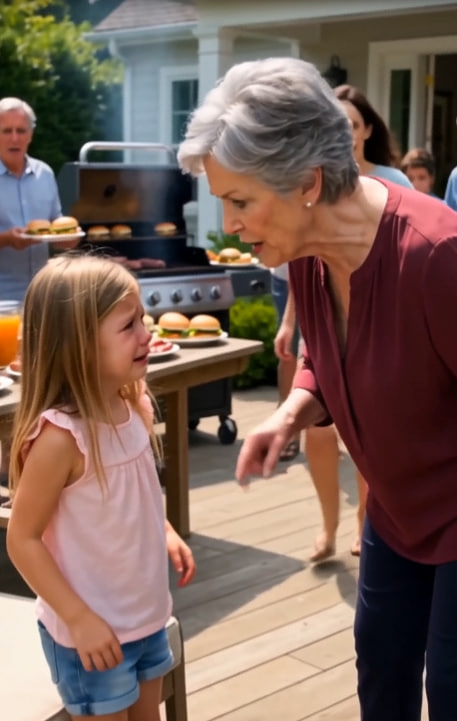
The first meeting lasted ten minutes.
That was my rule.
Shawna accepted it.
The location was Dr. Brooks’s office.
Hannah would remain present.
I would sit beside Keely.
Shawna would not bring food.
No gifts.
No physical contact unless Keely initiated it.
No apologies that required Keely to comfort her.
No discussion of court or family conflict.
When I read the conditions to Shawna, she said only, “Understood.”
The night before, I barely slept.
Keely did.
At breakfast she ate cereal and asked whether dinosaurs could get hiccups.
Children had a talent for refusing to organize their emotional lives around adult crises.
In the car, though, she became quiet.
“Can we leave if I want?”
“Yes.”
“Even after one minute?”
“Yes.”
“What if Grandma cries?”
“We can still leave.”
“Will it hurt her feelings?”
“Maybe.”
Keely looked worried.
“Are her feelings my job?”
I almost cried.
“No.”
She nodded.
Hannah met us in the waiting room.
Shawna arrived exactly on time.
When she entered, she stopped several feet away.
Keely gripped my hand.
Shawna did not move closer.
“Hi, Keely.”
“Hi.”
“You got taller.”
Keely looked at me as though checking whether this was suspicious.
Then she said, “I’m seven.”
“I know.”
Silence.
Hannah gently asked Keely whether she wanted to sit.
We moved into the therapy room.
Four chairs formed a loose circle.
Keely sat beside me.
Shawna chose the farthest chair.
That mattered.
For the first minute nobody knew what to say.
Then Keely noticed Shawna’s necklace.
“You still have the bird.”
Shawna touched the small silver pendant.
“Yes.”
“You said Grandpa gave it to you.”
“He did.”
“Did he really?”
“Yes.”
Keely looked at me.
I nodded.
That seemed to settle something.
Then she asked the question every adult had carefully avoided scripting.
“Why didn’t you feed me?”
Shawna went completely still.
My pulse roared.
Hannah did not intervene.
Shawna’s eyes filled.
“Because I was wrong.”
Keely waited.
“I thought making you hungry would make you obey me.”
“Why?”
“Because when I was little, someone taught me that.”
“Who?”
“My dad.”
“Your dad was mean?”
“Sometimes.”
Keely frowned.
“Then why did you copy him?”
Shawna closed her eyes briefly.
“I wish I had a better answer.”
“You knew it felt bad?”
“Yes.”
“Then you shouldn’t do it.”
“No.”
“You scared me.”
“I know.”
Keely’s voice became smaller.
“I thought Mommy wasn’t coming.”
I tightened my grip around her hand.
Shawna’s tears spilled.
But she did not reach forward.
“I told you something cruel about your mommy.”
Keely nodded.
“That was a lie,” Shawna said. “Your mommy came back. She always planned to come back.”
“Why did you lie?”
“I was angry.”
“At me?”
“At your mom. But I said it to you, and that was wrong.”
Keely thought carefully.
Then asked, “Are you still angry?”
“Sometimes.”
My body tightened.
Shawna continued.
“But I’m learning that being angry doesn’t let me scare people.”
Keely nodded slowly.
“That’s what Dr. Hannah says.”
Hannah smiled.
Seven minutes had passed.
At eight, Keely loosened her grip on my hand.
At nine, she asked whether Shawna still had the backyard swing.
“Yes.”
“At your house?”
“Yes.”
“Do you push too high?”
“I would only push how high you asked.”
Keely considered that.
At ten minutes, Hannah said, “We’re at the end of the time we planned.”
Shawna stood.
“So soon?” Keely asked.
Every adult froze.
I answered first.
“We planned ten minutes.”
“Oh.”
“Do you want to leave?”
Keely looked at Shawna.
Then at Hannah.
Then at me.
“Yes.”
Shawna nodded immediately.
“Okay.”
No disappointment placed on the child.
No but we just started.
No Grandma came all this way.
Just okay.
That might have been the most important thing she did.
At the door, Shawna said, “Bye, Keely.”
Keely hesitated.
Then waved.
No hug.
Shawna did not ask.
In the car, I waited.
Keely buckled herself.
“Can we get pancakes?”
“It’s three in the afternoon.”
“So?”
I laughed.
“Fine.”
At the diner, she ate one and a half pancakes.
Then stopped.
“You finished?”
“I’m full.”
“Okay.”
She watched me.
That old test.
Still there faintly.
“You’re not mad?”
“No.”
“Even though we bought them?”
“Even though we bought them.”
She smiled.
Then pushed the plate away.
I thought of ten-year-old me trapped at a kitchen table.
I wished I could reach backward through time and tell that girl she was allowed to stop eating.
Allowed to be hungry later.
Allowed to dislike something.
Allowed to leave the table.
I could not.
But I could tell Keely.
And maybe that was how we spoke to our younger selves.
Through the children we refused to treat the same way.
The next meeting happened a month later.
Twenty minutes.
Then thirty.
Always supervised.
Never centered around food.
They drew pictures.
Played cards.
Built blocks.
Shawna made mistakes.
Once she said, “Good girls put toys away.”
Keely immediately frowned.
Hannah corrected her.
Shawna apologized.
No argument.
Another time she reached to fix Keely’s hair without asking.
Keely pulled away.
Shawna stopped.
“Sorry. May I?”
“No.”
“Okay.”
Each tiny moment felt more important than grand declarations.
Accountability survived inconvenience.
That was what I had wanted.
Six months after the first meeting, Hannah asked Keely how she felt.
“Grandma isn’t as scary.”
“Do you trust her?”
“A little.”
Children understood gradations adults often refused.
A little.
Not forgiven forever.
Not condemned forever.
A little.
Then came the real test.
Shawna asked whether one supervised visit could happen at her house.
The swing.
Her garden.
Familiar toys.
I did not answer immediately.
We discussed it in therapy.
With Mark.
With Rebecca.
With Keely.
Conditions were created.
I would be there.
Hannah would not, but another approved supervisor would.
No meals prepared by Shawna.
We would bring Keely’s food.
Two hours maximum.
Keely could leave anytime.
Shawna agreed.
The morning of the visit, I packed sandwiches, fruit, crackers, water, and cookies.
Then Keely placed one additional item into the cooler.
I stared.
A hamburger bun.
“Why that?”
She shrugged.
“I want a burger.”
My chest tightened.
“At Grandma’s?”
“Yeah.”
“Are you sure?”
“Mommy.”
Her tone was almost annoyed.
“I just want lunch.”
Just lunch.
For her, perhaps the burned hamburger no longer had to be a symbol.
Maybe that burden belonged to us adults.
I zipped the cooler.
“Then we’ll make you a burger.”
May you like



And together, we drove back to the house where everything had begun.
---







