Chapter 4 - The Rule We Never Named
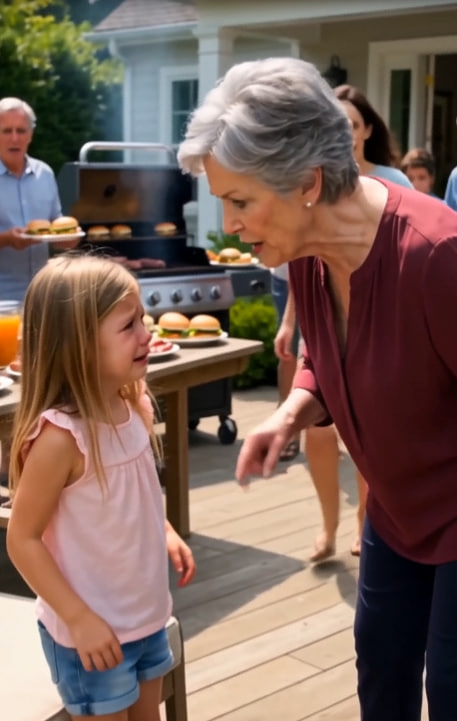
The attorney’s letter scared me for exactly eleven minutes.
Then anger took over.
I called a family-law attorney named Rebecca Lin, whose office was two blocks from mine.
She read the letter while I sat across from her desk.
“This is not a court order,” she said.
“I know.”
“Do you?”
“I know technically.”
“But emotionally?”
I shook my head.
Rebecca set the letter down.
“Then let me make it simple. Your mother cannot command you through stationery.”
I almost smiled.
“She says she has grandparent rights.”
“Grandparent visitation law is complicated and varies by circumstances. But nobody gets automatic unsupervised access to a child merely because they are biologically related.”
“What should I do?”
“Document. Follow the child-welfare investigation. Follow your daughter’s medical recommendations. Do not threaten your mother. Do not retaliate online. And don’t destroy evidence.”
“I threw a hamburger at her.”
“Yes.”
Rebecca’s expression remained neutral.
“I’m not recommending a second one.”
Despite myself, I laughed.
It was the first real laugh since Sunday.
Then Rebecca leaned forward.
“Your mother may be relying on a strategy common in high-conflict families.”
“What strategy?”
“Create so much noise around your reaction that everyone stops examining the original conduct.”
That sentence stayed with me.
It explained my entire childhood.
Shawna could insult you until you shouted.
Then the story became your shouting.
She could control you until you resisted.
Then the story became your disrespect.
She could hurt you until you cried.
Then the story became your sensitivity.
By the time I picked Keely up from Mrs. Alvarez’s, I had decided something.
I needed to understand my own past.
Not because the past would decide the investigation.
Because I did not trust myself to recognize all the things I had normalized.
That evening Daniel came over with Melissa.
Melissa looked furious.
Not frightened.
Furious.
“I asked both boys separately,” she said. “Evan lost lunch once because he complained about breakfast. Noah says Grandma threatened it but he ate because he was scared.”
Daniel stared at the table.
“I was standing in the same house.”
“You didn’t know,” I said.
“I should have.”
The hypocrisy of comforting him after blaming myself was not lost on me.
Melissa noticed.
“So should Claire?”
Daniel looked up.
“No.”
“Then stop saying it about yourself.”
He nodded slowly.
We began comparing memories.
At first they were small.
Cold oatmeal.
A plate reheated repeatedly.
Dessert withheld for ordinary childhood behavior.
Then the memories deepened.
Daniel remembered being forced to sit at the table long after everyone else had left.
I remembered asking Dad for toast once when Shawna had refused me dinner.
Dad had quietly made it.
Shawna discovered us.
They fought for hours.
After that, he stopped intervening.
Our father, Thomas, had died nine years earlier.
For years I had remembered him as gentle but distant.
Now I wondered how much of that distance had been surrender.
“Aunt Denise knows,” I said suddenly.
Daniel frowned.
“Why?”
“She fought with Mom about me once.”
“When?”
“I was around ten.”
“What happened?”
“I don’t remember everything.”
But a fragment remained.
Denise kneeling beside me.
A plate shattered in the sink.
Shawna shouting, You don’t tell me how to raise my child.
I called her.
Aunt Denise answered on the second ring.
“Claire.”
“You saw Mom’s post?”
“I saw the video first.”
“Tessa sent it?”
“She asked me before sending it around.”
I hesitated.
“Did Mom do the same thing to us?”
Denise did not answer immediately.
Then she said, “Yes.”
Daniel sat straighter.
“How bad?”
Denise exhaled.
“Bad enough that your father and I fought about it.”
“My father?”
“He knew.”
The room went silent.
“What did he do?”
“Sometimes he stopped her. Sometimes he didn’t.”
I hated how complicated grief could become years after burial.
“Why didn’t you help us?”
Denise’s voice cracked.
“I tried.”
“That’s not an answer.”
“No. It isn’t.”
She told us that when I was nine, she had threatened to call social services after finding me dizzy because Shawna had withheld meals for nearly a day.
My father begged her not to.
He promised it would stop.
It did.
For a while.
Then Shawna changed methods.
No more obvious long stretches.
Just missed meals.
Small humiliations.
Food used as leverage.
Things easy to call discipline.
“Why didn’t you tell me when Keely was born?” I asked.
“Because I thought Shawna had changed.”
“So did I.”
“I wanted to believe age had softened her.”
“It made her smarter.”
Denise began crying.
“I’m sorry.”
I believed she meant it.
That did not make the past disappear.
But it mattered.
Before we ended the call, she said, “There’s something else.”
“What?”
“Your father kept journals.”
Daniel and I exchanged a look.
“Dad?”
“Mostly financial notes, repairs, work things. But toward the end of his life, he started writing about the family.”
“Where are they?”
“Shawna’s house, probably.”
My disappointment was immediate.
“She’ll destroy them if they mention her.”
“Maybe not all of them.”
Denise hesitated.
“After your father died, he left a box with me.”
My heartbeat changed.
“What box?”
“I never opened it. I thought it was tax paperwork. He told me, ‘If Claire ever starts doubting herself, give her this.’”
I could barely breathe.
“You’ve had it nine years?”
“Yes.”
“Where?”
“In my attic.”
Daniel whispered, “Jesus.”
Denise said she would bring it the next morning.
After the call, none of us spoke for several minutes.
Keely appeared at the kitchen doorway wearing unicorn pajamas.
“Mommy?”
I forced my face to soften.
“Yes, baby?”
“Can I have toast?”
Three adults froze.
Keely immediately looked worried.
“Is it too late?”
I pushed back my chair so quickly it scraped the floor.
“No.”
I went to the pantry.
“You can have toast when you’re hungry.”
“Even at night?”
“Even at night.”
She smiled.
I made two pieces.
One for her.
One for me.
As we ate together, I finally understood what frightened Shawna most.
It wasn’t humiliation.
It wasn’t losing access to Keely.
It was something much larger.
For decades, she had convinced all of us that her rules were normal.
Now, for the first time, the children she had raised were comparing notes.
May you like



And by morning, we might have our father’s version too.
---







