Chapter 16 - Thanksgiving Without Her
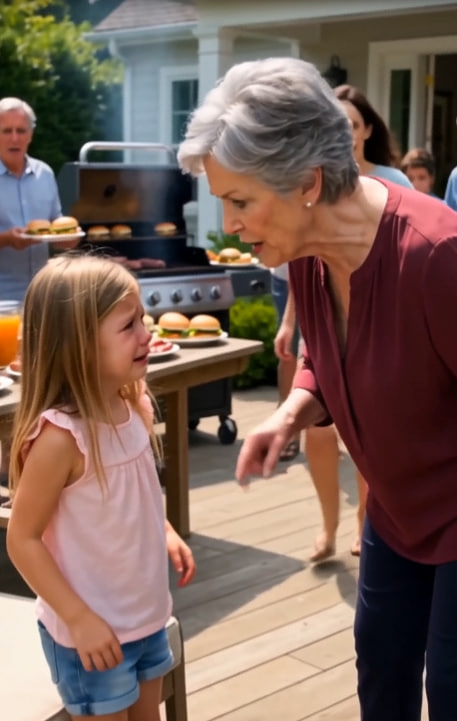
Thanksgiving arrived four months after the barbecue.
For the first time in my life, Shawna was not hosting.
Aunt Denise invited everyone.
Not everyone came.
Uncle Robert chose to spend the holiday with Shawna.
Two cousins went with him.
Aunt Rebecca came to Denise’s house.
Daniel, Melissa, Evan, Noah, Mark, Keely, Tessa, and her family came too.
The split was visible.
Nobody pretended otherwise.
At noon, Denise burned the rolls.
Everyone stared at the blackened tray.
Then Daniel said, “Careful. Mom might make us finish those.”
Silence.
He immediately looked ashamed.
“Sorry.”
Then, unexpectedly, I laughed.
Tessa laughed too.
Soon Denise was leaning against the counter crying with laughter.
It was not that hunger had become funny.
It was that the burned food no longer held power over us.
Denise threw the rolls away.
“We have more.”
Four ordinary words.
We have more.
I thought of Keely at the barbecue.
Everyone else had food.
There had always been more.
That was what made Shawna’s choice so terrible.
Scarcity had not forced it.
Control had.
During dinner, Keely rejected the cranberry sauce.
Nobody cared.
Noah asked for a second roll before finishing his turkey.
Melissa said yes.
Evan knocked over his milk.
Daniel helped clean it up without calling him careless.
These were tiny things.
They felt revolutionary.
After dessert, Aunt Rebecca pulled me aside.
“Your mom asked me to give you something.”
My body tightened.
“I thought she agreed not to contact me directly.”
“She did. This isn’t a message.”
Rebecca handed me a folder.
Inside was a copy of the childhood photograph Shawna had posted.
The one where I sat at the table.
But this version was uncropped.
On the back, Shawna had written:
I used this to shame you because I was afraid of what it showed about me. You were ten. You should have been fed.
I stared at the sentence.
“That’s all?”
Rebecca nodded.
“She didn’t ask for a response.”
I put the photograph away.
Daniel approached.
“Everything okay?”
I showed him.
He read it.
Then whispered, “Wow.”
“Yeah.”
“Do you believe her?”
I thought.
“I believe she wrote it.”
“That’s not what I asked.”
“It’s the only answer I have.”
He smiled slightly.
“Therapy has made you annoying.”
“You should try it.”
“I did.”
I stared.
“What?”
“Started last month.”
He shrugged.
“Turns out I hate conflict because conflict used to mean dinner might disappear.”
My throat tightened.
“How’s it going?”
“I apparently make jokes whenever I’m uncomfortable.”
“No.”
“Shocking diagnosis.”
I laughed.
Then hugged him.
For once, he did not joke.
Across the room, Keely was teaching Evan a card game with rules she invented as she went.
When he protested, she said, “You can stop playing if you don’t like it.”
I smiled.
Choice.
Such a simple thing.
After Thanksgiving, Shawna remained absent.
She sent no Christmas gifts directly.
Instead, through Rebecca, she asked whether she could contribute to Keely’s college account.
I said no.
Not because money was dangerous.
Because I was not ready for financial threads between us.
Shawna accepted the answer.
No protest.
At Christmas, a card arrived for me.
No gift.
I hope your house is peaceful. — Mom
I placed it in a drawer.
Keely did not ask about her.
That hurt in a complicated way.
Children could adapt to absence faster than adults expected.
Sometimes because the relationship had meant less to them.
Sometimes because safety allowed them to stop obsessing.
In January, Dr. Brooks asked Keely during a joint session how she felt when she thought about Grandma.
Keely colored a sun yellow.
“Sometimes sad.”
“What makes you sad?”
“Grandma made cookies.”
“What else?”
“She had the swing.”
“Do you want to see Grandma?”
Keely stopped coloring.
“Will she make me eat bad food?”
“No one is planning a visit,” Hannah said. “I’m only asking how you feel.”
Keely looked at me.
I kept my expression neutral.
“I don’t know.”
That was progress too.
Not yes.
Not terrified no.
Uncertainty.
Hannah later told me not to interpret too much.
“Let her feelings be hers.”
“I’m trying.”
“She may miss parts of the relationship without wanting it restored.”
“Sounds familiar.”
Hannah smiled.
“Children are inconveniently human.”
By spring, Shawna had been in therapy nearly eight months.
Dr. Porter contacted me once more, with authorization.
“Shawna is asking whether you would consider receiving periodic written updates about her progress. No request for contact.”
“What kind of updates?”
“Accountability milestones. Parenting education completed. Work she’s doing around coercive control. Reflections she chooses to share.”
I thought.
“Every three months.”
“That’s acceptable.”
“And no requests attached.”
“I’ll make that clear.”
The first update arrived in April.
Shawna wrote about volunteering at a community food pantry.
My first reaction was suspicion.
Of course she chose food.
Then I read further.
I thought volunteering would prove I had changed. Instead, the coordinator told me not to make anyone explain why they need food. That rule bothered me. Then I realized why. I have spent my life believing hunger must be justified.
I sat with that for a long time.
Maybe change was happening.
Maybe she had simply learned better language.
Both possibilities could exist.
I did not need to decide yet.
That evening, Keely asked why I was staring at a letter.
“It’s from Grandma.”
She became still.
“Is she coming?”
“No.”
Keely relaxed.
“What does she want?”
“Nothing.”
That surprised her.
“Nothing?”
“She wrote me a letter.”
“Can I see?”
I hesitated.
“Not this one. It’s grown-up stuff.”
Keely accepted that.
Then she asked, “Is Grandma learning?”
The question pierced me.
“I think she’s trying.”
Keely nodded as though that was enough.
May you like



Maybe for now, it was.
---







