Chapter 17 - Marcus Whitmore’s Last Negotiation
Marcus did not look at the cameras when agents arrested him.
He looked at Laura.
She had not planned to be there.
Maya insisted she remain across the street.
Noah was with Rebecca.
Marcus’s face was unreadable as officers guided him toward a vehicle.
Then he stopped.
“Laura.”
One agent allowed him a second.
She stayed where she was.
“You did this.”
“No.”
His jaw tightened.
“You, Daniel, Sarah, Elias, Helena—everyone gets to pretend this is justice.”
“I’m not pretending anything.”
“You think these people are clean?”
“No.”
That surprised him even now.
Laura continued.
“Grant failed. Helena helped you. Bell took your money. Daniel made reckless choices. I ignored Noah when I should have listened.”
Marcus stared.
“And?”
“And none of that makes your crimes disappear.”
His expression hardened.
“You always needed someone to be innocent.”
“Not anymore.”
The agent moved him.
Marcus laughed bitterly.
“That might be the only thing I ever taught you.”
Laura felt the words land.
Then let them go.
He was charged initially with conspiracy to commit wire fraud, bank fraud, interstate transportation of stolen property, obstruction, and offenses tied to falsified financial records.
Additional charges remained possible.
The child-abuse case proceeded separately in state court.
His attorneys secured release on a substantial bond with travel restrictions, passport surrender, and financial disclosure requirements.
He returned to his penthouse.
Not prison.
No cinematic instant justice.
Laura expected anger.
Instead she felt relief that the system was moving carefully.
Evidence that could survive scrutiny mattered more than spectacle.
Marcus still had one strategy.
Cooperation.
He offered prosecutors information about Robert Whitmore’s earlier schemes, Adrian Bell, overseas dealers, and lender practices.
Robert was dead.
Bell already cooperating.
Marcus’s value was limited.
Then he offered something prosecutors wanted.
Locations of three missing artworks.
In exchange, he wanted consideration.
The works were recovered from storage facilities in Luxembourg and Delaware.
Sterling reclaimed two.
A private collector retained temporary possession of one pending title litigation.
The case widened internationally.
Marcus’s plea negotiations began.
Laura was not involved.
She focused on divorce.
The marriage was dissolved eleven months after the gala.
The prenup largely governed.
Laura kept her separate assets.
Marcus relinquished all claims against Daniel’s patent trust as part of a civil settlement approved by the court after independent counsel for Noah reviewed it.
That mattered more than money.
Noah’s inheritance stayed his.
Laura did not receive the townhouse.
She did not want it.
She bought a smaller apartment in Brooklyn using savings and proceeds from selling investments she owned before Marcus.
No doorman who knew Marcus.
No marble foyer.
No rooms designed to impress donors.
Noah chose his own bedroom paint.
Dark green.
“It looks like a forest.”
“It looks like algae.”
“Mom.”
“Forest.”
Laura started consulting for nonprofit boards on financial controls and restricted-fund governance.
Her scandal had made her employable in an unexpected way.
“You know what not to do,” one client told her.
She laughed.
“Apparently that’s a marketable expertise.”
Grant never returned as Sterling’s director.
He remained an adviser during the collection recovery, then retired.
At a board hearing, he admitted publicly:
“I mistook institutional survival for institutional duty.”
No excuses.
Helena pleaded guilty to falsifying records and conspiracy-related charges.
Her cooperation significantly reduced her sentence.
Adrian Bell pleaded guilty to financial and obstruction offenses.
He forfeited the $12.4 million investment benefit traced to the scheme.
Celia helped Sterling rebuild provenance records.
Samuel Orr supervised transfer of Daniel’s old whistleblower files.
The Sarah Arts Trust recovered its Wrenhold ownership interest through a civil settlement funded partly by frozen Whitmore assets.
Millions went to children’s arts programs.
Sarah’s portrait never returned to Marcus.
Sterling displayed it temporarily after ownership was confirmed by the trust.
Beside it, the label read:
On loan from the Sarah Whitmore Arts Trust.
No Whitmore Foundation branding.
Just Sarah.
Noah stood before it one afternoon.
“She looks sad.”
Laura looked at the twelve-year-old girl in the portrait.
“Maybe.”
“Did Dad know her?”
“Yes.”
“Were they friends?”
“Yes.”
“Did you know?”
“No.”
Noah sighed.
“Adults hide too much stuff.”
Laura smiled.
“You may have identified the theme of this entire experience.”
Then he looked at her.
“Did Dad hide things because he didn’t trust you?”
The question hurt.
“Sometimes he hid things because he wanted to protect me.”
“Is that good?”
“Not always.”
“Why?”
“Because protecting someone without letting them understand the danger can leave them unprepared.”
Noah nodded.
“Like you with me.”
Laura went still.
“Yes.”
She put an arm around him.
“Like me with you.”
The recovered authentic Storm at Bell Point returned to Gallery Six.
The forgery was preserved too.
Sterling planned an exhibition about provenance fraud, conservation science, and institutional accountability.
Some trustees wanted Daniel presented as the heroic conservator who saved the collection.
Laura objected.
“He was not a superhero.”
The curator looked surprised.
“He identified the fraud.”
“He also concealed paintings without authorization and tried to build his own evidence trap instead of going directly to authorities.”
“You don’t want to honor him?”
“I want to honor him accurately.”
The final label described both.
Daniel’s discovery.
His misconduct.
His documentation.
His warning.
Truth without worship.
Noah approved.
“Dad would hate a boring plaque.”
Laura laughed.
“He would.”
Marcus’s lawyers requested one final meeting before his criminal plea.
Not with Laura.
With Noah.
Absolutely not.
Marcus claimed he wanted to apologize.
Noah’s therapist advised against contact unless Noah wanted it.
He did not.
“He can write it.”
Marcus did.
The letter arrived sealed.
Noah asked Laura to read it first.
Marcus wrote that he was sorry for striking him.
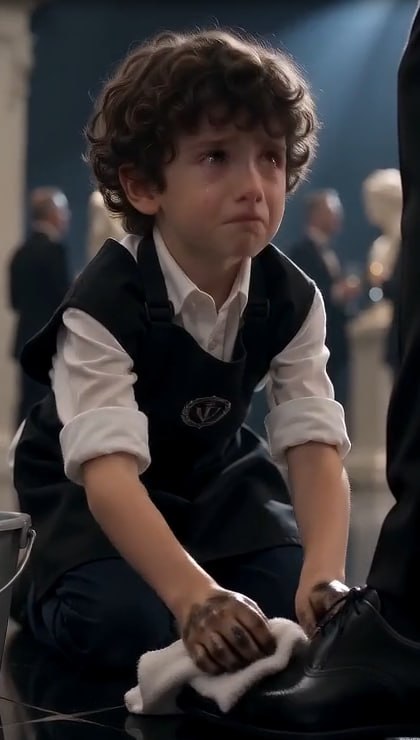
Sorry for making him clean the restoration room.
Sorry for using his grief about Daniel.
Then came the sentence that proved Marcus still did not fully understand.
I was under pressures you could not have understood.
Laura stopped reading.
Noah noticed.
“What?”
She handed him the letter.
He read it.
Then shrugged.
“He’s still explaining.”
“Yes.”
“Do I have to answer?”
“No.”
He tore the letter once.
Then stopped.
“Actually, keep it.”
“Why?”
“In case he says later he never apologized.”
Laura smiled faintly.
Evidence.
Noah had learned the family language.
Marcus eventually entered a guilty plea to multiple federal counts.
The plea did not cover every accusation.
That was how real cases worked.
Some charges dismissed.
Some impossible to prove.
Some resolved civilly.
He faced years in federal prison, substantial restitution, asset forfeiture, and permanent removal from management of charitable organizations.
At his plea hearing, the judge asked:
“Did you knowingly represent ownership interests in artworks you knew had already been transferred?”
Marcus answered:
“Yes.”
“Did you participate in falsifying records?”
“Yes.”
“Did you attempt to obstruct investigation of those acts?”
A longer pause.
“Yes.”
Laura did not attend.
She took Noah to baseball practice.
He struck out twice.
Then hit a double.
May you like



Life had begun becoming ordinary again.
That was the victory Marcus could not negotiate away.







