Chapter 20 - The Shoes Noah Chose to Polish
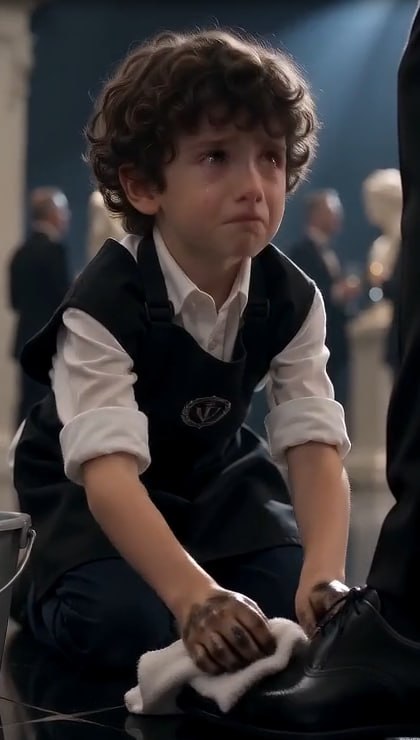
The reopening of Sterling’s east restoration wing happened on a rainy Saturday morning.
No tuxedos.
No billionaires.
No orchestra.
Museum staff, conservators, students, reporters, and a few former trustees gathered beneath simple white lights.
Laura liked it better than the gala.
Noah wore sneakers.
He had refused dress shoes.
“Dad’s are enough fancy shoes for one family.”
Daniel’s old leather work shoes sat inside a small display near the entrance beside his ultraviolet lamp and several conservation tools.
The brass access card rested in Noah’s pocket.
He had decided not to put it in the exhibition.
“It’s mine now.”
Laura agreed.
The museum could display a photograph.
Dr. Amara Feld welcomed everyone.
She did not call Daniel a hero.
That had been Laura’s condition.
“Daniel Carter identified serious collection irregularities and preserved evidence that later helped recover important works,” she said.
“He also made decisions outside established procedures because he believed those procedures were compromised. Some of those decisions created problems of their own.”
Laura smiled.
Truth.
Complicated.
Useful.
“Sterling honors his contribution best not by pretending he was flawless, but by building systems in which future conservators do not have to choose between silence and acting alone.”
Noah nudged Laura.
“That’s long.”
“She’s a museum director.”
“Do they get paid by the word?”
Laura covered a laugh.
The room opened.
Visitors entered the restored workspace.
The old hidden storage racks had been removed.
Glass walls allowed the public to observe conservators at work from a distance.
The narrow service chase Marcus had forced Noah to crawl into was sealed.
A small plaque explained that obsolete architecture and weak access controls had enabled unauthorized storage.
No mention of Noah’s crawling.
That was his decision.
Some experiences did not belong to public education.
Laura watched him stop near the spot where the bucket had once stood.
He looked down at the floor.
The old black marble remained scratched.
Noah had asked the museum not to replace it.
Laura approached.
“You okay?”
“Yes.”
He crouched.
Her body reacted before her mind.
Then Noah pointed.
“There.”
A faint black stain remained in one grout line.
Shoe polish.
From the gala.
Sterling’s cleaners had removed almost everything.
Not that.
Laura stared.
Noah touched the stone.
“Marcus made me clean his shoes right here.”
“Yes.”
“I thought everybody looking at me meant I did something wrong.”
Laura swallowed.
“I know.”
“I thought you would be mad.”
Her eyes filled.
“I know.”
He looked up.
“You were.”
Laura froze.
“Not about the shoes.”
“No.”
“You were mad because I kept saying Marcus was mean.”
Laura sat beside him on the edge of a workbench.
“Yes.”
“I hated that.”
“You should have.”
Noah looked surprised.
Laura continued.
“I can’t change the times I didn’t listen.”
“No.”
“I can only listen now.”
He nodded.
Then stood.
The ceremony moved toward Gallery Six.
Storm at Bell Point hung under carefully calibrated light.
Beside it, the forgery.
Visitors leaned close, trying to find differences.
Daniel’s microtag images appeared on a nearby digital display.
Noah pressed the UV button.
A triangle.
Three dots.
C.
His father’s hidden mark glowed.
Laura watched Noah smile.
For years, Daniel’s evidence had been hidden because he believed secrecy could preserve truth.
Marcus hid evidence because secrecy preserved power.
The difference had mattered.
But the method had trapped them both.
What finally broke the conspiracy was not one hidden object.
It was people sharing what they knew.
Grant.
Helena.
Bell.
Celia.
Samuel Orr.
Lenders.
Registrars.
Police.
Federal investigators.
Laura.
And a nine-year-old who recognized his father’s name behind a painting.
After the ceremony, reporters gathered.
Laura avoided them.
Noah did too.
They walked toward the museum café.
Then someone called:
“Mrs. Carter?”
Laura turned.
An older woman approached.
She introduced herself as director of one of the community art centers funded by Sarah Whitmore’s recovered trust.
“I wanted Noah to know something.”
Noah looked at her.
“Your father and Sarah tried to preserve money that now funds programs for almost eight hundred children.”
Noah smiled.
“That’s good.”
“It is.”
She hesitated.
“And the licensing revenue from your father’s microtag patent helped Sterling authenticate works in three other collections.”
Laura looked at Noah.
He seemed uncomfortable with praise.
The woman understood.
“Anyway, thank you for letting us tell the story accurately.”
After she left, Noah whispered:
“I didn’t do those things.”
“No.”
“Dad did.”
“Partly.”
“Sarah did.”
“Yes.”
“So why did she thank me?”
“Because adults love thanking nearby children for complicated historical outcomes.”
Noah laughed.
They reached the café.
Noah ordered hot chocolate.
Laura ordered coffee.
For the first time in years, the museum felt like a building rather than a crime scene.
Then Noah took the brass card from his pocket.
C-017.
He placed it on the table.
“What are you going to do with it?” Laura asked.
“Keep it.”
“Forever?”
“Maybe.”
He turned it over.
Daniel’s name was not engraved on the front.
Only the number.
Grant had once explained that conservation staff cards used numbers for security.
Daniel had written his name in tiny permanent marker along the edge.
Noah traced it with his thumb.
“Mom?”
“Yes?”
“Why did Dad leave so many clues instead of just telling people?”
Laura smiled sadly.
“He did tell people.”
“They didn’t listen?”
“Some didn’t. Some were scared. Some benefited from not listening.”
Noah thought.
“Like you with me.”
Laura accepted the hit.
“Yes.”
“Sorry.”
“Don’t be.”
“You listen now.”
“I try.”
He looked toward the gala atrium through the café doors.
The polished black marble shone in the distance.
One year earlier, he had knelt there with black polish on his hands while wealthy strangers stepped around him.
Marcus had told him respect meant obedience.
The museum’s silence had told him powerful adults were allowed to define what happened.
Laura’s disbelief had taught him that even people who loved you could fail to hear you.
Now everything meant something else.
Not because the floor changed.
Because he did.
Because Laura did.
Because the truth was finally shared instead of hidden.
Noah stood.
“Come on.”
“Where?”
“I want to do something.”
They walked back toward Daniel’s display.
The conservator on duty recognized him.
Noah pointed to the old work shoes.
“Can I take them out for one minute?”
The conservator hesitated.
Then checked with Dr. Feld.
Permission granted.
The shoes were placed on a padded table.
Noah looked at Laura.
“Do you still have the cloth?”
She opened her handbag.
Months earlier, Noah had given her the soft conservation cloth he used before the exhibit.
She had kept it.
Of course she had.
He laughed.
“Why do you carry that?”
“I’m sentimental.”
“You’re weird.”
She handed it to him.
Noah gently rubbed one dusty edge of Daniel’s shoe.
Then held the cloth out.
“Your turn.”
Laura took it.
Together they worked.
People nearby noticed.
No one applauded.
Laura was grateful.
This was not a performance.
Noah smiled when the leather darkened slightly beneath the cloth.
“Marcus would’ve said I missed a spot.”
Laura looked at him.
“What would Dad say?”
Noah thought.
Then grinned.
“He’d probably say we used the wrong material and start lecturing us about leather chemistry.”
Laura burst out laughing.
“Yes.”
“Definitely.”
Noah finished.
He put down the cloth.
Then he stood straight.
Laura saw the difference so clearly it hurt.
The first time she had seen Noah with a shoe cloth in this museum, he had been on his knees.
Ordered.
Humiliated.
Afraid.
Now he stood beside his father’s shoes because he had chosen to care for something that mattered to him.
No command.
No punishment.
No billionaire deciding what respect looked like.
Noah slipped his hand into Laura’s.
“Ready?”
“Yes.”
They returned the shoes to the case.
As the conservator closed the glass, Noah looked at the small black stain on his fingertips.
Laura noticed.
Her heart tightened for half a second.
Then Noah smiled.
“It’s just dirt.”
She smiled back.
“Yes.”
Just dirt.
Not shame.
Not obedience.
Not proof that he was beneath anyone.
Something washable.
Something ordinary.
Something that did not define him.
They walked toward the exit.
At the edge of the atrium, Noah stopped near the exact place where the brass card had fallen from his apron pocket.
He took the card out once more.
“Funny.”
“What?”
“This opened the old room.”
“Yes.”
“But it didn’t really start everything.”
Laura looked at him.
“What did?”
He considered.
“You walking in.”
Her eyes filled.
“No.”
He frowned.
“What?”
“You telling me the truth.”
“But you didn’t believe me before.”
“I know.”
“So—”
Laura squeezed his hand.
“You kept telling it anyway.”
Noah stared at her.
Then nodded.
Outside, rain streaked the museum steps.
Laura opened an umbrella.
Noah ran beneath it.
Behind them, the Sterling Metropolitan Museum remained imperfect.
Some cases still sat empty while ownership disputes continued.
Some money would never be recovered.
Some reputations would never return.
Daniel would remain dead.
Nothing about justice could change that.
Marcus would serve his sentence.
Nothing about prison could give Noah back the months he spent afraid inside his own home.
But the hidden paintings had names again.
Sarah’s trust belonged to the children she intended to help.
Daniel’s patent belonged to Noah.
Laura had a life no longer financed or designed by Marcus.
And Noah no longer mistook obedience for respect.
They reached the sidewalk.
Noah looked down at his sneakers.
“Mom?”
“Yes?”
“Do these need polishing?”
“They’re sneakers.”
“So no?”
“No.”
“Good.”
He splashed directly through a puddle.
Laura gasped.
“Noah!”
He laughed and ran.
She chased him beneath the rain, both of them getting soaked.
Behind them, through the museum’s tall windows, Daniel Carter’s old work shoes sat beneath soft conservation light.
Clean.
Scuffed.
Imperfect.
Real.
And in Noah’s pocket, the antique brass card remained silent.
It did not need to open anything anymore.
May you like



The truth was already out.
THE END







