Chapter 7 - The Chairman’s Debt
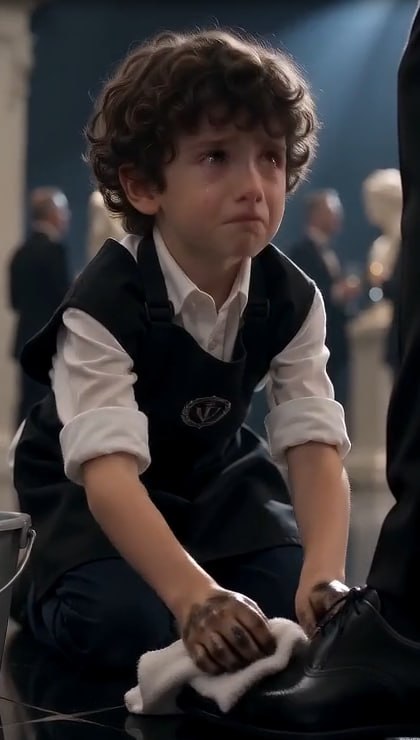
Adrian Bell denied taking the red envelope.
He denied manipulating security.
He denied knowing Wrenhold had pledged museum art.
Then federal agents arrived.
Once the $93 million private-credit transaction and potentially fraudulent charitable deductions were documented, the case expanded beyond local property disputes.
The FBI’s art-crime specialists joined with financial investigators.
The New York Attorney General’s Charities Bureau opened a review of Sterling and the Whitmore Foundation.
Marcus’s world was no longer a family argument he could control through lawyers.
He still tried.
Whitmore Capital issued a statement calling the allegations “a malicious reconstruction of incomplete records created by a dying employee acting outside museum authority.”
Laura read it twice.
Then called a press attorney.
Maya stopped her.
“You do not answer every insult.”
“He is calling Daniel unstable.”
“He wants you angry in public.”
“He hit Noah.”
“And you have a child-abuse investigation, video, witnesses, medical documentation, and a protective order. Let evidence work.”
Laura hated patience.
But Marcus had always exploited urgency.
She began learning not to give it to him.
Adrian Bell’s finances produced the next breakthrough.
Seven years earlier, Bell had personally guaranteed a failed real-estate development.
He faced a $12 million shortfall.
Three months later, Wrenhold transferred $12.4 million into an investment partnership partially controlled by Bell’s family trust.
The transfer was labeled art advisory participation.
Grant stared at the records.
“He was paid.”
Celia nodded.
“To bury Daniel’s report.”
Bell had chaired the committee that accepted outside counsel’s conclusion against Daniel.
He had voted to seal the restoration wing.
He had later approved Marcus’s emergency access privileges.
The network was not mysterious anymore.
It was money.
Always money.
Bell’s attorney approached federal prosecutors.
Cooperation negotiations began.
Marcus’s allies were choosing themselves.
That evening Laura went through Daniel’s recordings again.
One file was corrupted.
Celia’s technician recovered fragments.
Daniel’s voice:
“Adrian took the money.”
Then static.
“Marcus says refinancing closes June seventeenth.”
More static.
“If they can’t produce the Harrow original for lender inspection—”
The rest disappeared.
Laura understood.
The lenders had occasionally required physical verification.
Marcus needed access to the originals when inspections occurred.
That explained why paintings remained hidden in the old wing instead of being sold.
They were not merely stolen.
They were props in an ongoing financial fraud.
Originals could be shown privately to lenders.
Forgeries remained publicly displayed.
Everyone believed they possessed the same asset.
Noah walked in while Laura was listening.
“Is that Dad?”
“Yes.”
“Can I hear?”
Laura hesitated.
Then played a harmless segment of Daniel describing varnish discoloration.
Noah smiled.
“He sounds funny.”
“You were two. You don’t remember his voice much.”
“I remember him singing.”
Laura looked at him.
“You do?”
“Maybe.”
He shrugged.
“Or maybe I remember your videos.”
Memory was strange.
Marcus had exploited that too.
He knew Noah’s father was more idea than living memory.
A man easier to rewrite.
Noah sat beside her.
“Why did Marcus hate Dad?”
“I don’t think he hated him.”
“He says bad things about him.”
“Marcus was afraid of what Dad knew.”
Noah thought.
“Is that why he made me go in the room?”
“Yes.”
“He made me look behind paintings.”
Laura’s chest tightened.
“What?”
Noah nodded.
“I thought I told you.”
Again.
Laura forced herself not to collapse under guilt.
“What did he ask you to find?”
“Writing. Numbers. Little envelopes.”
“The red one?”
Noah’s face changed.
“You know?”
“Did you find it?”
“Yes.”
Laura grabbed his hands.
“When?”
“Before the gala.”
“Where did it go?”
“I gave it to Marcus.”
Her heart sank.
“What was inside?”
“I don’t know.”
“You didn’t open it?”
“Marcus did.”
“What did he do?”
Noah frowned.
“He got really mad.”
“Why?”
“He said Dad had cheated him.”
Laura’s pulse quickened.
“What happened to the envelope?”
“Marcus put the paper in his jacket.”
“And the envelope?”
“He threw it away.”
“What paper?”
Noah thought hard.
“It looked like a certificate.”
“Anything written big?”
“A woman’s name.”
“What name?”
“I don’t remember.”
Laura showed him possible names from Daniel’s files.
Celia.
Helena.
Laura.
Rebecca.
None.
Then Noah whispered:
“Sarah.”
No one in Daniel’s known records was named Sarah.
Celia went completely still when Laura told her.
“Sarah Whitmore.”
“Who?”
“Marcus’s younger sister.”
Laura frowned.
“I thought Marcus was an only child.”
“That is what the family says now.”
“What happened to her?”
Celia hesitated.
“She died when Marcus was twenty-eight.”
“How?”
“I don’t know.”
“What does she have to do with Daniel?”
Celia opened an old conservation database.
Search: Sarah Whitmore.
One result.
A painting title.
Portrait of Sarah, Age Twelve
Artist: Julian Wren.
Owner: Whitmore family.
Estimated value seventeen years earlier: $6.8 million.
Current location:
DEACCESSIONED — PRIVATE FAMILY RETURN
Celia whispered, “Daniel conserved this.”
“When?”
“The year before he died.”
Laura understood the Wrenhold name.
Julian Wren.
The family portrait.
Marcus’s financing company.
“What was in the red envelope?”
Celia looked at her.
“Probably proof of who actually owned the painting.”
Laura frowned.
“Why would that matter?”
Maya searched public trust filings.
Then stopped.
“Because Sarah Whitmore left a will.”
Marcus had lied about being an only child.
Sarah died unmarried.
Her estate created the Sarah Whitmore Arts Trust.
And according to the original trust terms, Portrait of Sarah and three other family works were not Marcus’s.
They belonged irrevocably to the trust.
Marcus had pledged one of them for millions.
The trust’s remainder beneficiary was not Marcus.
It was a children’s arts charity.
Marcus had stolen from his dead sister’s trust.
And the red envelope may have contained the only original ownership certificate.
Noah looked at Laura.
“Did Marcus throw it away?”
Laura shook her head.
“No.”
A man like Marcus did not destroy valuable leverage.
He hid it.
And Laura suddenly knew where he kept documents he considered truly dangerous.
Not the townhouse.
Not Whitmore Capital.
May you like



His private penthouse office above the Whitmore Foundation.
The same place he had forbidden her to enter throughout their marriage.







