Chapter 2 - The Husband Daniel Already Knew
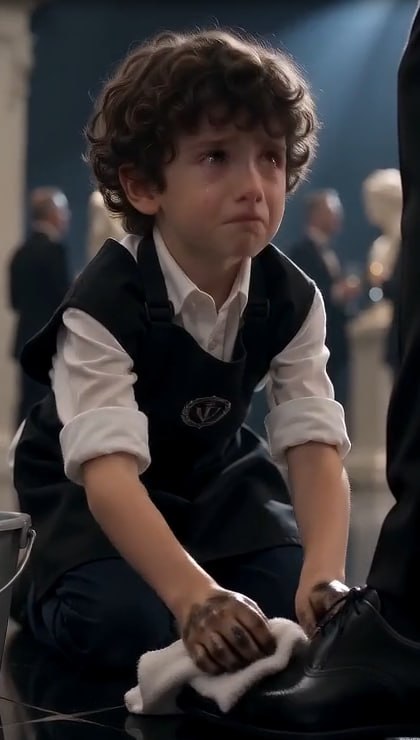
Laura did not remember crossing the room.
One moment she was staring at Daniel’s handwriting.
The next she was standing inches from Marcus.
“You knew him.”
Marcus remained remarkably calm.
“That inscription proves nothing.”
“You told me you never met Daniel.”
“I said I barely knew him.”
“No.”
Laura’s voice shook.
“You told me the first time you heard his name was when I told you I was a widow.”
Marcus glanced toward the guests gathering beyond security.
“This is not the place.”
“You keep saying that because every place becomes inconvenient when someone asks you the truth.”
Grant instructed security to clear the corridor.
Marcus objected.
“This is a Whitmore Foundation event.”
Grant looked at him.
“This is the Sterling Metropolitan Museum.”
That landed.
The relationship between the two men shifted visibly.
Marcus had donated tens of millions to Sterling.
But he did not own it.
At least not legally.
Two NYPD officers working the gala security detail arrived after guests reported the assault.
Laura gave a statement.
Noah was taken into a private office with her.
Marcus hired a criminal attorney before midnight.
The gala ended without speeches.
No one announced the $100 million Whitmore Cultural Preservation Initiative Marcus had planned to unveil.
By 1:30 a.m., footage of him striking Noah had already reached social media.
Laura did not care.
She sat beside Noah in a pediatric emergency clinic while a doctor examined the swelling on his cheek and bruising on his upper arm.
“No fracture,” the doctor said.
Laura nodded.
Noah stared at his black-stained fingers.
She wet a cloth and began wiping them.
He pulled away.
“It doesn’t come off easy.”
Her chest tightened.
“How many times did Marcus make you do that?”
Noah looked at the floor.
“Polish his shoes?”
“Yes.”
“A lot.”
Laura stopped.
“At home?”
“Sometimes.”
“When I was there?”
“No.”
“When I was working?”
He nodded.
Laura worked as chief financial officer of a mid-sized medical research nonprofit. Budget season frequently kept her late.
Marcus knew exactly when she would not be home.
“What else?”
Noah’s silence answered before his words did.
“Cleaning.”
“The museum room?”
“Yes.”
“Why?”
“He said I made messes and needed to learn what work looked like.”
Laura closed her eyes.
She remembered Noah telling her six months earlier that Marcus was “making him work.”
She had assumed chores.
She had told him Marcus was trying to teach responsibility.
A hot wave of shame moved through her.
“Why didn’t you tell me about the museum room?”
“I did.”
Laura opened her eyes.
“What?”
“I said Marcus made me clean old things.”
She remembered.
Dinner.
Noah complaining.
Marcus laughing and saying he had asked Noah to dust his home office because the boy had left sports equipment everywhere.
Laura had believed him.
Noah looked at her.
“You told me to stop making everything sound worse.”
The sentence broke her.
“I did.”
Noah nodded.
Laura took his hands.
“I was wrong.”
He stared at her.
“I should have listened.”
A tear slid down his cheek.
“Are you mad at me?”
“No.”
“Marcus said you would be.”
Laura pulled him into her arms.
“No.”
She held him until his shoulders stopped trembling.
“I’m mad at myself.”
At 8:00 a.m., Laura called a divorce attorney.
At 8:30, she requested an emergency protective order barring Marcus from contact with Noah.
As Noah’s stepfather, Marcus had no automatic custodial rights, but Laura wanted the prohibition explicit.
By 10:00, Sterling had closed the entire east wing.
Grant called.
“You need to come back.”
“Not with Noah.”
“No. Leave him somewhere safe.”
Laura’s sister, Rebecca, took Noah.
Laura returned to Sterling with attorney Maya Chen.
Grant led her to his office.
On his desk were two photographs.
One showed the painting from the sealed room.
The other showed the work hanging in Gallery Six.
“Externally they are nearly identical,” Grant said.
“And?”
“We used non-invasive imaging on both.”
Laura sat.
“The gallery painting is not by Winslow Harrow.”
She looked at him.
“It’s fake.”
“Yes.”
“How long has a fake been hanging upstairs?”
“We don’t know.”
“Daniel did.”
Grant’s eyes lowered.
“Yes.”
Laura studied him.
“What aren’t you telling me?”
Grant walked toward the window.
“Seven years ago, Daniel came to me.”
“You were here then?”
“Deputy director.”
“What did he say?”
“That he had discovered inconsistencies in three works tied to the Whitmore collection.”
Laura’s pulse changed.
“Marcus?”
“Marcus and his father, Robert Whitmore.”
Robert had died five years earlier.
“He said originals were being removed temporarily for private conservation, replaced by high-grade copies, then used in private collateral arrangements.”
Laura frowned.
“Collateral?”
“Art-secured loans.”
Laura worked in finance.
She understood immediately.
Someone could pledge valuable paintings as collateral to private lenders.
But if the museum believed it still possessed the original while a lender believed the borrower owned it—
“Double use,” she said.
Grant nodded.
“And possibly insurance fraud, false tax valuations, donor-restriction violations, and theft.”
Laura stared.
“What did you do?”
Grant looked ashamed.
“Not enough.”
“What does that mean?”
“I asked Daniel for proof.”
“And?”
“He was already ill.”
Laura’s chest tightened.
Daniel had been diagnosed with metastatic soft-tissue sarcoma shortly before leaving Sterling.
“He said he needed time.”
“Did you tell the board?”
“Yes.”
“Who chaired the acquisitions committee?”
Grant hesitated.
“Robert Whitmore.”
Laura laughed bitterly.
“You told Marcus’s father that Daniel suspected Marcus’s family?”
“I did not understand the extent of the conflict.”
“You were deputy director of a major museum.”
“I know.”
“What happened?”
“The board ordered an internal review.”
“Run by whom?”
“Outside counsel selected by Robert.”
Laura closed her eyes.
Of course.
Grant continued.
“The review concluded Daniel’s concerns were unsubstantiated.”
“And the wing?”
“Three months later, a pipe ruptured. There was extensive moisture damage. The board voted to decommission the old restoration wing.”
“Convenient.”
“Yes.”
“Did you ever enter it afterward?”
“No.”
“Why?”
“The old access system was disconnected from the main network. I was told the space had been emptied.”
Laura thought of the twelve paintings.
“Someone lied.”
Grant nodded.
Maya asked, “Who still had the old cards?”
“Conservation staff cards were destroyed.”
Laura placed Daniel’s brass token on the desk.
“Except his.”
Grant looked at it.
“It should not have worked.”
“Marcus knew it did.”
Silence.
Then a registrar entered carrying an inventory printout.
“Elias.”
Grant took it.
His face changed.
“What?”
He turned the paper toward Laura.
The museum’s records showed Storm at Bell Point had never left Gallery Six.
Not once.
For seventeen years.
Yet Daniel’s authentic original sat in a room supposedly sealed for seven.
Maya said, “Then the museum database was altered.”
“Yes.”
“Who can do that?”
“Registrars. Director-level administration. Certain trustees through archival authorization.”
“Marcus?”
Grant shook his head.
“Not directly.”
Laura noticed the word.
“Indirectly?”
Grant looked uncomfortable.
“Marcus has served on the collections finance committee for nine years.”
The timeline hit her.
Marcus had served at Sterling while Daniel was alive.
He had known Daniel.
Not casually.
Professionally.
Laura’s phone rang.
Marcus.
She declined.
A text followed.
YOU ARE MAKING A SERIOUS MISTAKE.
Then another.
DANIEL WAS NOT WHO YOU THINK HE WAS.
Laura stared at it.
A third arrived.
A photograph.
Daniel, seven years earlier.
Standing beside Marcus.
They were arguing in the Sterling loading dock.
On the back of the printed photograph, someone had written a date.
Three days before Daniel entered hospice.
Laura’s throat tightened.
Maya said, “Do not respond.”
Laura enlarged the image.
Daniel was pointing at Marcus’s chest.
Marcus was holding a red conservation folder.
May you like



And behind them, barely visible in the photograph, was the same brass access card that now sat on Grant’s desk.
Clipped to Marcus Whitmore’s belt.







