Chapter 10 - Rooms Full of Copies
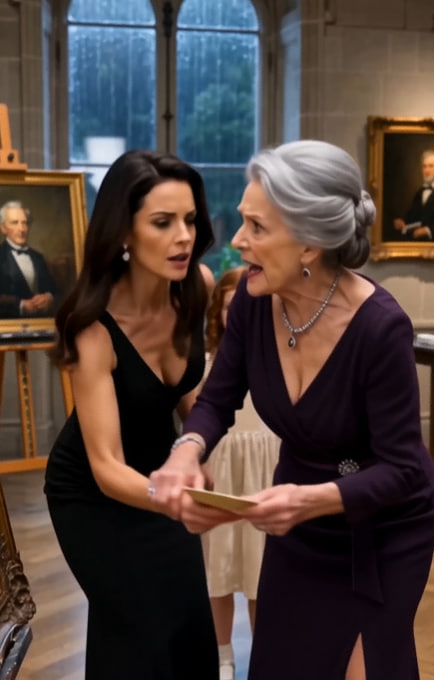
The full collection audit took three weeks.
Whitmore House became a place where nobody trusted appearances.
Every painting was photographed under visible light, ultraviolet, and infrared. Frames were compared with archival images. Canvas fibers were sampled where necessary. Insurance schedules were cross-checked against shipping records.
Visitors had once walked through the mansion admiring continuity.
Generation after generation.
Portrait after portrait.
Now continuity looked like camouflage.
Nine works were confirmed replicas.
Four originals remained missing.
Three had been used improperly as collateral.
One had been pledged twice.
Helena’s shell company had received more than twenty-three million dollars.
Only a portion had been used for Whitmore House.
The rest funded personal investments, Thomas’s failed company, renovations to Helena’s New York apartment, legal expenses, and a private reserve account in Luxembourg that investigators froze with international cooperation.
Claire stood in the ballroom while Maya placed red tags beside suspected works.
“It feels like the house is sick,” Claire said.
Maya shook her head.
“Houses don’t lie.”
“People do.”
“Exactly.”
Ava was kept away from the audit, but she asked about the red tags.
Claire told her the paintings were being checked to make sure they were the originals.
“Like copies at school?”
“Yes.”
“Are copies bad?”
“Not always.”
“Then why is everyone mad?”
“Because somebody pretended the copies were originals.”
Ava considered that.
“So the bad part is pretending.”
Claire smiled sadly.
“Yes.”
Children could reduce seven years of legal strategy to one sentence.
Thomas began meeting regularly with investigators.
He also moved from Whitmore House into a small rental apartment near Ava’s school.
Helena called it theatrical penance.
Claire called it appropriate.
Thomas never asked Claire to move back in with him.
That helped.
He began supervised weekend afternoons with Ava at the cottage until the counselor believed she was comfortable again.
One Saturday Ava showed him a drawing of Whitmore House.
All the windows were open.
“Why are the windows open?” Thomas asked.
“So secrets can get out.”
He laughed once, then wiped his eyes.
Claire watched from the kitchen.
She did not know whether their marriage was survivable.
She was learning not to confuse that question with whether Thomas could become a better father.
They were separate.
The next major break came from Boston collector Julian Cross.
He voluntarily surrendered The Open Door for examination after learning its sale may have been unauthorized.
His purchase file included Marcus Bell’s original invoice and photographs of the painting being loaded at Whitmore House.
One photograph showed Helena supervising.
Another showed a man at the edge of the frame.
Thomas.
Helena’s attorney seized on it.
Thomas examined the image.
“I was there.”
Claire felt another blow.
“Why?”
“It was after Dad died. Mother said the painting was being moved for valuation.”
“You never asked?”
He looked at her.
“No.”
The investigator zoomed in.
Thomas was holding a folder.
Inside the folder was a shipping authorization.
His signature appeared at the bottom.
Real.
Thomas remembered signing it.
He had not known the buyer or price.
Again, the law would distinguish knowledge from negligence.
Again, Claire thought of Arthur.
Do not trust silence either.
Marcus Bell was finally located in Florida.
He had retired from art dealing after years of scrutiny but had never been convicted.
Through counsel he agreed to provide records in exchange for consideration regarding his cooperation.
His files were meticulous.
Dealers survived by remembering who owned what.
Helena had contacted him repeatedly.
She described the sales as “restructuring a legacy collection.”
Bell asked once whether Arthur approved.
Helena replied in writing:
Arthur has been informed. Thomas will sign where required.
Arthur had not approved.
Bell’s files also contained invoices for commissioned replicas.
The copies were produced by skilled decorative painters overseas, then artificially aged and reframed in original frames.
Maya read the invoices in disgust.
“These weren’t even intended as innocent reproductions.”
“No,” Claire said. “They were meant to fool people.”
One invoice was dated two months after Arthur’s death.
Another three years later.
Helena’s scheme had continued long after any immediate financial crisis.
The defense that she had acted once to save the house was collapsing.
Then Bell’s records revealed something no one expected.
One missing painting had never been sold.
Saint Agnes in Blue had been delivered to a private storage facility under Helena’s name.
It was still there.
Investigators obtained access.
Inside the crate they found the original painting and a sealed binder labeled H.W. PRIVATE.
Helena tried to block review, claiming attorney-client privilege.
The court rejected the claim after preliminary inspection showed ordinary business records.
The binder contained handwritten accounting.
Not just paintings.
Jewelry.
Furniture.
Rare books.
Foundation donations.
Helena had moved assets in and out of family ownership for years.
But one page had a different heading.
ARTHUR — CONTROL PLAN
Under it were dates.
One entry corresponded to the night Arthur died.
2:11 — restoration.
2:18 — call T.
2:23 — emergency.
Claire stared at the numbers.
Someone had written down the exact timeline.
Not afterward.
That night.
Beneath the times was a final note.
Could not locate envelope. Portrait unfinished? Check after relining.
Helena had found Arthur collapsed.
She had searched for the codicil.
Then she called Thomas.
Then, five minutes later, she called for an ambulance.
Thomas read the page and sat down.
Claire felt physically ill.
Detective Ortiz remained disciplined.
“This still does not prove she caused his death.”
“No,” Claire said.
“But it may establish what she did before seeking help.”
Thomas whispered, “Five minutes.”
Nobody answered.
He looked at Claire.
“Would five minutes have saved him?”
Ortiz said, “We may never know.”
That uncertainty would become one of the cruelest truths in the story.
They might prove fraud.
They might prove concealment.
They might prove Helena searched for paperwork while her husband lay dying.
But they might never know whether Arthur could have survived if she had called immediately.
Thomas lowered his head.
May you like



For once, there was no secret left to protect him from the question.
---







