Chapter 9 - The Sale After the Funeral
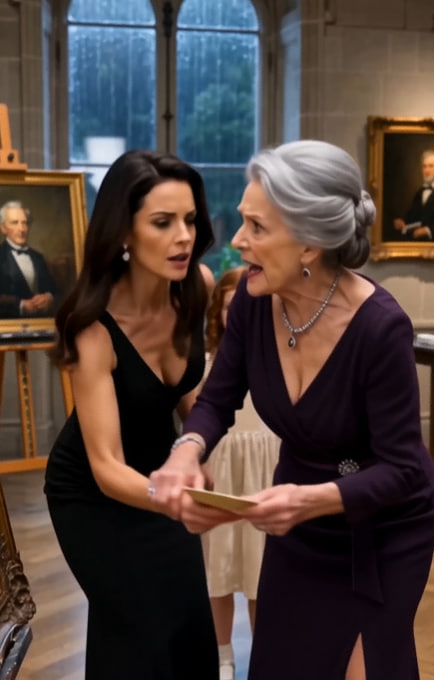
The document was dated eleven days after Arthur’s death.
The painting was Morning Harbor.
Sale price: $3.8 million.
Authorization: Thomas Whitmore.
This signature was real.
Thomas did not deny it.
Claire read the record at the cottage dining table while he stood across from her.
“You told me you only knowingly authorized The Red Harbor.”
“I did.”
“This is another sale.”
“I didn’t think it was a sale.”
She looked at him.
Thomas explained.
After Arthur’s funeral, Helena had told him the foundation needed liquidity to cover tax obligations and payroll. She placed several documents in front of him.
He signed.
One was the transfer of Morning Harbor to Marcus Bell.
“Did you read it?”
“No.”
“That is becoming a very expensive sentence.”
“I know.”
“Stop saying that.”
He closed his eyes.
Claire’s anger was no longer explosive.
It had become something colder.
A measurement.
For years Thomas’s greatest talent had been appearing honorable while letting somebody else carry the consequences of his avoidance.
He rarely lied outright.
He simply stopped asking questions at the exact point where answers might require courage.
Helena had exploited that.
Thomas had permitted it.
The hearing on the codicil began two days later in county surrogate’s court.
Claire sat behind Ava’s court-appointed guardian ad litem, a composed attorney named Rebecca Sloan, whose only client was Ava.
That mattered to Claire.
She did not want the child’s inheritance represented by Claire’s wishes or Thomas’s guilt.
Helena sat with three lawyers.
Thomas sat separately.
Mr. Vale testified first.
He described Arthur’s execution of the codicil.
Two witnesses had signed in his presence.
Both were still alive.
One was a retired physician.
The other had been Arthur’s accountant.
The codicil was formal, dated, initialed, witnessed, and notarized.
Helena’s argument that it was an unfinished draft weakened rapidly.
Then her attorney attacked Arthur’s capacity.
Mr. Vale remained calm.
“Arthur reviewed each paragraph and corrected a typographical error in the trust language himself.”
“Was he angry with his wife?”
“Yes.”
“His son?”
“Yes.”
“So this was an emotional act.”
“Many wills are signed during emotional periods. Anger does not equal incapacity.”
Claire almost liked him for that.
The retired physician testified that Arthur was lucid.
The accountant testified that Arthur understood the approximate value of his estate and the consequences of removing Thomas and Helena from control.
Then Thomas was called.
He took the oath.
Claire watched Helena.
For the first time in the hearing, she looked genuinely afraid.
Thomas admitted the unauthorized Red Harbor sale.
He admitted receiving Mr. Vale’s inquiry after Arthur’s death.
He admitted signing an affidavit stating he knew of no later valid testamentary document.
Helena’s lawyer stood.
“Did you, at that time, know a valid codicil existed?”
“No.”
“Did your mother tell you one existed?”
“No.”
“Then your affidavit was truthful.”
Thomas hesitated.
“Technically.”
The judge looked up.
Thomas continued.
“I knew my father had discussed changing his estate plan. I knew Mr. Vale was searching for something. My mother told me not to ask further, and I chose not to.”
Helena closed her eyes.
Her attorney asked, “Because you were grieving?”
“Partly.”
“Because you trusted your mother?”
“Partly.”
“What is the other part?”
Thomas looked toward Claire.
Then at the judge.
“Because if there was a new will, I was afraid my father had disinherited me.”
The courtroom went still.
“So you did not know.”
“No.”
“You suspected?”
“Yes.”
“And chose silence?”
“Yes.”
Helena’s attorney sat down.
Rebecca Sloan rose.
“Mr. Whitmore, after your father’s death, did you sign documents affecting the art collection?”
“Yes.”
“Did you review all of them?”
“No.”
“Why not?”
“My mother told me she was protecting the estate.”
“Did you benefit financially from her earlier unauthorized sale?”
“Yes.”
“Were you aware that exposing her conduct could expose yours?”
Thomas’s voice dropped.
“Yes.”
“So your silence benefited you.”
“Yes.”
Claire watched his shoulders settle after the answer.
Not relax.
Settle.
As if truth weighed less than carrying it hidden.
Outside court, reporters waited.
The Whitmore name had begun to attract attention after the art-fraud allegations became public.
Claire took Ava out through a private exit.
She refused every request for comment.
That evening the judge issued temporary findings.
There was substantial evidence the codicil was authentic.
The court formally reopened the estate proceeding.
Helena was suspended from any fiduciary authority she might still claim.
A neutral administrator was appointed.
Every major Whitmore asset was frozen pending accounting.
Thomas read the order in silence.
Then Rebecca called Claire.
“There is something you should know before tomorrow.”
“What?”
“The court-appointed inventory team inspected the north storage vault.”
“And?”
“They found six empty frames.”
Claire’s stomach dropped.
“Six more missing paintings?”
“Possibly.”
“But Maya’s list only had three completely missing.”
“These frames belong to works still recorded as hanging in the mansion.”
Claire understood.
More replicas.
“How many?”
“We don’t know.”
By morning the answer was worse.
Nine confirmed substitutions.
Four originals missing.
Three works pledged as collateral to lenders without proper authority.
And one painting—
Saint Agnes in Blue—
had been pledged twice.
The estate was not simply missing art.
Its financial records had been manipulated for years.
That afternoon Helena requested a private meeting with Thomas.
He refused.
She sent him a handwritten note instead.
Claire never asked to see it.
Thomas showed her anyway.
It contained one sentence.
If you finish this, you will learn what your father really thought of you.
Thomas folded the note.
“She still thinks fear works.”
Claire looked at him.
“Does it?”
He stared at the paper.
Then tore it once down the middle.
“Yes,” he said.
Claire appreciated the answer because it was true.
Then he tore it again.
May you like



“But I’m testifying anyway.”
---







