Chapter 16 - Helena Without the House
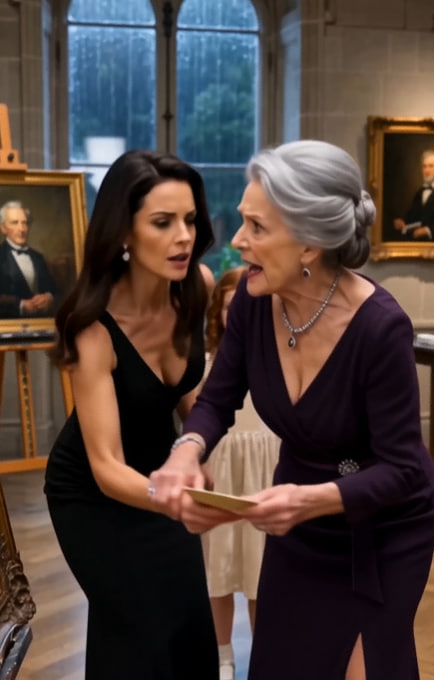
Claire visited Helena six months into her sentence.
She almost canceled three times.
Thomas did not go.
“I’m not ready,” he said.
Claire respected that.
Helena entered the prison visiting room in plain clothing.
No dark-purple gown.
No jewelry.
No house behind her.
For the first time since Claire had known her, Helena occupied a room that did not rearrange itself around her presence.
She sat.
“You look well.”
“So do you.”
“That is a polite lie.”
“Then you taught me something after all.”
Helena almost smiled.
Almost.
They spoke first about Ava.
Claire shared nothing private beyond what Rebecca and the counselor considered appropriate.
“She still asks about me?” Helena said.
“Yes.”
“What do you tell her?”
“That you love her and did serious things that hurt people.”
Helena’s eyes hardened.
“You tell an eight-year-old I’m a criminal?”
“I tell an eight-year-old the truth in language she can carry.”
“She will hate me.”
“That will be her choice.”
Helena looked toward the guards.
“Choice. Arthur’s favorite word after he discovered morality late in life.”
Claire studied her.
“You still blame him.”
“I blame all of us.”
It was the first surprising sentence.
Helena folded her hands.
“Do you know why I sold The Red Harbor?”
“To cover Thomas’s debts.”
“That is what I told myself.”
Claire waited.
Helena continued.
“Arthur refused to rescue him. He said failure might finally teach our son limits.”
“So you stole from Arthur.”
“Yes.”
The simple answer startled Claire.
“I told myself a mother protects her child.”
“And the extra six hundred thousand?”
Helena’s mouth twisted.
“The first time you cross a line, you expect thunder.”
Claire said nothing.
“When nothing happens, the second step is smaller.”
That was not an excuse.
It was an anatomy.
Helena looked down.
“I kept the remainder because Arthur controlled every account. Every property. Every major decision. I had spent fifty years being Mrs. Arthur Whitmore.”
“So you built money he couldn’t control.”
“Yes.”
“By stealing from him.”
“And from the foundation.”
Claire let the admission sit.
“Why the later paintings?”
“At first to keep the house. Then because having money he didn’t know about felt like breathing.”
“Arthur was dead by then.”
Helena looked at her.
“Fear does not disappear when the person you feared dies.”
Claire understood more than she wanted to.
“What were you afraid of?”
“Being nobody.”
The answer was quiet.
Claire thought of the conservatory conversation.
Helena had spent her life proving she belonged.
Eventually possession replaced belonging.
“If Arthur had left you everything,” Claire asked, “would you have stopped?”
Helena took a long time.
“No.”
Claire appreciated that answer more than remorse performed for mercy.
“What about the ambulance?”
Helena’s face closed.
Claire almost let it go.
Then Helena said, “I thought he was already dead.”
“The report says he was breathing.”
“I saw him on the floor. I checked his pulse and couldn’t find one.”
“You searched for the envelope.”
“Yes.”
“Before calling.”
“Yes.”
“Why?”
“Because the portrait backing was open.”
Claire’s breathing slowed.
“He collapsed while hiding it?”
“I think so.”
“You saw the envelope?”
“No. I saw the tools. The loose paper. I knew what he had been doing.”
“And you searched.”
“For minutes.”
“Five.”
Helena looked at her.
“Five.”
“Do you believe those minutes killed him?”
A crack finally appeared.
“I don’t know.”
It was the first time Claire had heard Helena say the words without using them as a defense.
“I dream about it,” Helena whispered.
Claire felt no satisfaction.
That surprised her.
“I dream that I call first. In one dream he dies anyway. In another he wakes up and tells everyone what I did. I don’t know which dream frightens me more.”
There was the truth.
Helena’s greatest terror had not been Arthur’s death.
It had been exposure.
Claire stood.
“I’m not forgiving you today.”
Helena nodded.
“I didn’t ask.”
“Ava may write to you eventually.”
Helena’s eyes lifted.
“That is not a promise.”
“I know.”
Claire turned to leave.
“Claire.”
She stopped.
Helena spoke without looking at her.
“Do not let the house teach Ava that being chosen makes her special.”
Claire looked back.
“That may be the first useful thing you’ve told me in eleven years.”
Helena gave a faint, bitter smile.
“I remain efficient.”
Outside, the winter air felt painfully clean.
Thomas waited in the parking lot.
He had driven Claire but refused to enter.
“How was she?”
“Still Helena.”
He nodded.
“Did she blame me?”
“Less than usual.”
“Progress.”
Claire got into the car.
He did not start the engine.
“What did she say about Dad?”
Claire told him.
All of it.
Thomas cried without hiding his face.
Claire did not tell him everything would be okay.
She placed one hand over his.
For several minutes that was enough.
Then Thomas looked at their hands.
“Does this mean—”
“No.”
He laughed through tears.
“Worth trying.”
Claire pulled her hand away.
“Drive.”
He did.
But something had changed.
Not forgiveness.
Not restoration.
The absence of pretending.
May you like



Sometimes that was the first form of intimacy that mattered.
---







