Chapter 8 - The Call Before the Ambulance
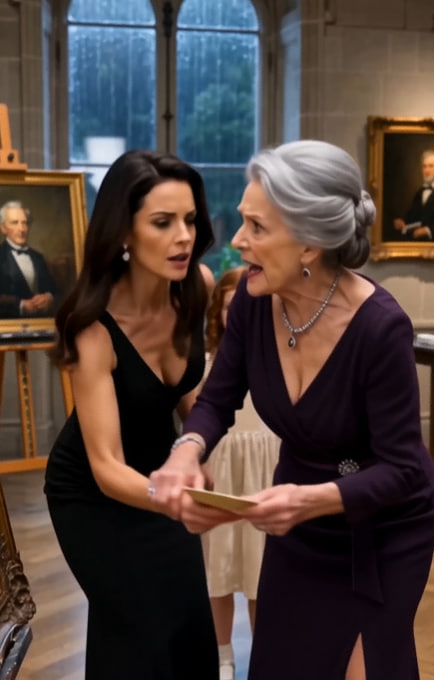
The telephone record confirmed the call.
2:18 a.m.
Helena called Thomas.
The emergency call for Arthur was placed at 2:23.
Five minutes.
Detective Ortiz refused to treat five unexplained minutes as evidence of murder.
Claire respected her for it.
“What matters,” Ortiz said, “is what Helena did during those minutes.”
Thomas sat with his lawyer in the library.
“She told me Dad was gone.”
“Did she say how she knew?”
“No.”
“What did you say?”
“I asked if she had called an ambulance.”
“And?”
“She said she would.”
“Did you call one?”
“No.”
Thomas’s lawyer shifted.
Ortiz watched him carefully.
“Why not?”
Thomas looked down.
“Because my mother sounded calm.”
“That reassured you?”
“No.”
“Then why?”
He swallowed.
“Because I was afraid to challenge her.”
Claire stood behind the investigator, furious at how often the same answer appeared in Thomas’s life.
Fear.
Not fear of violence.
Fear of conflict.
Fear of losing status.
Fear of seeing himself honestly.
Ortiz requested Arthur’s old medical file and ambulance report.
The paramedics had documented no suspicious circumstances.
His cardiac history was severe enough that the emergency physician had attributed death to acute myocardial infarction.
There was still no factual basis for homicide.
But there was another discrepancy.
The ambulance report noted Arthur had been found on the floor of the restoration wing.
Helena had told everyone he collapsed in his study.
Maya stared at the report.
“Why would he be in restoration after two in the morning?”
Claire looked toward the torn portrait.
“The codicil.”
They reconstructed the route.
Arthur’s study connected through a private corridor to the restoration wing.
Nora saw him shortly after midnight carrying an envelope.
At some point he hid it behind his portrait.
Then he apparently collapsed there.
Helena found him.
Before calling an ambulance, she called Thomas.
What did she do in those five minutes?
The answer came from a place nobody expected.
The restoration wing had an old environmental monitoring system that recorded temperature, humidity, and door openings to protect the collection.
The logs survived.
At 2:11 a.m., the private corridor door opened.
At 2:14, the main restoration door opened.
At 2:16, it closed.
At 2:22, it opened again.
Someone had left the room six minutes before the emergency call and returned one minute before paramedics were contacted.
“Could Arthur have walked out?” Claire asked.
Maya shook her head.
“If he was already collapsed, probably not. But the system doesn’t identify people.”
Helena refused to answer.
Her attorney insisted there were countless innocent explanations.
He was right.
But the silence deepened suspicion.
Then Mr. Vale’s old voicemail provider located something extraordinary.
Not the recording itself.
A transcription.
For several years the carrier had offered automated voicemail-to-email service. Mr. Vale had forgotten because he stopped using the email account long ago.
The message was still there.
12:17 a.m.
Arthur’s voice, imperfectly transcribed by old software:
Elias. It is signed. I moved it tonight. Helena knows I changed the estate, not where I put the original. If she finds it, she’ll destroy it. The paintings are worse than I thought. Thomas knows one. I don’t know what else he knows. Do not blame the boy for what I failed to teach him, but do not trust silence either.
Then a final line:
The house must not become payment for our shame.
Thomas read the transcript alone.
Claire watched him from the doorway.
He put both hands over his face.
For a long time he said nothing.
Finally: “He was still protecting me.”
“He was telling the truth about you.”
“That too.”
Claire sat opposite him.
“Why did your mother call you first?”
“I don’t know.”
“What do you think?”
Thomas stared at the page.
“I think she found him with the portrait open.”
Claire remembered the portrait before Helena cut it.
The backing had looked old but intact.
“What if she saw him hide the envelope?”
“Then why didn’t she take it?”
“Maybe he collapsed before finishing. Maybe she didn’t know where he put it.”
Thomas nodded slowly.
“And those five minutes?”
“She could have searched.”
The possibility was terrible precisely because it did not require murder.
Arthur might have suffered a natural heart attack.
His wife might have found him dying—
and searched for documents before calling for help.
Claire closed her eyes.
That was not yet proven.
But the environmental logs made it possible.
The district attorney subpoenaed Helena’s old personal papers and family office archives.
A warrant was obtained for H.W. Preservation’s records.
Meanwhile the probate court scheduled an evidentiary hearing on the codicil.
Helena responded aggressively.
Her attorneys filed objections alleging undue influence and lack of testamentary capacity.
They also accused Claire of manipulating Ava’s recollections to gain control of the estate.
Thomas read the filing and threw it onto the table.
“She’s attacking a seven-year-old.”
“She’s attacking me,” Claire said. “Ava is the weapon.”
“I’ll make her withdraw it.”
“No.”
He looked at her.
“You don’t control Helena.”
“She’ll listen to me.”
Claire almost smiled.
“When has she ever listened to you?”
Thomas opened his mouth.
Then closed it.
“Your mother used your shame to manage you for seven years,” Claire said. “If you want to change, stop believing there is one perfect conversation where she suddenly becomes reasonable because you found the right words.”
Thomas absorbed that quietly.
“What should I do?”
“Tell the truth under oath.”
He looked toward the windows.
“That could cost me everything.”
Claire thought of Arthur’s words.
The house must not become payment for our shame.
She said, “Then decide what everything means.”
That night Helena came to the cottage alone.
Security stopped her at the gate.
She asked to speak with Claire.
Against Thomas’s advice, Claire went outside.
Helena stood under an umbrella in the rain.
“You believe Arthur was a moral hero now,” she said.
“I believe he caught you selling paintings.”
“He ignored debts until I solved them.”
“You diverted millions.”
“I preserved a family that existed for two hundred years.”
“At whose expense?”
Helena stepped closer to the gate.
“At yours, apparently. Because this is what you wanted, isn’t it? Ava owns the estate. You become mother of the heir.”
Claire felt no need to defend herself.
“You don’t understand me at all.”
“I understand everyone when money appears.”
“No. You understand what money did to you.”
Helena’s expression hardened.
Claire continued.
“I don’t want Ava to become you.”
That struck deeper than any accusation.
Helena gripped the umbrella.
“You think Arthur left the estate to a baby because he loved her?”
Claire said nothing.
“He did it because babies have no past. He could pretend she was pure.”
“And?”
“And one day she will disappoint the dead too.”
Claire stepped closer.
“Then she’ll have the right to make her own mistakes.”
Helena looked toward the cottage window where Ava’s small silhouette moved behind the curtain.
For one second her face softened.
Then vanished.
“You should be careful what truth you demand, Claire.”
“Why?”
“Because your husband’s signature is on more than one sale.”
Claire already knew that.
But Helena added something new.
May you like



“And one of them happened after Thomas knew exactly what Arthur had done with the will.”
---







