Chapter 14 - The Buyer Who Kept Every Receipt
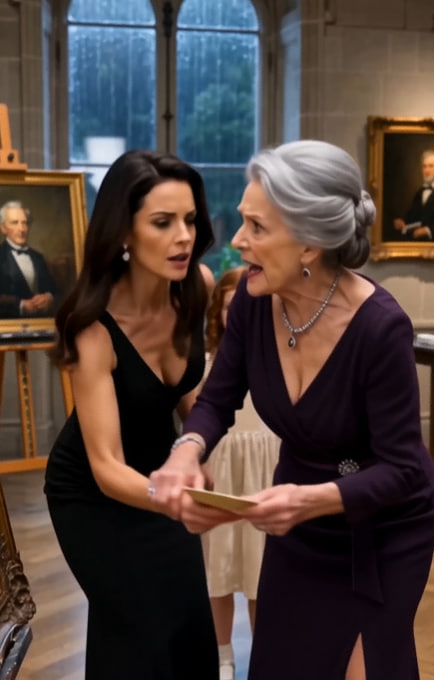
Marcus Bell arrived at Whitmore House wearing a linen jacket and the expression of a man determined to look less guilty than everyone expected.
He was seventy.
Silver-haired.
Courteous.
Maya disliked him immediately.
“You commissioned deceptive replicas,” she said.
Bell spread his hands.
“I commissioned decorative reproductions at a client’s request.”
“With artificial aging.”
“Aesthetic matching.”
“With transferred original frames.”
“That was not my decision.”
Detective Ortiz interrupted before Maya committed an offense of her own.
Bell had brought records.
Every invoice.
Every shipment.
Every email.
Helena had believed secrecy meant absence of witnesses.
Bell believed secrecy meant charging more and keeping documentation.
The records showed she had sold four original works through him.
He facilitated three replica commissions.
He had doubts about authority.
He asked questions.
Helena provided answers that were false.
Thomas’s name appeared repeatedly as implied approval, but Bell had spoken with him only once.
That call concerned The Red Harbor.
“Did Mr. Whitmore know the sale lacked his father’s authorization?” Ortiz asked.
Bell nodded.
“Yes.”
Thomas sat motionless.
Claire had already known.
Hearing it from another person still hurt.
“What did he say?” Ortiz asked.
Bell checked his notes.
“He said, ‘My mother has handled the family side. Just close quickly.’”
Thomas lowered his eyes.
Bell continued.
“He sounded desperate.”
Claire felt no sympathy for the adjective.
Then Ortiz asked about Helena.
“Did she ever discuss the codicil?”
“No.”
“Arthur’s estate plan?”
“Once.”
Everyone looked up.
Bell flipped several pages.
“After Arthur died, I expressed concern that ownership could be complicated by probate. Mrs. Whitmore told me, ‘Arthur threatened to change everything, but dead men don’t finish paperwork.’”
Mr. Vale’s face tightened.
“When was that?”
“Twelve days after the funeral.”
Thomas whispered a curse.
Helena had told him there was no completed codicil.
Yet she had told Bell Arthur threatened to change everything.
Not proof she knew it was signed.
But another crack.
Bell’s records also identified one additional buyer.
A New York investment executive named Corinne Maddox had purchased Summer Orchard.
Unlike the other collectors, Maddox refused to cooperate.
She argued she was a good-faith purchaser and had owned the painting for years.
Litigation began.
Ava heard none of the legal details.
She simply knew one of Grandpa’s pictures was not coming home yet.
“Does the lady love it?” she asked.
Claire considered.
“Probably.”
“Then why can’t we just tell her it was stolen?”
“We did.”
“What did she say?”
“She says she paid for it and did not know.”
Ava frowned.
“That’s sad for her too.”
Claire looked at her daughter.
“Yes.”
That had become the hardest lesson of the estate.
Wrongdoing spread consequences beyond the people who caused it.
Collectors who paid millions might lose paintings.
Foundation employees might lose jobs if finances collapsed.
Thomas had harmed Claire and Ava through choices made before either knew.
Even Helena had begun with one decision she called necessary.
Then another.
Then another.
By the time the lies became a system, each new lie felt like preserving the previous ones.
The court eventually encouraged settlement with Maddox.
The trust and foundation did not simply seize the painting.
They negotiated.
Insurance proceeds, partial reimbursement, and Thomas’s additional restitution contribution allowed Summer Orchard to return without financially destroying an innocent purchaser.
Thomas signed the settlement payment authorization.
Claire watched him.
“Does it hurt?”
He gave a bleak smile.
“Yes.”
“Good.”
He laughed.
“I deserved that.”
“No. I mean it should hurt. If restitution felt painless, it wouldn’t require anything from you.”
Thomas nodded.
“I sold my partnership interest too.”
Claire looked at him.
“That was most of your independent income.”
“I’ll survive.”
For once he did not say “I’ll rebuild.”
Perhaps he was learning that life did not always need to be framed as a comeback.
Sometimes accepting a smaller future was part of paying for the past.
The criminal investigation approached resolution.
Helena faced potential charges relating to fraud, falsified accounting, unauthorized sale of foundation assets, and obstruction of estate administration.
Thomas’s exposure was narrower but real.
His cooperation, restitution, and documented lack of involvement in later transactions mattered.
So did his admitted role in The Red Harbor sale.
His attorney negotiated.
Thomas refused to demand guarantees before continuing cooperation.
Claire noticed.
She also noticed he still woke from nightmares.
Growth did not look noble up close.
Sometimes it looked like a man staring at legal bills at two in the morning.
Sometimes it looked like telling his daughter, “I can’t buy that this month.”
Sometimes it looked like answering an investigator’s question even when the answer made him smaller.
Helena chose a different path.
She agreed to plead guilty only when prosecutors confronted her with Bell’s records, the shell-company accounting, Samuel’s duplicate ledger, and her own timeline note from the night Arthur died.
The agreement required prison time, restitution, forfeiture of assets traceable to the fraud, and a formal acknowledgment that she knowingly concealed the existence of a possible later testamentary instrument after Arthur’s death.
She would not admit that delaying the ambulance changed his medical outcome.
No one could prove it.
Claire was grateful the agreement did not pretend certainty where none existed.
Thomas attended the plea hearing.
Claire did not.
Neither did Ava.
Afterward Thomas came to the cottage.
“She said guilty.”
Claire waited.
“I thought hearing it would fix something.”
“Did it?”
“No.”
“What did you expect?”
“I don’t know. Maybe for the last seven years to become simpler.”
Claire poured tea.
“Truth rarely makes the past simpler.”
“No.”
He sat.
“It just makes it harder to lie about.”
Claire looked at him.
Arthur could have said that.
Perhaps Thomas finally understood his father better now that pleasing him was impossible.
Then Thomas placed something on the table.
His wedding ring.
Claire’s chest tightened.
“I’m not asking for a divorce,” he said.
“Then why?”
“Because I’ve been wearing it as if staying married means I haven’t lost you.”
Claire said nothing.
“That isn’t fair to you.”
He pushed the ring toward her.
“You decide when or whether I get to wear it as a promise again.”
Claire did not take it.
“Keep it.”
Hope flashed across his face.
She stopped him.
“Not on your hand.”
He nodded.
Thomas slipped the ring into his pocket.
May you like



For the first time since the portrait was cut open, he accepted uncertainty without asking Claire to rescue him from it.
---







