Chapter 12 - The Lie That Needed Too Many People
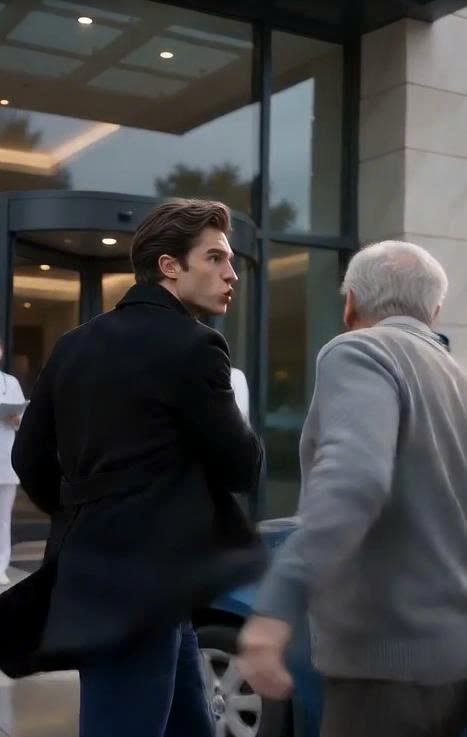
Blake denied taking the fentanyl vial.
His lawyer claimed someone had stolen his override credentials.
The hospital had already heard that explanation too many times.
Alan Reese traced the access.
The code was used from a secure physician terminal outside the executive conference suite.
Security footage showed Blake entering that corridor four minutes earlier.
There was still no camera inside the medication room.
But the circumstantial chain was tightening.
Police dismissed the developing case against Nora while investigating evidence tampering.
Nora cried when her attorney told her.
“They believed him first.”
Walter sat across from her.
“They believed the system record.”
“It was fake.”
“Yes.”
“That’s what I’ve been saying about Peter Lang for fourteen months.”
Walter had no answer.
Nora looked at him.
“You know what the worst part is?”
“What?”
“If he had never slapped you, nobody would have reopened anything.”
The words hurt because they were true.
Walter nodded.
“You’re right.”
Nora looked surprised.
“No excuse?”
“No.”
“Not even that you didn’t know?”
“I didn’t know because our system made it too difficult for people like you to make powerful people uncomfortable.”
Nora’s eyes filled.
Walter continued.
“That is a leadership failure.”
For the first time, his anger became less personal.
That changed him.
The foundation review cleared Walter of using Compassion Bridge grants to purchase silence.
But it criticized weak documentation and informal overrides.
Walter accepted the findings publicly.
He did not defend himself.
He issued a statement:
Good intentions do not excuse bad governance. I bypassed required processes in several cases because I believed urgency justified it. That was wrong, even when the underlying assistance was appropriate.
The admission surprised the media.
Blake’s narrative weakened.
Then Aisha Rahman provided the next major clue.
She remembered Blake dictating Peter Lang’s operative report after the reoperation.
“He changed one phrase three times.”
“What phrase?” Claire asked.
“Device anchor fracture.”
“To?”
“Annular tissue disruption.”
“Did anyone hear?”
“Dr. Evan Patel.”
Evan Patel, forty-nine, another cardiac surgeon, had recently accepted a job in California.
Investigators called him.
He was silent for a long time.
Then said:
“I told Blake the device needed to be reported.”
“What did he say?”
“That CardioVance would pull research funding.”
“Anything else?”
“He said Marcus had already handled risk.”
Evan agreed to testify to the hospital committee.
Then he disclosed something bigger.
“Blake wasn’t supposed to be principal investigator on the Vantage outcomes study.”
“Who was?”
“Me.”
“Why did that change?”
“CardioVance preferred him.”
“Why?”
“He promised volume.”
The research relationship was not just academic.
Blake had steered purchasing volume toward CardioVance.
CardioVance funded his studies.
Those studies increased his national profile.
His profile increased patient referrals.
The hospital used referrals to justify expansion.
Marcus used expansion to justify purchases.
Thomas used revenue to justify silence.
Each person received something.
Money.
Prestige.
Growth.
Power.
The scheme did not require one secret agreement at the beginning.
It became a conspiracy through aligned selfishness.
The special committee subpoenaed hospital emails.
One chain connected them all.
BLAKE:
If adverse-event reporting pauses Vantage enrollment, CardioVance walks.
MARCUS:
We can classify current cases as technical complications pending manufacturer review.
THOMAS:
Do not put speculative device conclusions into board materials.
BLAKE:
Agreed. I’ll manage clinical narrative.
Clinical narrative.
Peter Lang’s death reduced to narrative management.
Walter read the email in silence.
Then Emily said, “Dad.”
He looked up.
“There’s more.”
An attachment listed planned private-center ownership percentages.
Blake Morgan — 42%.
Marcus Grant — 18%.
Colin Mercer — 15%.
Outside investors — 25%.
Projected annual distributions once hospital referrals shifted:
$11.6 million.
Walter closed his eyes.
Marcus had been willing to weaken his family’s hospital to create a private revenue stream.
Emily whispered, “How could he?”
Walter looked at her.
“Because he thought the hospital was mine.”
“What?”
“He didn’t think he was stealing from patients.”
Walter’s voice was hollow.
“He thought he was taking something from me.”
Emily began crying.
The family wound had become financial motive.
That evening, Marcus asked to see Walter.
Through counsel.
They met.
Marcus looked older.
“I’m cooperating.”
Walter said nothing.
“I’m giving federal investigators everything.”
“Why?”
Marcus laughed bitterly.
“You really need motives for every decent decision I make now?”
Walter flinched.
“No.”
Marcus continued.
“Blake planted the fentanyl.”
“You know?”
“He called me before it happened.”
“What did he say?”
“He said Nora needed to become unreliable.”
Walter’s hands curled into fists.
“Did you help?”
“No.”
“Did you stop him?”
Marcus looked down.
“No.”
Walter stood.
“Then do not ask me for congratulations because you became honest one day late.”
Marcus’s eyes filled.
“I know.”
Walter walked toward the door.
“Dad.”
He stopped.
Marcus whispered, “I’m sorry.”
Walter remained facing away.
He wanted to turn.
He wanted to forgive his son because fatherhood had trained him to reach toward Marcus whenever he sounded like a frightened boy.
But forgiveness offered too quickly could become another form of avoidance.
“I believe you are sorry.”
Marcus looked up.
Walter continued.
“That is not the same as being repaired.”
Then he left.
That night, Blake met with his attorney.
The hospital’s credentialing case was worsening.
The financial investigation was moving toward prosecutors.
His medical license had not been suspended, but the Massachusetts Board of Registration in Medicine had opened an inquiry.
Blake looked at the documents.
“What happens if Grant gets reinstated?”
His lawyer answered.
“That should be the least of your concerns.”
“No.”
Blake’s voice became quiet.
“He wants to destroy me.”
“Your own emails are destroying you.”
Blake looked away.
Then the lawyer asked the question nobody had asked him.
“Why did you slap Walter Grant?”
Blake stared.
“What?”
“You were angry about a scratch.”
“Yes.”
“So you hit an old man.”
Blake’s face hardened.
“He was in my way.”
The attorney slowly leaned back.
There it was.
Not a defense.
May you like



A worldview.
And for the first time, even the man paid to defend Blake understood how much danger that worldview had created.







