Chapter 3 - The Patient Who Died Twice
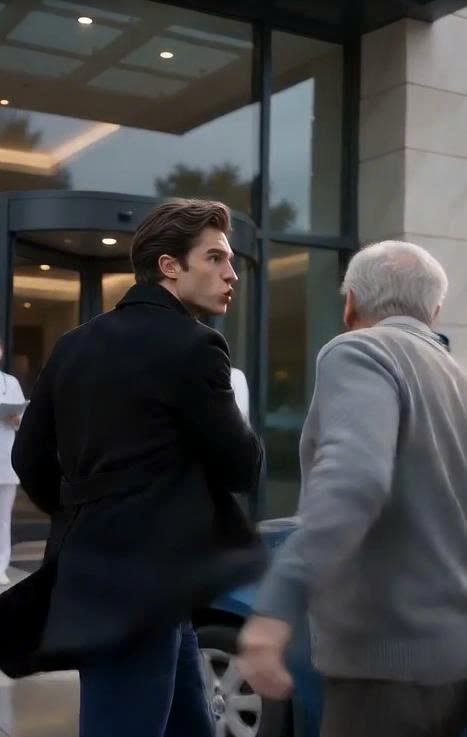
Peter Lang’s medical record said he died from cardiogenic shock following a rare but recognized postoperative complication.
The official morbidity review described the case as tragic but unavoidable.
Walter read it twice.
Then he asked Dr. Miriam Cole to read it.
She closed her office door.
“You understand this is protected peer-review territory.”
“Yes.”
“You cannot use privileged committee materials for a personal investigation.”
“I’m asking whether something looks wrong.”
Miriam studied him.
“Then I need to know why.”
Walter handed her the anonymous letter.
She read it.
Her expression changed.
“Where did you get this?”
“Mail.”
“When?”
“Two weeks ago.”
“And you kept it?”
“I wanted corroboration.”
Miriam’s eyes hardened.
“If someone is alleging falsification of a death review, you don’t sit on it.”
Walter felt the rebuke.
“I know.”
“No, Walter. I don’t think you do.”
He sat back.
She continued.
“You founded this hospital. People defer to you. That means when you decide to investigate quietly, everyone assumes quiet is the correct way to handle it.”
“I was trying to protect the institution.”
“That sentence has buried more institutional misconduct than incompetence ever did.”
Walter said nothing.
Miriam was right.
That was the danger of becoming powerful.
Your mistakes stopped looking like mistakes because people found respectful names for them.
“Then let’s correct it.”
Miriam turned to her computer.
Peter Lang had undergone minimally invasive mitral-valve repair using a CardioVance Vantage Flex ring.
Blake’s operative note described the procedure as successful.
Six hours later, Peter became unstable.
At 2:13 a.m., imaging showed severe recurrent mitral regurgitation.
At 3:04, he returned to the operating room.
Blake’s second operative note blamed “acute annular tissue failure.”
Peter never recovered.
Miriam frowned.
“What?”
“The device.”
Walter leaned closer.
“What about it?”
“The ring serial number is missing from the second operative note.”
“Is that unusual?”
“Yes.”
She searched supply records.
The first procedure used Vantage Flex serial VF-337190.
The inventory system showed the same device as “returned to manufacturer.”
Walter frowned.
“After it was implanted?”
“That’s impossible.”
“Unless the record was changed.”
Miriam’s expression became grim.
They contacted the operating-room quality manager, Denise Park.
Denise arrived twenty minutes later.
She remembered Peter Lang.
Not because of his complication.
Because a nurse had filed a device-event report.
“Which nurse?” Walter asked.
Denise hesitated.
“Nora Shaw.”
The same nurse who had witnessed the slap.
The same nurse whose staff-intimidation complaint was in Walter’s folder.
“What did she report?”
Denise looked at Miriam.
Miriam nodded.
“The valve ring partially detached,” Denise said. “Nora reported that when Dr. Morgan removed it during the second operation, part of the anchoring mechanism appeared cracked.”
Walter felt cold.
“Then why does the review say tissue failure?”
Denise looked uncomfortable.
“Dr. Morgan disagreed with Nora’s interpretation.”
“Was the device preserved?”
“It should have been.”
“Was it?”
Denise checked the system.
Her face drained.
“No.”
“Where did it go?”
“The record says CardioVance picked it up.”
Miriam frowned.
“That violates our adverse-device protocol. Risk management should have retained it pending investigation.”
Denise whispered, “I remember telling them that.”
“Who overruled you?”
Denise stared at the screen.
Then at Walter.
“CFO authorization.”
Walter’s stomach tightened.
“Marcus?”
“I don’t know if he personally signed it.”
They pulled the electronic approval.
M. GRANT.
Walter stared at his son’s name.
“It could be delegated credentials.”
Miriam looked at him.
“You’re already defending him.”
Walter realized she was right again.
He stood.
“Call Marcus.”
Five minutes later, Marcus entered.
His expression shifted when he saw Peter Lang’s record.
“What is this?”
Walter pointed.
“Why did your office authorize release of a failed surgical device?”
Marcus blinked.
“I have no idea.”
“Your approval is here.”
“I approve thousands of financial disposition records.”
“This wasn’t financial.”
“It may have been attached to vendor-credit paperwork.”
Miriam said, “A device involved in a patient death was released before the hospital completed review.”
Marcus exhaled.
“Then someone made a mistake.”
“Who?”
“I don’t know.”
“Find out.”
Marcus looked at Walter.
“Is this because Blake slapped you?”
Walter’s face hardened.
“Don’t ever use what he did to me as a reason not to examine what happened to a patient.”
Marcus lifted both hands.
“Fine.”
He left.
Miriam watched him go.
“You believe him?”
Walter did not answer.
That was answer enough.
Across the hospital, Blake entered a private physician lounge.
Marcus was waiting.
“You told me the Lang file was dead,” Blake said.
Marcus shut the door.
“It was.”
“My device report disappeared?”
“Yes.”
“Then why are they looking at it?”
“Anonymous complaints.”
Blake paced.
“From who?”
“I don’t know.”
“Nora.”
“Maybe.”
Blake stopped.
“Then handle her.”
Marcus stared.
“What does that mean?”
“You’re CFO. You have HR.”
“I’m not firing a nurse because you’re afraid of her.”
Blake smiled faintly.
“Afraid?”
“Concerned.”
“You know what happens if Lang becomes a device-fraud issue?”
Marcus said nothing.
Blake stepped closer.
“CardioVance payments get reviewed.”
“They were legitimate.”
“Some were.”
Marcus’s face changed.
Blake saw it.
“So don’t become righteous now.”
Marcus lowered his voice.
“My father is already suspicious.”
“Your father is emotionally compromised because I slapped him.”
“You slapped the founder of the hospital.”
“I didn’t know who he was.”
Marcus laughed without humor.
“That is not the defense you think it is.”
Blake stared at him.
Then his phone buzzed.
A message from CardioVance regional vice president Colin Mercer.
Need to talk. Federal compliance subpoena hit distributor.
Blake’s face went still.
“What?” Marcus asked.
“Nothing.”
“Blake.”
He put away the phone.
“Just make sure Nora doesn’t become a problem.”
Meanwhile, Emily was inside the hospital security center.
Alan Reese pulled access logs.
“At eight thirteen,” he said, “someone logged into the camera archive.”
“Who?”
“Administrative security account.”
“Yours?”
“Yes.”
“Were you logged in?”
“I was in a staff meeting.”
“Who has your password?”
“No one.”
Emily stared.
“Then somebody stole it.”
Alan hesitated.
“There’s something else.”
“What?”
“The login came from the finance-network segment.”
Emily looked at him.
“Finance?”
“Yes.”
“Which workstation?”
Alan entered a command.
One address appeared.
CFO-EXEC-02.
May you like



Emily stopped breathing.
Her brother’s office.







