Chapter 20 - People Who Actually Matter
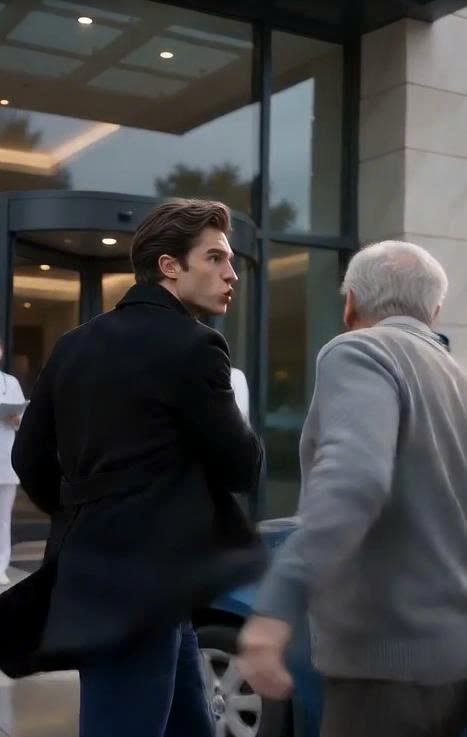
At seven fifteen the next morning, Walter drove the blue Honda through the Grant Medical Center valet entrance.
For a moment, the past returned with perfect clarity.
Blake’s white SUV.
The violent scrape.
The slap.
That thing probably costs less than my wheels.
Stay out of the way of people who actually matter.
Walter parked beside the curb.
A new valet approached.
He was maybe nineteen.
“Good morning, sir.”
“Morning.”
“Do you have an appointment?”
Walter smiled.
“No.”
The young man glanced toward the old Honda.
Not contempt.
Concern.
“Your left rear tire looks a little low.”
Walter looked.
“It does.”
“I can have maintenance put air in it while you’re inside.”
“Thank you.”
The valet took the key without recognizing him.
Walter loved that.
Inside, the hospital had changed.
Not dramatically.
Hospitals rarely transformed in ways visitors could see.
The floors were still polished.
Monitors still beeped.
Coffee still tasted terrible after six hours in a warming pot.
But beneath the surface, systems had changed.
A new staff-safety hotline reported directly to the independent board committee.
Vendor conflict disclosures appeared in searchable internal records.
Residents were trained to document attending-physician disagreements.
Nurses could trigger device-safety reviews without department-chair approval.
No single executive could delete security footage.
And every new physician orientation included a sentence Walter had suggested but refused to attach his name to:
Expertise increases responsibility. It does not reduce accountability.
He entered the hospital chapel.
Emily was waiting.
So was Marcus.
Marcus had been released after serving his custodial sentence and completing transitional placement requirements. He was thinner.
Quieter.
He now worked for a small construction-accounting firm that had nothing to do with healthcare.
He had started at an ordinary desk.
No title.
No family name above the door.
Walter thought it was good for him.
Marcus looked at the blue car through the chapel window.
“You still drive that thing?”
Walter smiled.
“That thing probably costs less than your shoes.”
Marcus froze.
Emily stared at their father.
Then Walter laughed.
Marcus groaned.
“Too soon.”
“It has been almost three years.”
“Still too soon.”
They were there because it would have been Ruth’s seventy-first birthday.
Emily carried white lilies.
Marcus had brought coffee Ruth would have hated.
Walter carried nothing.
He had the car.
That was enough.
They drove to the small hillside cemetery outside Boston.
Emily sat in the passenger seat.
Marcus folded himself into the back.
“This car was not built for adult men.”
“Your mother drove you to high school in it.”
“That was humiliating too.”
Walter smiled.
“She knew.”
At Ruth’s grave, they talked.
Not solemnly the whole time.
Ruth would have hated that.
Emily told her about the hospital.
Marcus told her he had finally learned Excel without assistants doing half the work.
Walter told her nothing at first.
Then:
“You were right.”
Emily laughed.
“About what?”
Walter looked at Ruth’s name carved into stone.
“Everything, apparently.”
Wind moved through the trees.
He told Ruth about the board reforms.
About Emily becoming CEO.
About Marcus rebuilding his life.
About Nora.
Elaine.
Aisha.
Peter Lang’s memorial plaque in the patient-safety education center—not because he was a symbol, but because his family consented to use his case to teach disclosure failures.
Finally, Walter said:
“And Blake.”
Marcus lowered his eyes.
Emily asked:
“Have you heard anything?”
Walter nodded.
Blake had written him a letter from prison six weeks earlier.
Walter had not answered.
Emily knew about the letter.
Marcus did not.
“What did he say?” Marcus asked.
Walter took a folded page from his coat.
He had brought it without deciding why.
Blake’s handwriting was small and controlled.
Mr. Grant,
I have had a great deal of time to replay the morning outside the hospital.
For years I told myself the slap destroyed my career because it turned your attention toward me.
That is not true.
The slap did not create anything that followed.
It only made visible what I had already become.
Walter stopped reading.
Marcus looked away.
Emily whispered:
“That sounds different.”
“Yes.”
“What else?”
Walter continued.
Blake wrote about his father.
A mechanic who drove a rusted Ford.
Blake had been embarrassed to be picked up from school in it.
He remembered promising himself nobody would ever look down on him.
Then:
Somewhere along the way, I became the person I had spent my life being afraid of.
Walter folded the letter.
Marcus asked:
“Do you forgive him?”
Walter looked toward Ruth’s grave.
“I don’t know him well enough to answer that.”
“You were his victim.”
“One of many.”
Emily asked:
“Will you write back?”
“Maybe.”
They returned to the hospital near noon.
The valet entrance was busy.
An ambulance passed.
A woman struggled to guide her elderly father from a taxi.
Before Walter could move, a young man in surgical scrubs hurried toward them.
He held a coffee and a phone.
Walter watched.
Years earlier, Blake might have walked around them.
This doctor stopped.
He placed his coffee on the curb.
“Sir, let me help you.”
The elderly man looked embarrassed.
“I’m slow.”
“That’s okay.”
“I’m making you late.”
The resident smiled.
“Then I’ll be late.”
Walter stood beside the Honda and watched him help the man into a wheelchair.
Emily stepped beside her father.
“You’re staring.”
“I know.”
“Do you know him?”
“No.”
The resident pushed the chair toward the entrance.
Walter’s eyes filled unexpectedly.
Emily touched his arm.
“What?”
Walter shook his head.
“Nothing.”
But it was not nothing.
Three years earlier, Blake had told Walter to stay away from people who actually mattered.
Walter had spent decades believing he understood why those words were wrong.
He understood them differently now.
People did not matter because they were founders.
Surgeons.
Donors.
Executives.
Patients did not matter because they were vulnerable.
Nurses did not matter because they were brave.
Walter did not matter because his name was on the building.
They mattered before any of those descriptions.
That was the principle.
Everything else was administration.
The valet returned with Walter’s key.
“All set, Mr.—”
He looked at the tag.
His eyes widened.
“Grant?”
Walter smiled.
“Yes.”
The young man looked from Walter to the name carved above the hospital entrance.
“Oh.”
Walter knew that expression.
Recognition rearranging status.
“Sir, I’m sorry. I didn’t realize—”
Walter stopped him.
“You treated me perfectly before you realized.”
The valet hesitated.
Then smiled.
“Your tire’s fixed.”
“Thank you.”
Walter tipped him.
The young man tried to refuse when he saw the amount.
Walter laughed.
“It isn’t the hospital.”
“Still.”
“Take your mother to dinner.”
“How do you know I have a mother?”
“Statistically aggressive guess.”
The valet laughed and accepted.
Walter opened the Honda door.
The dent Ruth made with the shopping cart remained above the rear wheel.
The paint was still faded.
The engine still rattled slightly on cold mornings.
Blake had been correct about one thing.
The car was worth almost nothing.
Walter sat behind the wheel.
Emily leaned through the open window.
“Where are you going?”
“Lunch.”
“Where?”
“The diner.”
Marcus groaned.
“That place with the terrible meatloaf?”
“The meatloaf is excellent.”
“It’s gray.”
“Flavor has many colors.”
Emily laughed.
Walter started the engine.
Before pulling away, he looked once more at Grant Medical Center.
For most of his adult life, he had thought the hospital was his legacy.
Then he had almost watched ambition, secrecy, family resentment, money, and ego destroy it.
Now he understood legacy differently.
It was not the building.
Not the chairman’s seat.
Not the foundation accounts.
Not even the Grant name.
It was whether the next frightened nurse would be heard before someone powerful was hurt.
Whether the next patient’s family would get truth without having to fight for it.
Whether the next brilliant doctor would understand that talent never made another person smaller.
Walter shifted into drive.
A white luxury SUV stopped to let him enter the lane.
Walter smiled.
Then the old blue car rolled slowly into Boston traffic.
Three years earlier, he had stood beside that same car with a burning cheek while a surgeon told him to stay away from people who mattered.
Now Walter knew the answer he wished he had given.
Not a threat.
Not his title.
Not his wealth.
Just the truth.
Everyone matters before you know who they are.
And anyone who has to see power before showing respect has already revealed exactly who they are.
Walter drove on.
The hospital disappeared behind him.
May you like



This time, he did not look back.
THE END







