Chapter 6 - The Blue Car Had Been Watching
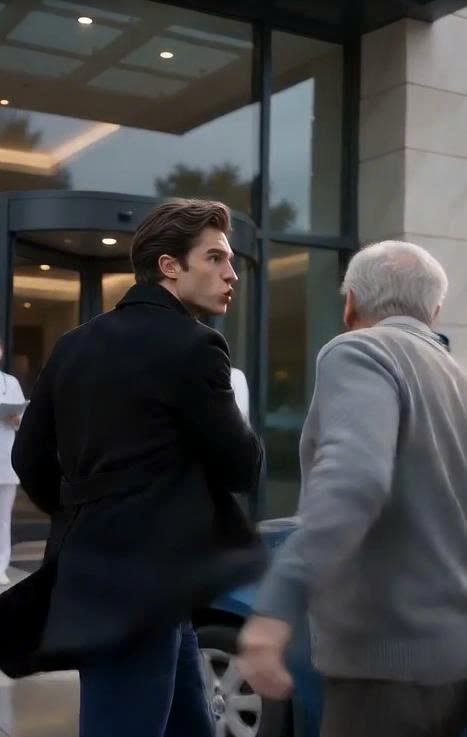
Blake’s attorney called Walter’s attorney the next morning.
Dr. Morgan regretted the “misunderstanding” outside the hospital.
He was prepared to pay for Walter’s vehicle repairs.
He would consider a private civil settlement.
No admission of wrongdoing.
Confidentiality required.
Walter laughed when Claire Donnelly read the proposal.
“He wants me to sign a nondisclosure agreement?”
“Yes.”
“For slapping me?”
“That appears to be the idea.”
“Tell him no.”
Claire raised an eyebrow.
“That was fast.”
“I’m old. I save time where I can.”
Walter’s humor disappeared when Alan Reese entered carrying a small electronic device.
“We found something.”
“What?”
“Your car.”
Walter frowned.
Alan placed a memory card on the desk.
“You installed a dash camera.”
Walter stared.
Then remembered.
Ruth had insisted on it three years before she died.
Walter drove too slowly.
Ruth said that was exactly why impatient idiots would eventually hit him.
He almost heard her voice.
Emily whispered, “Mom.”
The dash camera powered on automatically when the engine started.
Alan copied the video without altering the original card.
The footage was clear.
Blake’s white SUV crossed the valet lane.
Metal scraped.
Walter exited.
Audio captured everything.
You scratched my car.
You hit me.
Then the slap.
The camera shook slightly when Walter staggered.
Finally:
That thing probably costs less than my wheels.
And:
Stay out of the way of people who actually matter.
Nobody spoke when the recording ended.
Emily wiped one eye.
Walter noticed.
“It’s okay.”
“No, it isn’t.”
“I mean your mother would be unbearable about being right.”
Emily laughed despite herself.
Then Alan looked serious.
“This also proves the hospital camera deletion wasn’t necessary to hide what happened.”
Walter understood.
“Which means whoever deleted it may have panicked.”
“Exactly.”
Emily added, “Or they were testing whether they could erase footage.”
That thought changed the room.
Alan pulled older logs.
The remote-access tool associated with Blake and Marcus’s workstation had connected to security archives twelve times over eight months.
Not merely the morning of the slap.
One deleted clip showed CardioVance representatives entering the hospital after midnight.
Another showed Marcus carrying boxes to a private loading area.
A third showed Nora Shaw leaving risk management with a red evidence bag after Peter Lang’s death.
The following clip—showing where she took it—was missing.
Walter watched each timestamp.
“They have been cleaning history.”
Emily nodded.
“And nobody noticed because there was no reason to compare gaps.”
Walter leaned back.
He had built Grant Medical Center on trust.
For years he had bragged that senior executives could reach him directly without layers of bureaucracy.
He had believed good culture reduced the need for rigid controls.
Now he saw the flaw.
A culture dependent on good people became fragile when powerful people stopped being good.
At noon, Nora met with the independent investigators.
She described the failed Vantage Flex ring.
“After surgery, I placed it in a red biohazard evidence bag,” she said.
“Who took custody?” Claire asked.
“Risk manager Paul Dwyer.”
“Where is he?”
“Retired.”
“Why did you complain?”
“Because three days later the incident report changed.”
“How?”
“My sentence about the cracked anchor disappeared.”
“Did you confront anyone?”
“Dr. Morgan.”
“What did he say?”
Nora looked toward the recorder.
“He said I was confusing device damage with surgical handling.”
“Were you?”
“I don’t think so.”
“Anything else?”
“He told me, ‘Don’t turn a bad outcome into a career choice.’”
Walter’s mouth tightened.
Claire asked, “Did you understand that as a threat?”
“Yes.”
“Did you tell anyone?”
“Dr. Miriam Cole.”
Miriam had received the complaint.
She had referred it into peer review.
Then Peter Lang’s case vanished from the committee agenda.
Miriam looked horrified when investigators showed her.
“I never withdrew it.”
“Who had authority to alter agendas?” Claire asked.
“Medical staff office.”
“Executive override?”
“CEO, CMO in emergencies, legal counsel.”
“And CFO?”
“No.”
Yet system logs showed Marcus’s admin token accessing the peer-review scheduling server.
Again through a remote tool.
Walter sat with the evidence until evening.
Then Blake arrived at his office uninvited.
Claire stood.
“This meeting is not authorized.”
Blake looked at Walter.
“I want five minutes.”
Walter should have refused.
He did not.
That was his mistake.
“Five.”
Claire remained.
Blake placed both hands on the desk.
“The device may have been defective.”
“I know.”
Blake blinked.
Walter continued.
“CardioVance retained it.”
Blake’s face changed.
Too much.
Walter saw it.
“You knew.”
“I learned recently.”
“You omitted evidence of device failure from Peter Lang’s operative report.”
“I made a clinical judgment.”
“You threatened Nora.”
“I told a nurse not to speculate beyond her expertise.”
“You hid money from CardioVance.”
“I performed consulting work.”
Walter’s anger rose.
“You slapped me because you thought I was poor.”
Blake’s expression hardened.
“And now we’re finally discussing what this is actually about.”
Walter stood.
“No.”
He walked around the desk.
“This is what you still don’t understand.”
He pointed toward the hospital outside the window.
“Thirty-nine years ago, my wife and I mortgaged our house to open six treatment rooms. I cleaned floors because we couldn’t afford night maintenance.”
Blake said nothing.
“People mattered before they could pay us.”
Walter’s voice became quieter.
“And somehow, people like you learned to wear our name while believing the opposite.”
Blake’s jaw tightened.
“You think morality operates an operating room?”
“No.”
“Talent does.”
“Talent without judgment kills people.”
Blake stepped closer.
“You need me.”
Walter stared.
That sentence.
The source of everything.
“You really believe that.”
“It’s true.”
Walter shook his head.
“That may be the saddest thing about you.”
Blake left furious.
Within two hours, every CardioVance payment routed to Morgan Clinical Education disappeared from Blake’s hospital laptop.
Investigators had already preserved copies.
But one separate cloud folder was deleted before they could image it.
Claire confronted Walter.
“You told him we found the device.”
Walter knew immediately.
“He realized how far we’d gotten.”
“Yes.”
“I made a mistake.”
“Yes.”
No comfort.
He appreciated that.
Then Emily entered.
Her face was white.
“What happened?”
She held a bank record.
The $180,000 foundation transfer to Marcus’s company had not remained there.
Two days later, MG Health Advisory wired $150,000 to another entity.
Morgan Clinical Education LLC.
Blake.
The hospital’s compassion money intended for vulnerable patients had become money for the surgeon now accused of hiding a patient’s device failure.
Walter sat down.
May you like



This was no longer merely about Blake.
His son was inside it.







