Chapter 4 - Blood Before Truth
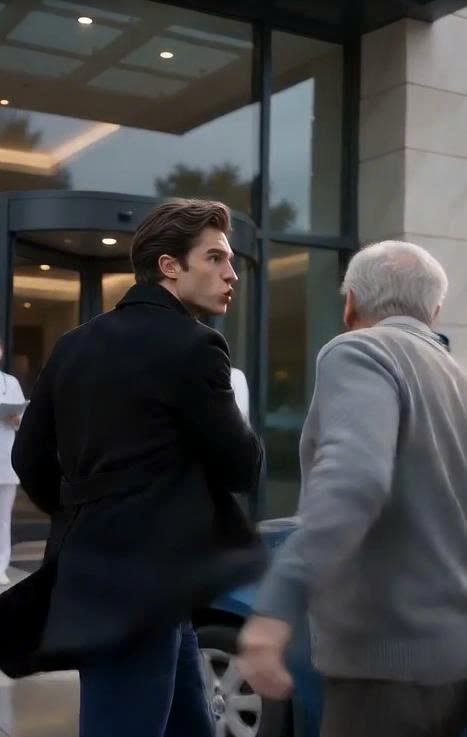
Emily did not confront Marcus immediately.
She wanted certainty.
That decision saved evidence.
It also began breaking her family.
Alan Reese exported the security logs to a protected drive and created a cryptographic hash so any later alteration could be detected.
Emily sent a copy to outside counsel rather than internal IT.
Only then did she call Walter.
He arrived ten minutes later.
When she showed him the workstation identifier, he stared at the screen.
“That doesn’t prove Marcus used it.”
“No.”
“Someone could remote into his computer.”
“Yes.”
“Does Blake have access?”
“Not normally.”
Walter rubbed his forehead.
Emily watched him defend Marcus with possibilities.
“Dad.”
“What?”
“You warned me yesterday that family and governance can conflict.”
Walter looked at her.
“I remember.”
“Now prove you meant it.”
He sat quietly.
Emily continued.
“If this pointed to my computer, what would you do?”
“Preserve everything.”
“Then preserve Marcus’s.”
Walter nodded.
An hour later, independent forensic consultants imaged the CFO workstation.
Marcus objected violently.
“This is insane.”
Walter stood across from him in the executive office.
“We are preserving evidence.”
“You’re treating me like a criminal.”
“No.”
“You took my computer.”
“Temporarily.”
“Because a camera glitched?”
“Because credentials used from your workstation deleted evidence of an assault.”
Marcus stared.
“That is your real concern.”
“No.”
“You’re enjoying this.”
Walter’s face changed.
“What?”
“For years, you’ve acted like Emily inherited your conscience and I inherited some defect.”
Emily whispered, “Marcus.”
“No. He needs to hear it.”
Marcus turned on Walter.
“You gave me finance because you thought numbers were safer than leadership.”
“That’s not true.”
“You never considered me for COO.”
“You never wanted operations.”
“I wanted you to believe I could run something.”
Walter’s anger faded.
Under the accusation he heard something older.
A son who had spent forty-four years feeling measured.
“I trusted you with billions of dollars.”
“That’s not the same as trusting me with your legacy.”
Walter stood silent.
Marcus laughed bitterly.
“Exactly.”
He left.
Emily looked at her father.
“You knew?”
“Knew what?”
“That he felt like that.”
Walter looked toward the closed door.
“I knew he was competitive.”
“That isn’t what I asked.”
Walter had no answer.
His family had built a hospital around healing strangers while leaving some of its own wounds untreated for decades.
That evening, Nora Shaw finished a twelve-hour shift and found Blake waiting near the employee parking garage.
She stopped.
“You shouldn’t be here.”
Blake leaned against a concrete column.
“I work here.”
“Not in my parking garage.”
“I wanted to clear up a misunderstanding.”
“There isn’t one.”
He smiled.
“That incident outside looked worse than it was.”
“You slapped a sixty-nine-year-old man.”
“He stepped toward me.”
“You hit him.”
“I reacted.”
“You humiliated him.”
Blake’s smile disappeared.
“You gave police a statement.”
“Yes.”
“You also filed an old complaint about Peter Lang.”
Nora went still.
“How do you know that?”
“I’m the surgeon.”
“Peer-review complaints are supposed to be confidential.”
“I hear things.”
“That’s the problem.”
Blake moved closer.
“You think one difficult case makes you a surgeon?”
“No.”
“You saw one piece of a device after a failed repair.”
“I saw a fractured anchor.”
“You saw blood and metal during an emergency reoperation.”
“I know what I saw.”
Blake’s voice cooled.
“You also know nurses who accuse surgeons of negligence develop reputations.”
Nora stared at him.
“Is that a threat?”
“Advice.”
She pulled out her phone.
Blake looked at it.
“Are you recording me?”
“I am now.”
His face changed.
He stepped back.
“Good night, Nora.”
She watched him leave.
Then sent the recording to Miriam Cole.
By morning, the Medical Executive Committee imposed an interim precautionary suspension of Blake’s elective surgical privileges pending expedited review.
Emergency coverage was reassigned.
Blake exploded.
He stormed into Thomas Vale’s office.
“You are letting nurses run this hospital.”
Thomas shut the door.
“You approached a complaining witness in a parking garage.”
“She’s lying.”
“She recorded you.”
Blake went silent.
Thomas continued.
“You need counsel.”
“I need my operating room.”
“You need judgment.”
Blake laughed.
“Where was your judgment when you let Walter Grant disappear for eighteen months while the rest of us built this place?”
Thomas’s eyes narrowed.
“What does that mean?”
“It means everybody worships a man who hasn’t practiced medicine in twenty-two years.”
“He founded the hospital.”
“And I made your cardiac program nationally relevant.”
Thomas leaned back.
“There it is.”
“What?”
“The thing everyone keeps trying not to say to you.”
Blake stared.
“You believe talent is a credit balance.”
Thomas folded his hands.
“You think every brilliant thing you do buys permission for the next cruel thing.”
Blake’s jaw tightened.
“That is not medicine.”
“No.”
Thomas’s voice softened.
“That is why I am worried.”
Blake left.
That afternoon, the forensic consultants found a remote-access tool installed on Marcus’s finance workstation.
It had been used at 8:13 the morning of the slap.
The remote login came from a laptop connected to the hospital physician network.
Registered user:
BMORGAN-SURG.
Blake.
Walter read the report.
For the first time, the missing camera connected directly to the surgeon.
But Emily kept reading.
“There’s another login.”
Walter looked up.
“From where?”
“Same tool. Three months earlier.”
“To what?”
“Risk-management archives.”
She turned the screen.
Peter Lang.
Walter’s face went cold.
May you like



Blake had accessed the dead patient’s risk file months after the case was closed.
And he had done it using Marcus’s computer.







