Chapter 18 - Marcus Comes Home to Tell the Truth
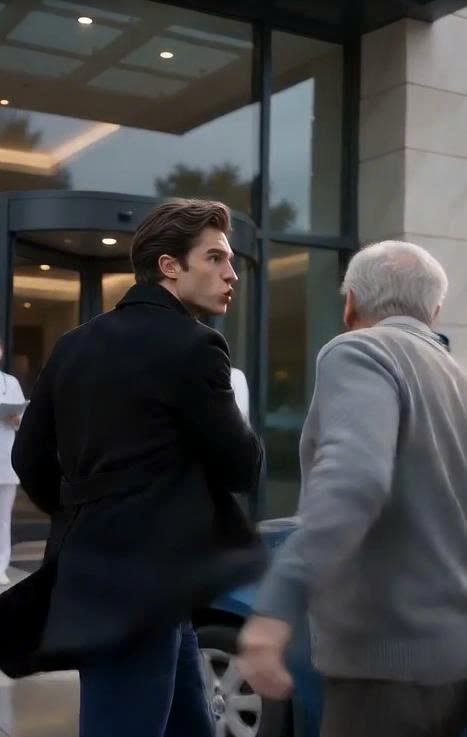
Marcus entered a guilty plea four months later.
Walter attended.
Emily sat beside him.
The federal courtroom was quieter than Walter expected.
No dramatic shouting.
No reporters inside.
Just law.
Facts.
A judge asking Marcus whether he understood the rights he was giving up.
“Yes, Your Honor.”
Whether anyone forced him.
“No.”
Whether he admitted knowingly participating in a scheme involving disguised payments and falsified transaction records.
Marcus swallowed.
“Yes.”
Walter looked down.
He had imagined consequences for months.
The reality still hurt.
Afterward, Marcus was permitted to speak briefly with family before leaving with counsel pending sentencing.
Emily hugged him.
Walter did not.
Not immediately.
Marcus stood awkwardly.
“Dad.”
Walter looked at him.
“I’m sorry.”
“I know.”
“I keep saying that.”
“Yes.”
Marcus laughed weakly.
“I don’t have better words.”
Walter stepped forward and hugged him.
Marcus collapsed.
Not physically.
Emotionally.
He began sobbing into his father’s shoulder.
“I ruined everything.”
Walter held him.
“No.”
Marcus pulled back.
“I did.”
“You damaged things.”
“That sounds like you’re making it smaller.”
“I’m making it accurate.”
Walter looked into his son’s eyes.
“You are going to spend the rest of your life being responsible for what you did.”
Marcus nodded.
“That does not require becoming nothing but what you did.”
Emily began crying again.
Marcus asked:
“Do you forgive me?”
Walter’s face tightened.
“Not completely.”
Marcus looked surprised.
Walter continued.
“I love you completely.”
Silence.
“Forgiveness may take longer.”
Marcus nodded slowly.
“That’s fair.”
At sentencing months later, Marcus received thirty months in federal prison, restitution obligations, and a prohibition on serving in certain healthcare financial roles during supervised release.
His cooperation, early plea, and evidence against others mattered.
So did his conduct.
Thomas Vale was not charged with taking kickbacks, but federal and state investigators scrutinized his role in reporting failures and financial representations.
He resigned permanently.
The hospital board concluded he had violated governance and safety duties.
Thomas lost the career he had spent decades building.
He sent Walter a letter.
Walter read it once.
Then put it away.
Not burned.
Not framed.
Just away.
Nora returned to Grant Medical Center.
The hospital offered her a settlement for retaliatory employment actions and reimbursement of legal expenses.
She negotiated through counsel.
Walter did not interfere.
She eventually became associate director of clinical safety reporting.
Her first condition:
“No complaint about a senior physician can disappear from an agenda without an external audit trail.”
Approved unanimously.
Aisha Rahman completed her fellowship.
She did not become Blake.
That pleased her.
Miriam promoted her based on performance, not heroism.
Elaine Lang received a formal apology from the hospital.
Not a secret payment.
Not a nondisclosure agreement.
A public acknowledgment that Peter’s device event had been mishandled.
CardioVance issued expanded safety notifications involving certain Vantage Flex lots and faced regulatory and civil consequences.
The exact cause of Peter Lang’s death remained medically complex.
That mattered.
Grant Medical Center did not claim the device alone killed him.
Instead, the hospital acknowledged something it could prove:
Suspected device failure had been improperly minimized and reporting processes compromised.
Truth did not need exaggeration to be terrible.
Blake’s criminal case developed more slowly.
He was charged federally with offenses tied to the payment scheme, including conspiracy and wire-fraud allegations, while state prosecutors separately pursued charges related to evidence tampering and the assault on Walter.
The medical board investigation continued independently.
His lawyers fought every count.
Some charges were later narrowed.
Others remained.
Walter refused interviews predicting Blake’s sentence.
He had learned enough about justice to stop confusing accusation with outcome.
Then came Blake’s professional appeal.
A medical-staff appellate panel reviewed the revocation.
Blake attended.
So did Nora.
Aisha.
Miriam.
Walter did not speak.
The panel upheld revocation.
When Blake left the hearing, reporters crowded him.
“Dr. Morgan, do you regret striking Walter Grant?”
Blake stopped.
For months, his lawyers had told him to say nothing.
This time he answered.
“Yes.”
The reporters erupted.
“Do you regret the financial relationships?”
Blake’s face tightened.
“My attorneys have advised—”
“Do you regret Peter Lang?”
That stopped him.
Blake looked toward the hospital.
His expression became unreadable.
“I regret that he died.”
Then he left.
Walter watched the clip later.
Emily asked:
“Do you believe him?”
Walter considered.
“Yes.”
“That he regrets Peter?”
“Yes.”
“Does that change anything?”
“No.”
People could regret outcomes while refusing responsibility for decisions.
Walter knew that from himself too.
His own reforms began.
Grant Medical Center separated family foundation authority from hospital operations.
An independent board chair would replace Walter after one year.
Vendor contracts above defined thresholds required independent conflict review.
Clinical safety reporting bypassed finance.
Physician consulting payments became subject to external verification where legally appropriate.
Security archives became immutable.
Controlled-medication badge overrides required dual authorization and automated alerts.
And the Grant family lost several special informal privileges Walter had once considered harmless.
Emily asked:
“You realize Mom would laugh at you becoming the bureaucracy guy.”
Walter smiled.
“She would be unbearable.”
The hospital stabilized.
Slowly.
Painfully.
The heart tower remained canceled.
Some employees left.
Some donors never returned.
But patients did.
Trust returned slower.
That was appropriate.
One afternoon, Walter walked through the valet entrance.
His blue Honda sat outside.
Repaired.
The scratch was gone.
The dent remained.
Walter had told the body shop not to fix it.
Emily noticed.
“Why keep the dent?”
Walter touched the faded paint.
“Your mother made that one.”
“How?”
“Shopping cart.”
Emily laughed.
“She blamed you.”
“For eleven years.”
They stood beside the old car.
Then Emily asked:
“Are you ever buying something newer?”
“No.”
“Dad.”
“It runs.”
“It has a cassette player.”
“That is a feature.”
She rolled her eyes.
Walter smiled.
For the first time in nearly two years, the car reminded him more of Ruth’s laughter than Ruth’s death.
That was healing too.
Then Alan Reese approached.
“Mr. Grant.”
“Yes?”
“We recovered something from the valet-camera archive.”
Walter frowned.
“The deleted footage?”
“Part of it.”
The assault itself was already proved by the dashcam.
But Alan found frames from minutes before the collision.
Blake’s SUV had been parked across the street.
Someone sat inside with him.
Marcus.
Walter stared at the image.
The two men had been arguing intensely.
Marcus later explained.
He had told Blake Ruth’s notes had resurfaced.
Blake left the SUV furious.
He entered the valet lane too fast.
Then struck Walter’s car.
The collision had not been planned.
Neither was the slap.
May you like



It was simply the moment Blake’s carefully managed life encountered an old man he believed had no power.
And all the contempt he normally aimed downward became visible.







