Chapter 2 - The Folder
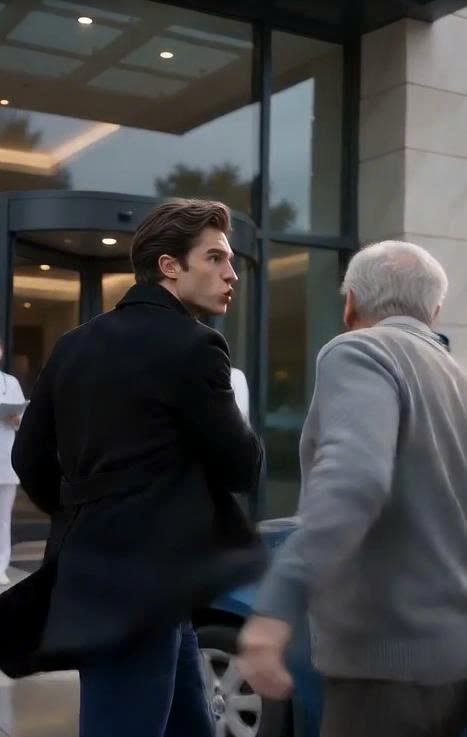
Blake recovered quickly.
Arrogance, Walter realized, was not the absence of fear.
Sometimes it was simply fear wearing a better suit.
“This is ridiculous,” Blake said. “A parking-camera malfunction has nothing to do with my promotion.”
Walter looked toward security director Alan Reese.
“Does it?”
Alan was fifty-eight, broad-shouldered and cautious.
“We’re checking the server logs.”
“Was the camera functioning at seven thirty?”
“Yes.”
“At eight?”
“Yes.”
“And when did the file gap begin?”
“Eight fourteen.”
Walter glanced at his watch.
Blake’s SUV had struck the Honda shortly after eight sixteen.
“When did it resume?”
“Eight twenty-seven.”
Nobody spoke.
Blake leaned forward.
“Are you accusing me of hacking security cameras while I was driving?”
“No,” Walter said.
“Then stop staring at me like a criminal.”
Dr. Miriam Cole intervened.
“Blake.”
He turned.
“You should choose your words very carefully.”
The warning angered him.
Walter saw that too.
He had spent forty-three years building institutions and hiring ambitious people.
The dangerous ones were rarely those who wanted success.
They were those who believed success proved they deserved exemption from ordinary rules.
Walter opened the folder.
“Dr. Cole, you chair the Medical Executive Committee?”
“Yes.”
“As Chairman of the corporate board, I am not directing clinical credentialing decisions.”
Blake glanced around as though surprised Walter understood the distinction.
Walter noticed and almost smiled.
“But I am asking that the committee review these materials immediately.”
Miriam accepted the folder.
The first complaint was from a surgical intensive-care nurse named Nora Shaw.
Blake recognized the name.
Then recognized the woman.
The nurse from outside.
His stomach tightened.
Walter continued.
“Until the committee determines whether there is an immediate patient-safety concern, your administrative promotion is frozen.”
Blake scoffed.
“What about my surgeries?”
Miriam answered.
“You have an elective mitral-valve repair scheduled at eleven.”
“Yes.”
“I’m assigning Dr. Patel to review the chart before you proceed.”
Blake’s jaw flexed.
“I don’t need supervision.”
“This is peer review, not supervision.”
“I am the highest-volume valve surgeon in this hospital.”
“And for the next several hours,” Miriam said, “you are also the surgeon named in a patient-safety report.”
Blake looked at Thomas Vale.
The CEO avoided his eyes.
That disturbed him.
Usually Thomas defended high earners.
Blake brought more cardiac referrals to Grant Medical Center than any other surgeon under forty.
His research program attracted donors.
His name appeared in magazines.
He was supposed to be valuable.
Walter seemed unimpressed by value.
Emily opened another document.
“Dad, the police are downstairs.”
Blake turned sharply.
“You called police?”
Walter’s eyes moved to him.
“A man struck me in public.”
“It was one slap.”
Marcus Grant suddenly spoke.
“Maybe everybody should calm down.”
Walter looked at his son.
Marcus was forty-four.
Tall.
Handsome.
The only Grant family member who had pursued finance instead of medicine or hospital operations.
He had become CFO seven years earlier.
Walter had always worried Marcus cared too much about proving he could turn the hospital into something bigger.
He had never suspected something darker.
Until recently.
“Why?” Walter asked.
Marcus frowned.
“Why what?”
“Why should everyone calm down?”
“Because we’re mixing personal conflict with governance.”
Walter nodded.
“That sounds reasonable.”
Marcus relaxed slightly.
Walter continued.
“So we will separate them.”
He looked at Blake.
“The police will handle the assault.”
Then he looked at Miriam.
“The Medical Executive Committee will handle clinical concerns.”
Then at Alan Reese.
“Security will investigate the missing video.”
Finally, Walter looked at Marcus.
“And independent auditors will examine the financial issues in that folder.”
Marcus’s face changed.
Only slightly.
Walter saw it.
Blake did too.
That interested him.
Miriam opened the second report.
“What financial issues?”
Walter answered.
“CardioVance Medical.”
Blake’s back stiffened.
CardioVance manufactured an artificial mitral-valve ring called the Vantage Flex.
Grant Medical Center had purchased nearly $9.4 million in CardioVance products during the previous three years.
Blake had been a prominent speaker at CardioVance educational conferences.
That was disclosed.
What had not been disclosed, according to documents sent anonymously to Walter, was Morgan Clinical Education LLC.
The company belonged to Blake.
It had received $418,000 in consulting and speaking fees from CardioVance affiliates.
Blake smiled.
“Completely legal consulting compensation.”
“Perhaps,” Walter said.
“I disclosed my relationship.”
“To the research office.”
“Yes.”
“But not the full payments.”
Blake’s smile vanished.
Marcus interrupted.
“This sounds like paperwork.”
Walter turned toward him.
“You seem unusually familiar with it.”
Marcus said nothing.
The police arrived.
Blake was interviewed.
Nora gave a statement.
So did the valet.
Blake claimed Walter had approached aggressively after the collision.
He admitted making physical contact.
He described the slap as “a reflexive defensive gesture.”
The valet nearly laughed.
Walter did not.
By ten thirty, Blake’s elective operation had been reassigned.
That humiliation cut deeper than the police interview.
He confronted Miriam outside the operating suite.
“You are taking my patient away because Walter Grant is angry.”
“I’m taking you off one elective case while we review a serious complaint.”
“What complaint?”
“You know peer-review matters are confidential.”
“I’m the subject.”
“You’ll receive appropriate notice.”
Blake moved closer.
“Do you know what happens to this program if I leave?”
Miriam looked at him.
“Yes.”
He expected fear.
She continued.
“We recruit another surgeon.”
Blake stared.
For the first time that morning, someone had described his replaceability aloud.
He walked away.
Upstairs, Walter sat with Emily.
She placed ice wrapped in a towel against his cheek.
“I cannot believe you didn’t tell me you were driving in.”
“I wanted to surprise you.”
“You did.”
Walter smiled weakly.
Emily looked at the bruise.
“Why the Honda?”
His smile faded.
“Your mother’s birthday would have been tomorrow.”
Emily understood.
The blue Honda had belonged to Ruth Grant.
Walter could afford a hundred new cars.
He kept that one because Ruth had driven it during the first years of the hospital, back when Grant Medical Center was a struggling specialty clinic and she personally delivered payroll envelopes because Walter refused to hire enough administrative staff.
Emily touched his hand.
“Dad.”
“I know.”
“You’re still doing this to yourself.”
“Driving her car?”
“Living inside memories.”
Walter looked away.
There was the flaw nobody at the hospital saw.
He could confront billion-dollar negotiations without blinking.
He could not easily let go of people he loved.
It had made him loyal.
It had also made him slow to see betrayal.
Emily opened the black folder.
“Who sent these?”
“Anonymous source.”
“For six weeks?”
“Three separate packages.”
“And you didn’t tell me?”
“No.”
Her expression changed.
“Why?”
“I didn’t know who I could trust.”
That hurt her.
Walter saw it.
“You thought it might be me?”
“I thought it might be anyone.”
“I’m your daughter.”
“And COO.”
Emily stood.
“Those are not competing identities.”
“They can be.”
Her face tightened.
Walter immediately regretted it.
He had come to Boston intending to expose secrecy.
Instead, he had brought more of it.
Emily moved toward the door.
“Where are you going?”
“To find out why our security camera disappeared.”
She stopped.
“And Dad?”
“Yes?”
“If you ever suspect me again, ask me.”
The door closed.
Walter sat alone.
His phone vibrated.
Unknown number.
A message.
The camera is the least of your problems.
Then a second.
Ask what happened to Peter Lang.
Walter stared.
Peter Lang.
Sixty-two years old.
A retired school principal.
Fourteen months earlier, Peter had entered Grant Medical Center for routine valve surgery.
Dr. Blake Morgan had operated.
Peter died three days later.
Walter opened the black folder again.
The anonymous complaint about Peter Lang contained only one handwritten sentence.
He didn’t die from the complication Morgan reported.
May you like



Walter picked up the phone.
And for the first time that morning, the slap no longer mattered.







