Chapter 11 - The Offer
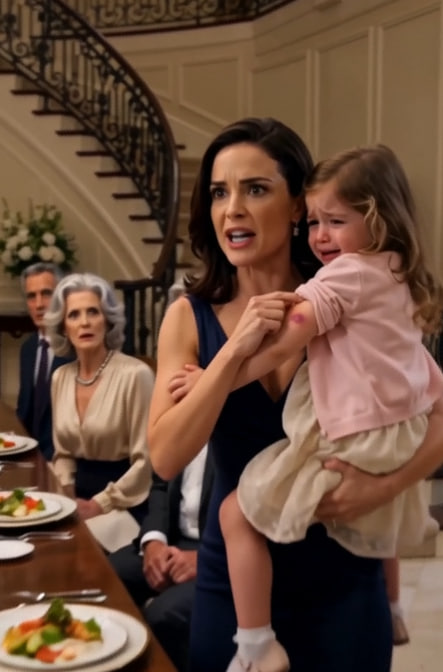
The settlement conference took place without Rosie.
That was nonnegotiable.
Maya sat beside me in a private room while the prosecutor, Assistant District Attorney Helen Price, explained the proposed resolution.
Bethany would plead guilty to a reduced child-endangerment offense.
She would complete parenting and child-safety education despite not being a parent herself, undergo individual therapy, perform community service, comply with a court-ordered no-contact condition regarding Rosie for at least one year and remain subject to further consequences if she violated probation.
“The court may also require an evaluation,” Price said.
“What about the assault charge?”
“It would be resolved as part of the plea.”
I looked at Maya.
She gave nothing away.
Price continued.
“Your sister has no criminal history. The injury was documented but did not require significant medical treatment. The conduct was brief. Those are factors.”
“So being efficient about terrifying a child helps her?”
Price’s expression remained calm.
“I understand why that feels insulting.”
I looked away.
She did not tell me to calm down.
That mattered.
“What do you recommend?”
“I think a resolution that requires a public acceptance of responsibility and enforceable conditions may protect Rosie better than months of uncertain litigation.”
“Public?”
“In open court.”
Bethany would have to say what she had done.
No jokes.
No family translation.
No dinner table.
An official record.
I asked for one additional condition.
“If Rosie ever sees Bethany again, I decide when.”
Price nodded.
“The court can restrict contact. Future changes would require appropriate approval. Your wishes as Rosie's parent will carry substantial weight.”
I thought of my father’s favorite sentence.
Family forgives.
It had never meant forgiveness.
It meant access without accountability.
“I support the plea,” I said.
Maya glanced at me.
“But I want the no-contact period enforced.”
“It will be.”
“And I don’t want anyone telling Rosie this means she has to forgive Bethany.”
“That isn’t part of the court’s role.”
“Good.”
Dad’s case remained separate.
His attorney argued that the glass had not been aimed at us.
The prosecution could not prove otherwise.
What they could show was that Dad had angrily thrown a glass while I was standing nearby holding a four-year-old, and that it shattered beside us.
He was offered a plea to a lower-level reckless-conduct offense and anger-management requirements.
Dad rejected it.
Of course he did.
According to Mom, he considered any guilty plea humiliation.
She was still staying with Laura.
Dad had alternated between begging her to return and threatening to cut off access to joint accounts.
Her lawyer explained that marital assets did not disappear because Richard became angry.
Another atmosphere became a legal document.
Another form of invisible power found edges.
Mom rented a small furnished apartment.
When she showed me pictures, I hardly recognized her voice.
“There’s no formal dining room,” she said.
“Mom, you live alone.”
“I know.”
“Who are you feeding?”
She laughed.
It was the first real laugh I had heard from her in weeks.
Then her face became serious.
“Can I see Rosie?”
The question had been coming.
I looked through the sliding doors at Rosie drawing with sidewalk chalk.
“I’m not ready.”
Mom swallowed.
“Okay.”
No guilt.
No argument.
No mention of how much she missed her granddaughter.
Just okay.
That helped more than any apology could have.
“Her therapist says contact should happen only if Rosie wants it and if I believe the adult understands the safety rules.”
“I understand.”
“What rules?”
Mom answered immediately.
“No secrets. No discipline. No unsupervised time. No asking her about the case. No asking her to comfort me. If she wants to leave, she leaves.”
I was surprised.
“Where did you learn that?”
“I started therapy.”
This family was apparently keeping half the county’s therapists employed.
Mom smiled weakly.
“My therapist says I have confused being needed with being safe.”
“That sounds expensive.”
“She charges enough.”
We both laughed.
The moment frightened me because affection remained.
Anger would have been easier if I had stopped loving her.
I had not.
Love, Dr. Foster told me later, did not determine access.
“Boundaries are not measurements of love,” she said. “They are conditions for participation.”
I wrote that down.
The week before Bethany’s plea hearing, her attorney sent another letter.
This one was shorter.
Claire,
I read your statement about slapping me.
You apologized for your part without asking me to pretend mine didn’t happen. I don’t know why that affected me as much as it did.
Dad says the plea is surrender. Mom says admitting what I did is the first honest thing I’ve done since that night.
I’m going to take the plea.
Not because I think I deserve everything people are saying about me. I don’t.
But I did grab Rosie. I did put her in the closet. I did hear her cry and leave her there. And afterward I blamed you for raising her weak because admitting the truth made me feel weak.
I am sorry.
I sat with the letter for a long time.
There was still self-defense inside it.
Maybe there always would be.
But there was also something I had rarely heard from Bethany.
Ownership.
Not perfect.
Not complete.
Real enough to notice.
I did not reply.
The morning before her court appearance, Dad showed up at my new office.
Security called upstairs.
“Claire Mercer?”
“Yes.”
“There’s a Richard Mercer in the lobby asking for you.”
My stomach tightened automatically.
Then Dr. Foster’s words returned.
Authority he no longer fully possesses.
“Tell him I’m unavailable.”
“He says he’s your father.”
“I know who he is.”
A pause.
“Would you like us to ask him to leave?”
I looked around my office.
My new office.
My desk.
My employer.
My rules.
“Yes.”
Five minutes later, security called back.
“He’s gone.”
My hands were still shaking.
But I had not gone downstairs.
That evening Dad sent one message.
You think strangers can replace your family. One day you’ll understand what you destroyed.
I read it.
Then deleted nothing.
Saved everything.
And for the first time, I understood exactly what he feared.
May you like



Not that strangers would replace my family.
That I would discover I could live without his permission.







