Chapter 8 - The Cost of Keeping Peace
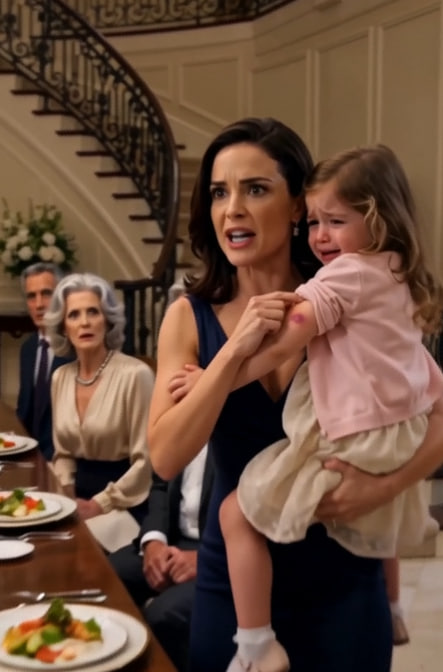
Laura came to my house that night.
She brought no coat despite the cold.
She had apparently driven over the moment our call ended.
“I should have told you.”
We sat at my kitchen table while Rosie slept upstairs.
Aaron had offered to stay, but I told him I needed to hear this without an audience.
Laura wrapped both hands around a mug she never drank from.
“Owen was three.”
Her eyes filled immediately.
“Bethany had just graduated college. I had a childcare emergency. Diane said Bethany could watch him at their house.”
“What happened?”
“Apparently he kept following Bethany around. She wanted to talk on the phone with a boyfriend.”
Laura looked ashamed even though she had done nothing wrong.
“So she told Owen there were rats in the basement. He cried. Then she put him on the basement landing and shut the door.”
“For how long?”
“He said forever. Bethany later told me it was maybe two minutes.”
Two minutes.
Three minutes.
The measurement adults use to make terror sound small.
“How did you find out?”
“Months later we were visiting my parents. Dad opened the basement door and Owen had a full panic attack.”
Laura swallowed.
“He finally told me Bethany had done it.”
“Did you confront her?”
“Yes.”
“And?”
“She laughed.”
Of course.
“She said it had cured him of being clingy.”
My hands curled into fists.
“Mom asked you to stay quiet?”
“Diane said Bethany had been young and stupid. She said Richard would explode if I accused his daughter of abusing a child.”
I stared at her.
“And you agreed?”
Laura looked directly at me.
“Yes.”
The honesty disarmed me.
“I was twenty-six. I hated confrontation. Owen seemed fine. Diane cried. I told myself keeping distance was enough.”
She wiped her face.
“It wasn’t enough.”
“No.”
“I know.”
For once, the phrase did not anger me because Laura was not using it to escape responsibility.
She was standing inside it.
“Would you tell Detective Park?”
“Yes.”
No hesitation.
The next morning, she did.
By noon, the investigation had expanded.
The prior incident was old and unlikely to produce separate charges, but it mattered as potential background and as evidence that Bethany’s conduct toward Rosie had not emerged from nowhere.
More important, it changed how I understood my sister.
Bethany had always disguised cruelty as instruction.
At eleven she once cut the ribbons from my ballet shoes because she said embarrassment would “make me less precious.”
At seventeen she hid a classmate’s inhaler for thirty seconds and later told everyone the girl needed to “stop panicking about everything.”
At twenty-two she dumped a boyfriend’s clothes outside his dorm because he cried when his grandfather died.
Each story had been absorbed into the family mythology.
Bethany was blunt.
Bethany was fearless.
Bethany had a strange sense of humor.
Bethany didn’t coddle people.
We had mistaken the absence of empathy for strength.
Worse, we had praised it.
That afternoon, Bethany’s attorney contacted Maya.
Bethany wanted a civil no-contact arrangement instead of a formal protective-order hearing.
“She’ll agree not to approach or communicate with Rosie,” Maya explained.
“What about me?”
“She is asking to communicate only through counsel.”
“Fine.”
“There’s another part.”
I waited.
“She wants assurance you won’t distribute the videos publicly.”
“I’m not planning to.”
“Then agreeing may protect Rosie without compromising the criminal process.”
I agreed.
The protective boundaries were formalized two days later.
For the first time since the dinner, I slept four consecutive hours.
Then Dad found another weapon.
Aaron received a message.
Not from Dad directly.
From Dad’s attorney.
Mr. Wells, Mr. Mercer is deeply concerned that ongoing conflict in Ms. Mercer’s household may be affecting Rosie emotionally. He would be willing to fund independent counsel should you wish to review whether temporary custody adjustments are appropriate.
Aaron showed it to me without comment.
I read it twice.
My vision blurred.
“He’s trying to take her.”
“No.”
I looked at him.
Aaron pointed to the message.
“He’s trying to scare you into thinking I might.”
That distinction mattered.
“Are you?”
His expression hardened.
“Claire.”
“I had to ask.”
“I know.”
He sat beside me.
“I’m not changing custody because you protected our daughter.”
“What if he tells people I’m unstable?”
“He can tell them you’re a pirate queen.”
Despite everything, I almost smiled.
Aaron continued.
“We have joint custody. I know what happened. I’ve seen the footage. I was at the clinic. I’m cooperating with investigators.”
He tapped Dad’s attorney’s message.
“And now I have evidence your father tried to insert money into our custody arrangement.”
My fear turned into anger.
“Can we use this?”
“We can save it.”
That had become another family rule.
Save it.
Not because every ugly message would become courtroom evidence.
But because documentation prevented reality from being rewritten later.
Maya forwarded the message to a family-law colleague, who assured us that nothing Dad had written gave him custody rights over Rosie.
Grandparents did not simply purchase standing because they disliked their daughter’s choices.
Still, the message accomplished something.
It showed me Dad’s goal was no longer merely defending Bethany.
He wanted control restored.
At any cost.
Later that evening, Mom called again.
She had completed her second police interview.
“I told them everything.”
“Everything?”
“The hallway. The deletion attempt. Your father telling me to say the video was edited.”
I sat down.
“How did Dad react?”
“I haven’t gone home.”
“Where are you staying?”
“With Laura.”
That surprised me.
Laura had invited her.
Mom continued.
“I also told them about Owen.”
“Thank you.”
The words felt insufficient but honest.
Then Mom said, “Your father called me twenty-three times.”
“Don’t answer.”
“I didn’t.”
A small act.
For Diane Mercer, enormous.
Before hanging up, she said something I would think about for weeks.
“I spent thirty-seven years believing a family survived because someone kept everyone from leaving.”
Her voice trembled.
“I think maybe we survived because nobody was allowed to.”
That night, I checked on Rosie before bed.
She was sleeping with one leg kicked outside the blanket.
Teddy lay upside down beside her.
I adjusted the covers.
On her nightstand was the drawing of our safe house.
Two stick figures.
One yellow sun.
And now, something new.
A third figure stood outside the purple square.
Rosie had drawn it in black crayon.
I wondered whether it was Bethany.
Or my father.
In the morning I asked.
Rosie shook her head.
“That’s Grandma.”
My chest tightened.
“Why is Grandma outside?”
May you like



Rosie answered simply.
“She didn’t keep me safe.”







