Chapter 12 - In Open Court
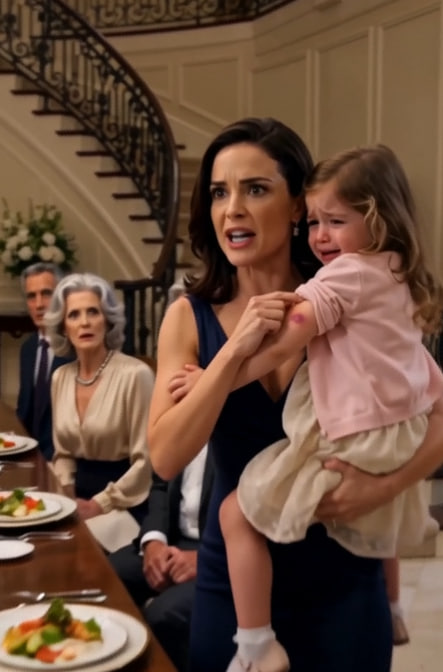
Bethany looked smaller in court.
Not physically.
She wore a cream blouse, navy trousers and the same pearl earrings Mom had given her when she turned thirty.
Her hair was perfect.
Her face was pale.
But the invisible stage she usually carried around with her was gone.
Nobody there cared that she sold million-dollar houses.
Nobody cared that Dad knew developers and judges and hotel executives.
She stood at a wooden lectern and answered questions.
“Yes.”
“No.”
“I understand.”
Then the judge asked her to describe what she had done.
Bethany looked toward her attorney.
He whispered something.
She gripped the edge of the lectern.
“I was with my niece, Rosie.”
Hearing Rosie's name made my body tighten.
“She was afraid of a dark closet. I thought she was being overly fearful.”
The judge waited.
Bethany continued.
“I grabbed her upper arm.”
“Forcefully?”
“Yes.”
“And then?”
“I put her in the closet and closed the door.”
“For what purpose?”
Bethany swallowed.
“To make her stop being afraid.”
The judge’s expression changed slightly.
“Did it work?”
Bethany looked down.
“No.”
“What happened?”
“She cried.”
“And what did you do?”
“I left her there for several minutes.”
“Did she suffer an injury?”
“Yes.”
“What injury?”
“Bruising on her arm.”
The room was silent.
No laughter.
No “joke.”
No one blaming my parenting.
The judge asked whether Bethany understood that a four-year-old could not consent to being subjected to that kind of fear.
“Yes.”
“Do you understand that attempting to frighten a child out of fear can itself constitute harmful conduct?”
“Yes.”
Then the question I had not expected.
“Why are you pleading guilty?”
Bethany’s eyes lifted.
For one second they met mine.
“Because I did it.”
That was all.
Three words.
My chest hurt.
The plea was accepted.
The court imposed the agreed conditions, including probation, therapy, community service, educational requirements and strict no contact with Rosie unless future court approval and parental consent permitted otherwise.
Outside, reporters were not waiting.
There were no cameras.
The world did not stop.
People hurried down courthouse steps carrying coffee and folders.
For my family, the hearing was enormous.
For the justice system, it was Tuesday.
I found that strangely comforting.
Bethany walked out with her attorney.
Dad was not there.
Mom was.
She stood ten feet away from me.
When Bethany reached her, Mom did not hug her immediately.
They spoke quietly.
Then Bethany began crying.
Mom hugged her.
An old part of me felt anger.
Of course Mom comforted Bethany.
Then another thought arrived.
Accountability did not require abandonment.
Maybe that was another family lesson we had misunderstood.
Bethany could face consequences and still have a mother.
Rosie could be protected without requiring me to hate everyone forever.
I left before either of them approached.
That afternoon I picked Rosie up from preschool.
She ran toward me holding a construction-paper turkey with six uneven feathers.
“Mommy!”
I crouched.
“That is the greatest turkey in American history.”
“No, it’s not.”
“Top five.”
She considered.
“Maybe.”
In the car she asked, “Did you see Aunt Bethany?”
I had told her I was attending an adult meeting about what happened.
“Yes.”
“Did she say sorry?”
“She said what she did was wrong.”
Rosie thought about that.
“Can I still not see her?”
“Yes.”
Relief crossed her face.
“Okay.”
That was the only judgment that mattered to me that afternoon.
Dad’s case, however, was moving in the opposite direction.
He refused every negotiated resolution.
His attorney demanded a hearing concerning the admissibility and context of the foyer video.
Dad insisted the glass had slipped from his hand during an argument.
That claim lasted until Detective Park obtained statements from two dinner guests.
My uncle Steven had seen Dad throw it.
So had Bethany.
And for once, Bethany did not protect him.
Her statement said:
My father intentionally threw the glass in Claire’s direction after telling her to leave. I do not know whether he meant to hit her.
When Mom told me that, I was stunned.
“Bethany said that?”
“She did.”
“Dad must be furious.”
“He hasn’t spoken to her in four days.”
I knew how much that would hurt.
Even at thirty-one, Bethany remained desperate for Dad’s approval.
Perhaps especially at thirty-one.
Mom said, “She thinks he’ll never forgive her.”
I nearly repeated my old response.
That wasn’t Rosie’s problem.
It wasn’t.
But I also understood something now.
Bethany had begun telling the truth knowing she might lose the person whose approval had shaped her entire personality.
That did not erase what she had done.
It made the choice meaningful.
“Mom?”
“Yes?”
“Don’t tell her I said this.”
“I won’t.”
“If she keeps telling the truth even when it hurts her, that matters.”
Mom was quiet.
“I think so too.”
Days later, Mercer Hospitality’s outside counsel finished the first portion of its governance review.
Dad had authorized company funds for legal expenses tied partially to his personal dispute.
He had also directed company counsel to participate in my termination before human resources completed an independent review.
The board placed restrictions on his authority while they investigated.
Dad blamed me.
Naturally.
But this time he could not reverse the decision.
Gregory Sloan called.
“We may need your cooperation regarding the employment matter.”
“I’ll cooperate through counsel.”
“Understood.”
Then he surprised me.
“Claire, your termination record is being reviewed.”
My throat tightened.
“Does that mean I get my job back?”
“If the company offers reinstatement, would you want it?”
I looked around my new office.
Through the glass wall, members of my new team were discussing a restaurant opening.
No one lowered their voice when I approached.
No one feared my father.
“No,” I said.
The word came easily.
Gregory laughed softly.
“I thought that might be the answer.”
I had spent weeks fighting the idea that Dad could take my career.
Only after building another one did I understand something.
May you like



Winning did not always mean getting back what someone had taken.
Sometimes it meant realizing you no longer wanted it returned.







