Chapter 6 - What I Owned
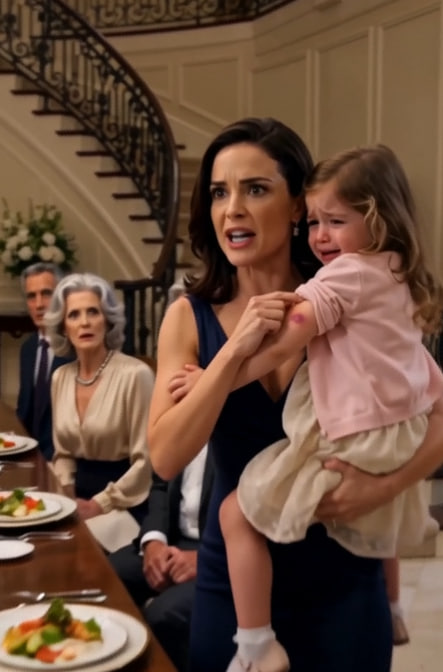
Mercer Hospitality had been founded by my grandfather Thomas Mercer with one roadside inn and money borrowed against a house he nearly lost twice.
By the time I was born, there were three hotels.
By the time Grandpa died, there were six.
Dad inherited control.
Bethany and I inherited smaller ownership interests held through a family trust.
I had never cared much about the distinction between employment and ownership.
I cared now.
Maya introduced me to a corporate attorney named Nathan Cho.
He reviewed the trust documents I already possessed and explained what my father had spent years discouraging me from understanding.
“You don’t own the company outright, obviously,” Nathan said, “but you do appear to have a beneficial interest in shares held by the Mercer Family Trust.”
“How much?”
“Based on these documents, fifteen percent was allocated for your benefit after your grandfather’s death.”
“I thought Dad controlled all voting rights.”
“He may control voting rights as trustee under certain conditions. That does not mean your economic interest disappears if he fires you.”
I stared at the paperwork.
For years Dad had spoken as if my entire career existed because he allowed it.
Nathan tapped a clause.
“Your grandfather appears to have anticipated family conflict.”
That sounded like Grandpa.
He had loved Dad, but he had never been fooled by him.
“What can Richard do?”
“Potentially a lot. But not anything.”
It was the first professional sentence anyone had said to me that week that made my shoulders drop.
Not anything.
Dad had spent decades turning power into atmosphere.
You stopped noticing it because it seemed as natural as weather.
Nathan reminded me it had limits.
Later that day, Mercer Hospitality formally terminated me.
The letter arrived at 3:18 p.m.
Cause: misuse of confidential information, conduct damaging to the company’s reputation and breakdown of trust with senior leadership.
I read the final phrase twice.
Breakdown of trust.
My father had thrown a glass past my daughter’s head and was firing me for trust.
Maya advised me not to respond directly.
Nathan advised me not to sign anything.
Aaron advised me to eat.
I did only one of the three immediately.
Rosie came home Sunday afternoon wearing a paper crown she had made with Aaron.
“I’m Queen Rosie.”
Aaron bowed dramatically.
“Your Majesty.”
She giggled.
For ten beautiful seconds, nothing else existed.
Then she saw the pink cardigan hanging by the coat rack.
Her smile vanished.
“I don’t want that.”
I looked at it.
It was the same cardigan from dinner.
“I can put it away.”
“Throw it.”
“You want me to throw it away?”
She nodded.
I did.
No ceremony.
No lesson.
I put it directly into the trash.
Rosie watched.
Then she ran upstairs to change her doll’s dress.
Aaron stood beside me.
“You okay?”
“It was forty dollars.”
He smiled faintly.
“That’s what you’re thinking?”
“If I think about what it represents, I’ll start crying.”
“Then forty dollars it is.”
The following Tuesday, Detective Park called again.
The prosecutor’s office had reviewed the initial evidence.
Bethany was being charged with misdemeanor assault involving a child and endangering the welfare of a child under applicable state law.
The exact filing could still change.
Dad’s conduct was being reviewed separately.
I sat down on the kitchen floor.
Not because I was relieved.
Because suddenly the word charged existed where only family arguments had existed before.
“Will Bethany be arrested?”
“She’ll likely be issued instructions through counsel to appear for arraignment. I can’t promise the procedure.”
“Is she going to jail?”
“I don’t know.”
The honesty helped.
“What happens to Rosie?”
“Possibly nothing further in court for now. The recorded interview may reduce the need for repeated questioning.”
I thanked him.
After the call, I cried.
Not triumphantly.
I cried because I hated that Rosie’s name existed anywhere near a criminal case.
I hated that Bethany had forced strangers to discuss whether my daughter’s fear met statutory definitions.
I hated that justice required paperwork.
That night, Dad emailed me from his personal account.
Congratulations. Your sister is being charged because you couldn’t control yourself.
I stared at the sentence.
Then another arrived.
If anything happens to Bethany’s career, that will be on you.
I did not respond.
Five minutes later:
You have forty-eight hours to sign the separation agreement from Mercer Hospitality. After that, all discretionary compensation is withdrawn.
Maya had already received the agreement.
It offered six months of salary.
A favorable reference.
Continuation of benefits for a limited period.
And one paragraph that mattered more than all the rest.
A broad nondisparagement and confidentiality clause covering “private family incidents capable of harming the Mercer name or affiliated businesses.”
Maya had circled it.
“Don’t sign,” she said.
“What if they increase the money?”
“Then you decide whether the money is worth the restrictions. But read the language carefully. Your father isn’t only trying to end your employment relationship.”
“He wants to control what I say about Rosie.”
“Yes.”
I called Nathan.
He confirmed that refusing the separation agreement did not erase my trust interest.
Then Dad made his next move.
A package arrived by overnight courier.
Inside were revised documents concerning Rosie’s education account.
Dad had been custodian.
The balance was $83,412.
Attached was a handwritten note.
Sign the company agreement, withdraw your accusations against Bethany, and this becomes Rosie’s outright trust immediately.
I photographed the note.
Then I called Maya.
Her first words were, “Please tell me he did not actually put that in writing.”
“He did.”
There was silence.
Then Maya said, “Your father may have just created a much bigger problem for himself.”
I looked at the paper again.
Dad believed money ended arguments.
Grandpa had taught him that business was leverage.
Dad had transformed that lesson into something darker.
Everything had a price.
Jobs.
Silence.
Loyalty.
Even a four-year-old’s future.
I folded the note back into its envelope.
Then Rosie came running into the kitchen carrying a drawing.
It showed two stick figures holding hands.
One tall.
One tiny.
Above us she had drawn a giant yellow sun.
“That’s us,” she said.
“Where are we going?”
She pointed to a purple square.
“Our safe house.”
My throat tightened.
I crouched beside her.
“We already have one.”
She looked around our kitchen.
“Here?”
“Here.”
May you like



She smiled.
And suddenly the eighty-three thousand dollars in my father’s envelope looked very small.







