Chapter 13 - The Custody Threat
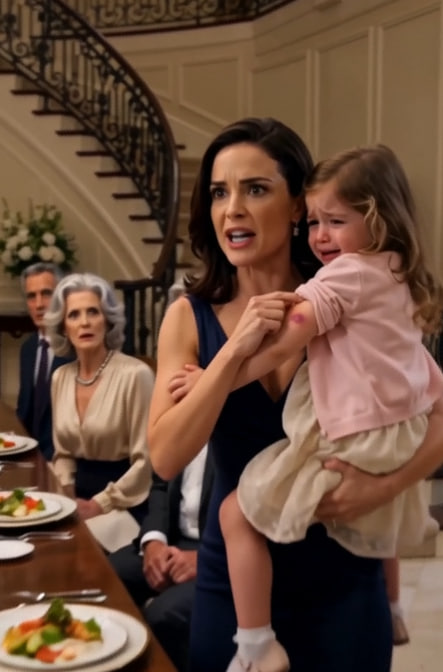
Dad tried Aaron next.
Not through lawyers this time.
Personally.
He waited outside Aaron’s fire station after a shift.
Aaron saw him before Dad reached the parking lot.
He immediately took out his phone—not to secretly record audio, but to document the encounter and text his supervisor that an unwanted family member had arrived.
Dad stopped several feet away.
“I’m not here to fight.”
Aaron later told me that sentence was how he knew Dad had come to fight.
“What do you want?” Aaron asked.
“To protect my granddaughter.”
“You threw a glass while she was in Claire’s arms.”
Dad ignored that.
“Claire is turning Rosie against everyone.”
“No.”
“She’s unstable.”
Aaron laughed.
Dad hated being laughed at.
“You think this is funny?”
“I think you offering to pay for a custody attorney because Claire reported child abuse is interesting.”
“I offered because I’m concerned.”
“You’re concerned you lost control.”
Dad stepped closer.
Aaron did not.
“I can make sure Rosie’s future is secure.”
“She’s secure.”
“You’re a paramedic. Claire just lost a six-figure position. Do you understand what private school costs? College? Health care?”
Aaron told me he almost answered with numbers.
Instead he said, “You think money makes you her parent.”
Dad’s face changed.
“My family paid for half of Claire’s life.”
“Then maybe stop sending invoices.”
Dad left.
But not before saying something Aaron documented immediately afterward in a written statement.
“If Claire continues with this, I’ll make sure she spends everything she has defending herself.”
When Aaron told me, my hands went cold.
“What does that mean?”
“It means he wants us afraid.”
“What if he files something?”
“Then we answer it.”
“What if he lies?”
“Then we use evidence.”
“What if—”
Aaron touched my arm.
“Claire.”
I stopped.
“You’re doing it.”
“Doing what?”
“Living ten minutes ahead.”
Mom’s phrase.
Protecting the next ten minutes.
Fearing the next disaster.
I sat down.
Aaron continued.
“We know the facts. Rosie is safe. We agree on custody. Her doctors know what happened. Her therapist knows. Police know.”
He crouched in front of me.
“Your father can create stress. He cannot invent authority.”
Dr. Foster had said nearly the same thing.
Apparently everyone had joined a conspiracy to make me emotionally healthier.
Dad did hire a private investigator.
We discovered it because the investigator called Aaron’s neighbor asking how often Rosie stayed there.
Maya and our family-law attorney, Olivia Chen, advised us not to panic.
“Private investigators can lawfully collect public or observable information,” Olivia explained. “Do not confront him. Document inappropriate conduct.”
I hated every second of it.
For two weeks, I looked for unfamiliar cars.
I checked the doorbell camera obsessively.
Then one night Rosie noticed.
“Why you look outside?”
I froze.
“No reason.”
She walked to the window.
“Is Grandpa there?”
My stomach dropped.
I had brought my fear into her safe house.
That evening, after she slept, I disabled phone notifications from the outdoor camera except for doorbell presses.
If danger came, I would handle it.
I would not make vigilance our family religion.
Dad never filed for custody because he had no credible basis.
Instead, his pressure campaign became another piece of evidence in the broader dispute surrounding my termination and his conduct.
Mercer Hospitality’s board suspended him temporarily as chief executive pending completion of the governance review.
That was the first time in my life I saw my father lose institutional power.
He called Mom.
She did not answer.
He called Bethany.
She did.
According to Mom, the conversation lasted less than two minutes.
Dad told Bethany she had betrayed him by giving a truthful statement about the glass.
Bethany replied, “You threw it.”
Dad said, “Whose side are you on?”
Bethany answered, “That’s the problem. You think truth has a side.”
When Mom repeated the sentence, I sat silent.
It was a good line.
Infuriatingly good.
“Did she really say that?”
“Yes.”
“Sounds rehearsed.”
Mom almost smiled.
“She’s been in therapy.”
“Therapy is making everyone quotable.”
Mom laughed.
Then she asked again about seeing Rosie.
This time I discussed it with Rosie’s therapist.
The therapist asked the question that mattered.
“What does Rosie want?”
So I asked my daughter carefully.
Not “Do you miss Grandma?”
Not “Grandma is sad.”
Just: “Would you like to see Grandma sometime if I stay with you the whole time?”
Rosie colored for several seconds.
Then she asked, “At our house?”
“No. Somewhere you choose.”
“The duck park?”
“Yes.”
“Can Daddy come?”
“If you want.”
She nodded.
“Okay.”
The visit lasted twenty-eight minutes.
Mom arrived early.
She brought nothing.
No gifts.
No emotional letters.
No attempt to buy sweetness.
Rosie stayed beside me for the first ten minutes.
Mom knelt several feet away.
“Hi, Rosie.”
“Hi.”
“I’m happy to see you.”
Rosie looked at the ducks.
Mom did not touch her.
Eventually Rosie held out a piece of bread.
“Want one?”
Mom took it.
“Thank you.”
They fed ducks.
That was all.
Until the end.
When we stood to leave, Mom said, “Rosie, I need to tell you something.”
My entire body tensed.
Mom looked at me first.
I nodded.
She turned back to Rosie.
“When Aunt Bethany put you in the closet, I should have stopped her.”
Rosie watched silently.
“I should have opened the door right away. And I should never have told you not to upset Mommy.”
Mom’s voice cracked.
“You were not bad. I was wrong.”
Rosie kicked at a leaf.
Then she asked, “Why?”
Mom could have said she was scared.
She could have blamed Dad.
She could have blamed Bethany.
Instead she said, “Because I made a bad choice.”
Rosie accepted that more easily than adults accepted entire legal briefs.
“Okay.”
Mom started crying.
Rosie looked alarmed.
I intervened.
“Grandma can handle her feelings.”
Mom nodded immediately.
“Yes. I can.”
That mattered too.
Rosie did not have to comfort the adult who had failed her.
As we walked away, Rosie slipped her hand into mine.
“Grandma said sorry.”
“Yes.”
“Does that mean she comes home?”
I realized she thought Mom still lived with Grandpa.
“No. Grandma has her own apartment now.”
Rosie considered.
“Because Grandpa throws cups?”
Despite myself, I laughed.
“Partly.”
She squeezed my fingers.
Then she said, “I like the duck park.”
So did I.
Because forgiveness had not happened there.
May you like



Something safer had.
A beginning with rules.







