Chapter 18 - Bethany’s Second Choice
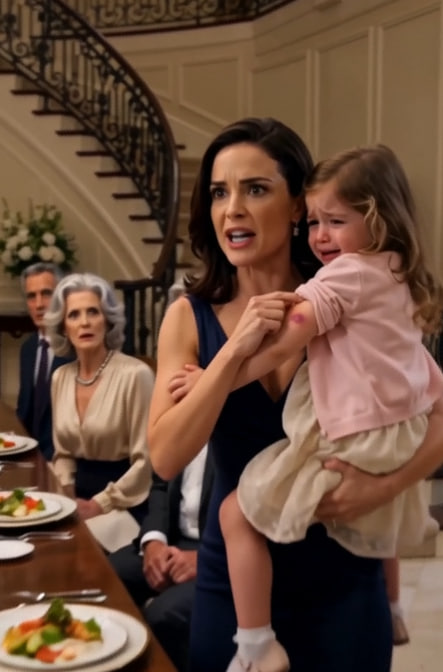
Bethany finished probation fourteen months after the dinner.
Her attorney informed Maya that the court restrictions would expire as scheduled.
That did not change my boundary.
No contact with Rosie remained my rule.
Bethany did not challenge it.
Instead she made another choice.
She volunteered to speak—not publicly, not to reporters, but as part of a training program her therapist had connected her with for adults completing court-ordered child-safety education.
The program asked participants to describe harmful beliefs they had once considered normal.
Bethany talked about fear.
I knew because she sent me the written version afterward.
Not to earn access.
She made that explicit.
I am sending this because I finally understand something I wish I had understood before Rosie paid for it.
Her statement described how our family had treated fear as a moral defect.
How children were mocked for crying.
How vulnerability became ammunition.
How humiliation was praised as resilience training.
Then Bethany wrote:
I used a four-year-old to prove to myself that I was the strong person in the room.
No defense followed.
That is one of the ugliest things I know about myself.
I sat with the sentence.
It would have been easier if she stayed a monster.
Monsters require only distance.
People require judgment.
People can harm you.
Change.
Regret it.
Improve.
And still not regain what they lost.
I wrote Bethany my first direct letter since the case.
Through counsel.
I believe you are taking responsibility. I am glad you are doing the work.
That does not mean Rosie is ready to see you. I am not ready either.
Please continue respecting that.
Her response came two days later.
I will.
Six words later:
Thank you for telling me directly.
That was all.
Dad continued anger-management counseling beyond the court requirement.
Whether he did it for himself or to eventually see Rosie, I did not know.
For once, motive mattered less than behavior over time.
He stopped sending gifts.
Stopped contacting Aaron.
Stopped asking Mom to intervene.
At Mercer Hospitality, the new CEO stabilized the company.
Dad remained a shareholder and occasional board observer without operational authority.
According to Gregory, he had learned to sit through meetings without interrupting.
This may have been his greatest rehabilitation milestone.
Mom’s divorce became final.
She cried afterward.
Then bought herself a lemon tree.
“I always wanted one,” she told me.
“Why didn’t you buy one?”
“Richard hates citrus plants indoors.”
I stared at her.
“You stayed married thirty-seven years and this is your rebellion?”
“It has seven lemons.”
Respectable.
Rosie entered kindergarten.
On the first day, she wore the yellow cardigan.
I noticed.
She did not.
That felt like victory.
Her teacher, Ms. Alvarez, knelt beside her at the classroom door.
“Want Mom to walk you in?”
Rosie looked at me.
Then shook her head.
“I can go.”
She took three steps.
Returned.
Hugged me hard.
Then went inside.
I cried in the parking lot with every other kindergarten parent.
Ordinary tears.
I treasured them.
A month later, the school held a family picnic.
Rosie brought Aaron, me and Mom.
Three adults who once would never have imagined sitting comfortably on one blanket.
Aaron handed Mom lemonade.
Mom complained that he had packed too much food.
He reminded her she had brought two pies.
We laughed.
Rosie ran toward the playground.
Mom watched her.
“Do you think she remembers the closet?”
“Yes.”
“You sound sure.”
“I think children remember feelings even after details soften.”
Mom nodded.
“I wish I could change it.”
“I know.”
She looked at me carefully.
“Was that an excuse?”
“No.”
We watched Rosie climb.
Then Mom said, “I used to think being forgiven meant someone agreed to stop making me feel guilty.”
I looked at her.
“And now?”
“I think guilt is sometimes mine to carry.”
That was the first time I reached for her hand.
Mom started crying immediately.
“Don’t make this dramatic.”
“I’m not.”
“You are.”
“I’m your mother.”
“Apparently it’s genetic.”
Across the field, Rosie waved.
We waved back.
That evening, after the picnic, she asked me a surprising question.
“Can Aunt Bethany see me when I’m six?”
My heart stopped.
“Why are you asking?”
“Grandma said Aunt Bethany has a new apartment.”
My head snapped toward Mom instinctively even though she was no longer there.
“Did Grandma tell you to ask?”
“No.”
“Did she say Aunt Bethany wants to see you?”
“No.”
“Then why?”
Rosie shrugged.
“I remembered her.”
I sat beside her.
“You don’t have to decide now.”
“I know.”
“You can say no forever.”
“I know.”
“You can also change your mind someday.”
She thought.
“Would you be there?”
“Yes.”
“And Daddy?”
“If you want.”
“And not at Grandpa’s house?”
“Definitely not.”
She nodded.
“Maybe when I’m six.”
I did not call Bethany.
I did not tell Mom.
I did not build meaning around the question.
Rosie had opened a tiny door.
That did not mean anyone was entitled to walk through it.
Three months later, on Rosie’s sixth birthday, she brought it up again.
This time she said, “I want Aunt Bethany at the duck park.”
I asked twice over two different days.
Her answer stayed the same.
After consulting her therapist and Aaron, I contacted Bethany.
Her response came within minutes.
Yes. Whatever rules you want.
I stared at the message.
Sixteen months earlier, Bethany had decided Rosie needed to become less afraid.
Now she was asking permission to stand near her.
That difference did not erase the past.
But it proved something important.
May you like



People could learn that another person’s boundary was not a challenge.
Sometimes it was the only bridge left.







