Chapter 9 - Bethany Without an Audience
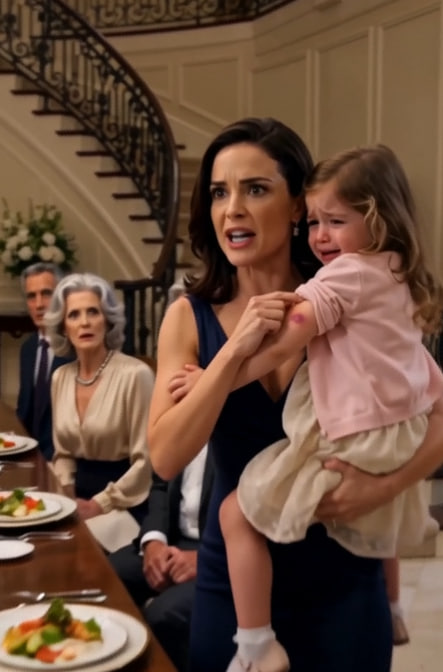
Bethany had always been strongest in front of witnesses.
She knew how to make cruelty look entertaining.
At family dinners she could humiliate someone and make half the room laugh before the victim understood what had happened.
Without an audience, apparently, she was different.
I learned that when Maya forwarded a letter from Bethany’s attorney.
It was not an apology.
It was a request.
Bethany wanted permission to send me a personal statement before her next court appearance.
“Do I have to read it?” I asked.
“No.”
“Does she gain anything legally if I do?”
“No.”
“Then why send it?”
“Possibly because her lawyer told her accountability matters. Possibly because she means it. Possibly both.”
I hated that adulthood rarely offered motives in clean categories.
I agreed to receive the letter.
It arrived electronically.
Claire,
I know you think I’m a monster.
I almost stopped there.
Then I continued.
Bethany wrote that she had not intended to injure Rosie.
She wrote that she believed Rosie was too dependent on me and too easily frightened.
She said she remembered Dad forcing both of us to “face fears” when we were children.
I remembered too.
When I was nine and afraid of deep water, Dad threw me into the swimming pool.
When Bethany was seven and afraid of dogs, he forced her to hold a neighbor’s barking German shepherd by the collar.
His philosophy had been simple.
Fear was weakness.
Weakness disappeared through humiliation.
Bethany wrote:
I thought I was teaching her not to be scared. I know how that sounds now.
Then came the sentence that made me furious.
Mom was there, and she didn’t stop me, so I assumed I wasn’t doing anything seriously wrong.
I closed the laptop.
There it was.
Bethany’s favorite refuge.
Someone else failed too.
Therefore her failure shrank.
I walked around the kitchen.
Opened the refrigerator.
Closed it.
Then reopened the letter.
I grabbed Rosie harder than I should have. I put her in the closet. She was crying. I knew she was crying. I left her there because I wanted her to come out embarrassed about being afraid.
No excuse disguised that paragraph.
When she came out, she wouldn’t look at me. Mom told her not to upset you. I knew Rosie thought she had done something wrong. I still went back to dinner and said nothing.
I sat down.
When you found the bruise, I should have apologized immediately. Instead I insulted your parenting because I was embarrassed and angry.
Then:
I am not asking you to forgive me. I am asking you not to believe I wanted to hurt Rosie.
That was harder.
Intent mattered morally.
Impact mattered too.
I called Maya.
“What do I do with this?”
“Nothing is required.”
“Should I respond?”
“Not directly.”
“Can prosecutors see it?”
“Her attorney knows it may be disclosed. We’ll send it through appropriate channels.”
I read the letter again that evening.
Aaron came over after his shift and found me staring at the final paragraph.
“What do you think?” he asked.
“I think she still wants control over how I see her.”
“Probably.”
“I also think parts of it are true.”
“Probably.”
I hated when he answered that way.
“Can you pick a side?”
“I’m on Rosie’s side.”
That silenced me.
He sat down.
“You can believe Bethany didn’t wake up planning to injure Rosie and still believe she had no right to do what she did.”
“I know.”
“You can also believe your father taught both of you terrible things and still hold Bethany responsible for repeating them.”
I looked toward the staircase.
“That’s what scares me.”
“What?”
“What did he teach me that I don’t notice?”
Aaron considered before answering.
“That conflict means abandonment.”
I stared at him.
He continued.
“During our marriage, every disagreement felt catastrophic to you.”
“That’s unfair.”
“It’s true.”
I wanted to argue.
Then I remembered how often I had interpreted his silence as rejection.
How often I apologized before deciding whether I had done anything wrong.
How often I believed one angry evening meant the entire marriage was ending.
Aaron rubbed his hands together.
“I’m not saying your family caused our divorce.”
“Good.”
“We managed plenty ourselves.”
That earned a weak smile.
“But maybe this is bigger than Bethany.”
“I know it is.”
“No. I mean for you too.”
The comment irritated me precisely because it landed somewhere accurate.
The following week I started therapy.
My therapist, Dr. Lena Foster, never once told me whether I should forgive my family.
Instead she asked irritating questions.
“When your mother says Richard is angry, what happens in your body?”
“My chest tightens.”
“What do you assume will follow?”
“Punishment.”
“What kind?”
I opened my mouth.
Nothing came.
I was thirty-four.
My father could fire me.
He could disinherit me.
He could insult me.
He could lie.
But the physical certainty in my body belonged to a twelve-year-old girl hearing his footsteps in the hall.
Dr. Foster said, “Your nervous system may be reacting to authority he no longer fully possesses.”
I thought about that for days.
Dad had real power.
Money.
Connections.
Control of the company.
But some of his greatest power had never existed outside our fear.
Meanwhile, Bethany appeared in court.
She pleaded not guilty at the initial arraignment, as her attorney had advised.
Conditions were imposed preventing contact with Rosie.
A future conference was scheduled.
Nothing dramatic happened.
No gavel slammed.
No confession exploded across the courtroom.
Justice moved through calendars.
Then Detective Park called with news about Dad.
The prosecutor had decided to file a charge related to the thrown glass, alleging reckless conduct that created a substantial risk while I was holding Rosie.
He would also be questioned further about the attempt to delete the footage after learning police might become involved.
“Does that mean obstruction?” I asked.
“Not automatically.”
Again, precision.
Facts first.
“What happens now?”
“He gets counsel. The process continues.”
Dad sent no message that night.
For once, silence came from him.
The next morning, however, Mercer Hospitality’s board chairman called me.
Not Dad.
The chairman.
His name was Gregory Sloan.
“Claire,” he said, “I need to ask whether Richard used company resources in connection with your termination or the family incident.”
My pulse quickened.
“I don’t know.”
“We have received questions about legal invoices.”
“What invoices?”
He hesitated.
“That is what I’m trying to determine.”
May you like



For the first time, Dad’s private war against me had reached a place he could not control simply by raising his voice.
His own boardroom.







