Chapter 15 - The Man Who Was Never Wrong
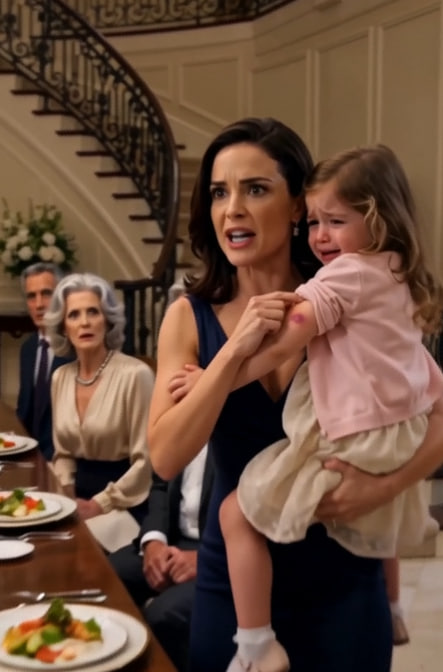
Dad’s defense was simple.
He had been angry.
He had thrown a glass.
But he had thrown it toward the doorframe, not toward me.
Therefore, in his mind, nothing criminal had happened.
The fact that I was standing beside that doorframe while holding Rosie became an inconvenience of geometry.
His attorney argued that the video did not establish intent to strike anyone.
The prosecutor agreed intent to hit us might be difficult to prove.
That was why the charge focused on reckless behavior.
Dad still refused the plea.
“He wants vindication,” Maya said.
“He wants someone official to say I caused it.”
“Probably.”
“Can they?”
“No court can rule on your entire childhood, Claire.”
I smiled despite myself.
The hearing was less dramatic than Dad deserved and more painful than I expected.
Uncle Steven testified first.
He had been at dinner.
“What did you see?”
“Richard picked up his glass.”
“Then?”
“He threw it.”
“Where was Claire?”
“Near the front door.”
“Was she holding her daughter?”
“Yes.”
Dad stared at Steven as if betrayal physically smelled.
Then Mom testified.
I could barely watch.
She described Bethany’s conduct.
The argument.
My departure.
Dad shouting.
The glass.
“Did your husband appear to be trying to hand Claire the glass?”
Dad’s attorney objected before Mom could answer.
Sustained.
The prosecutor reframed.
“What did you personally observe?”
“Richard pulled his arm back and threw it toward the foyer.”
“Where Claire was standing?”
“Yes.”
“Where Rosie was?”
“Yes.”
Mom’s hands trembled.
Then came cross-examination.
Dad’s attorney asked whether I had slapped Bethany.
“Yes.”
Whether Dad was upset.
“Yes.”
Whether the family argument was chaotic.
“Yes.”
“Isn’t it possible your husband intended to throw the glass against the wall rather than at Claire?”
Mom looked toward Dad.
He held her gaze.
For thirty-seven years, that look had ended arguments.
Mom turned back to the attorney.
“It’s possible.”
My stomach tightened.
Then she added, “But Claire was standing there with a child, and he threw it anyway.”
Dad looked away first.
When my turn came, I told the truth.
I had slapped Bethany.
I regretted it.
I had carried Rosie toward the door.
Dad yelled.
I turned.
The glass was already flying.
I shielded Rosie.
It shattered.
“Did the defendant say, ‘I’m going to hit you with this glass’?”
“No.”
“Did he say, ‘This is aimed at you’?”
“No.”
“Then you don’t know where he intended it to land.”
“No.”
Dad’s attorney smiled slightly.
I continued before he could stop me.
“I know where my daughter was.”
The prosecutor did not object to my own answer.
The judge eventually found enough evidence for the case to proceed.
No grand vindication.
No public humiliation.
Just continuation.
Two days later, Dad accepted a negotiated plea.
Lower-level reckless conduct.
Anger-management classes.
Probationary conditions.
No direct contact with me or Rosie unless I consented.
The man who never admitted wrongdoing stood in court and acknowledged that throwing the glass had created an unjustifiable risk.
He did not apologize.
I did not need him to.
Not then.
Consequences did not require emotional cooperation.
Afterward, Dad’s attorney asked whether I would consider a private meeting.
“No.”
“He would like to repair the relationship.”
“No.”
“He’s your father.”
Maya stepped forward.
“That is not legal argument.”
I almost smiled.
Outside, Mom waited by the courthouse steps.
Dad passed her.
Neither spoke.
That hurt to watch.
A marriage could be unhealthy and still contain thirty-seven years of breakfasts, illnesses, jokes, vacations, funerals and ordinary Wednesdays.
Ending it did not erase those things.
It simply stopped them from being enough.
Mom had filed for legal separation.
She was not certain she wanted divorce.
I did not advise her.
That was another change.
I had stopped trying to rescue adults from choices that belonged to them.
Bethany completed the first stage of her court-ordered program.
She sold her condo and moved to a smaller place across town.
Her real-estate firm did not fire her, but she lost two major clients after the case became known within her professional circle.
Dad blamed me.
Bethany, apparently, did not.
Mom told me Bethany said, “Actions have costs.”
Therapy was making my sister annoyingly reasonable.
Still, I maintained no contact.
Rosie had stopped asking about her.
That mattered more than Bethany’s progress.
One evening, nearly five months after the dinner, Rosie climbed onto my bed holding a new cardigan.
Aaron had bought it.
Yellow.
No pink.
“Help?”
I slid one sleeve onto her arm.
She watched carefully.
For months she had resisted long sleeves.
As I pulled the fabric over the place where the bruise had been, something twisted inside me.
The skin was clear.
No mark.
Rosie did not flinch.
“Too tight?” I asked.
“No.”
She extended both arms.
“Pretty?”
“Very.”
She spun once.
The cardigan flared.
Then she ran toward the mirror.
I sat on the bed.
The bruise was gone.
But healing, I had learned, was not the disappearance of evidence.
It was the return of ordinary things.
Sleeves.
Dark hallways.
Closed doors.
Trust.
Later that night, Mom sent me a photograph.
She was standing in her apartment beside a small dining table.
Four chairs.
No marble.
No crystal.
No Richard.
Beneath it she wrote:
I bought a table small enough that nobody has to shout across it.
I laughed.
Then another message arrived.
This one was from Gregory Sloan.
The board has completed its review. Richard will not return as CEO.
I stared at the screen.
My father had spent months insisting I destroyed the family.
Now he was losing the position that had defined him for twenty-five years.
But the message continued.
We would like to discuss the disposition of your employment claim and your ongoing shareholder interest.
Dad’s consequences were not finished.
May you like



Neither were mine.
Because leaving a family business was easy compared with deciding what remained yours after you left.







