Chapter 14 - What Bethany Learned From Him
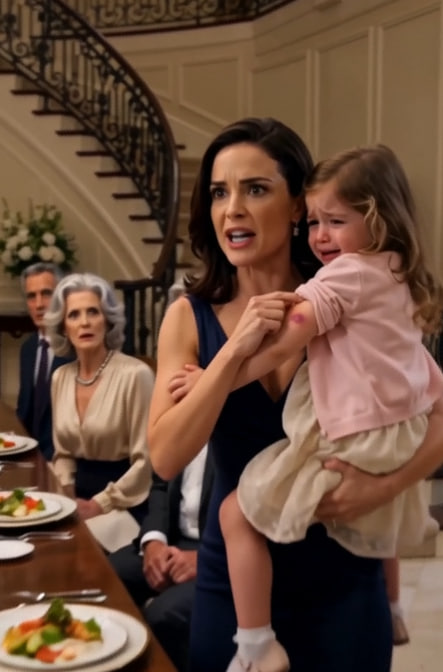
Bethany’s probation required therapy.
I knew because it was part of the court order.
I did not know what she discussed there, and I did not ask.
Then, three months after the dinner, Maya received another letter.
Bethany had written it for me but told her attorney I was under no obligation to accept it.
I almost declined.
Then I read it.
Dad called me weak after court.
I stopped.
The word.
The same word Bethany had used about Rosie.
He said pleading guilty proved I had no backbone.
I told him I did it.
He said that wasn’t the point.
I kept reading.
Bethany described a childhood memory I had forgotten.
She was eight.
A girl at school had bullied her for stuttering during a presentation.
Bethany came home crying.
Dad made her stand in front of the bathroom mirror and repeat, “Nobody can humiliate me unless I let them.”
When she cried harder, he told her tears were a performance used by weak people to control stronger ones.
Mom stood in the doorway.
Silently.
The next day Bethany shoved the girl who had mocked her.
Dad bought Bethany ice cream.
He told me, “Now she knows you’re not prey.”
I stared at the sentence.
I could hear Dad saying it.
Bethany continued.
I don’t think he taught me to hurt Rosie. That would be an excuse.
I think he taught me that being frightened is shameful and making someone frightened is power.
That was different.
Not absolution.
Understanding.
I did what I did because part of me enjoyed being the person who wasn’t scared.
I had to stop reading.
That sentence was uglier than “it was a joke.”
It was also more honest.
When I returned to the letter, she had written:
I don’t expect to see Rosie. I’m not asking.
I want you to know I am not going to fight the no-contact order.
If she grows up and never wants me near her, I will have to live with that.
I closed the laptop.
For the first time, I cried for Bethany.
Not instead of Rosie.
Not because I thought my sister had suffered enough.
I cried for the child Bethany had once been and for the woman she had chosen to become.
Both could be true.
Dr. Foster had spent months teaching me that two truths could exist without one destroying the other.
Dad had harmed Bethany.
Bethany had harmed Rosie.
Mom had been harmed by Dad.
Mom had failed Rosie.
I had grown up afraid of conflict.
I had also slapped my sister.
Understanding a chain did not require pretending any link was harmless.
At work, my new position had become demanding enough to feel normal.
Frances gave me responsibility without surveillance.
The first time I disagreed with her in an executive meeting, my pulse raced.
I expected punishment afterward.
Instead she sent me a spreadsheet and wrote:
Your concern about the expansion assumptions was right. Revise the model.
I stared at that email longer than necessary.
Disagreement.
No exile.
A tiny revolution.
At home, Rosie stopped asking for the hallway light every night.
Some nights she still did.
We left it on.
Aaron and I became better co-parents than we had ever been spouses.
One Friday he stayed for dinner.
After Rosie went upstairs, he helped load the dishwasher.
“You seem different,” he said.
“Better hair?”
“No.”
“Rude.”
He smiled.
“You don’t apologize every time you disagree with me anymore.”
“I can start.”
“Please don’t.”
I closed the dishwasher.
“Do you ever think if I’d figured all this out sooner—”
“No.”
I looked at him.
He leaned against the counter.
“We loved each other. We also made each other miserable for a while.”
“True.”
“We don’t have to rewrite our marriage into a tragedy just because we got better after it ended.”
I smiled.
There it was again.
Two truths.
Later that weekend, Mom told me Dad had moved out of the estate temporarily.
His attorney had advised him to avoid conflict with Mom while their separation negotiations began.
Dad remained suspended from operational authority at Mercer Hospitality.
The board review found enough governance concerns to require significant restructuring, though not every questionable expense was unlawful.
Gregory Sloan became interim executive chairman.
Dad retained ownership.
But ownership no longer meant absolute control.
He hated this distinction.
Mom said he still blamed me.
“For everything?”
“For the board. Bethany’s plea. Our separation.”
“What about weather?”
“Probably.”
We laughed.
Then Mom became serious.
“He wants to speak to you.”
“No.”
“He said he’ll apologize.”
“No.”
“You don’t even want to hear it?”
“Not yet.”
Mom nodded.
No pressure.
Progress.
Then she said, “He asked whether he could write to Rosie.”
My answer was immediate.
“No.”
“Okay.”
Another miracle.
That evening Rosie and I made cookies.
She insisted on pink frosting.
While she decorated one, she said, “Mommy?”
“Mm-hmm?”
“Can people stop being family?”
My hand paused.
“Sometimes people stop seeing each other.”
“That’s not what I asked.”
She was ruthless.
I set down the spoon.
“People can be related to us even if we don’t let them be part of our lives.”
She frowned.
“So Grandpa is family?”
“He’s related to us.”
“Is that family?”
I thought of the sentence I had shouted before leaving my parents’ house.
She is my family.
You are not.
At the time, I had meant it absolutely.
Now I understood something more complicated.
“Family isn’t only who you’re related to,” I said. “Family is also how people treat each other.”
Rosie nodded solemnly.
Then she licked frosting off the spoon.
“Daddy is family.”
“Yes.”
“You are family.”
“Yes.”
“Teddy?”
I looked at the stuffed bear sitting on a chair.
“Obviously.”
She smiled.
For now, that definition was enough.
May you like



But a few days later, I received notice that Dad’s criminal case was finally proceeding toward a hearing.
And unlike Bethany, Richard Mercer still insisted he had done nothing wrong.







