Chapter 5 - The Family Version
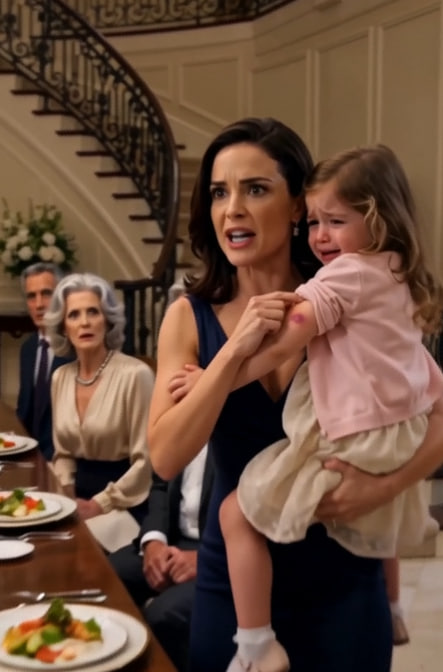
By Friday morning, my family had created a new story.
In their version, Bethany had been playing with Rosie.
Rosie had become emotional.
Bethany had “guided” her briefly into the coat closet as part of a harmless game.
I had misunderstood the bruise.
I had assaulted my sister.
My father had thrown a glass toward the wall in frustration, not toward me.
My mother had tried heroically to calm everyone.
And I had responded by stealing private security footage and threatening to destroy the family.
I learned this from my cousin Laura.
She called while I was making pancakes.
“I thought you should know what they’re telling people.”
I turned away from Rosie.
“Who is ‘they’?”
“Your dad. Bethany. Aunt Diane isn’t saying much.”
That sounded exactly like Mom.
Silence gave everyone else room to speak for her.
“What are they saying?”
Laura hesitated.
“Richard says you’ve been under stress at work.”
I almost admired the efficiency.
“What else?”
“That you and Bethany have always competed. That you exaggerated something because you resent her.”
Rosie was arranging blueberries into a smiley face.
I lowered my voice.
“Did he mention the video?”
“Yes.”
“And?”
“He says it looks bad without context.”
Of course.
For my family, context had always meant finding enough surrounding words to make cruelty sound reasonable.
Laura said, “Claire, I’m not asking you to explain. I just wanted you to know.”
“Thank you.”
After we hung up, I stared at my phone.
I wanted to call every relative.
I wanted to send the video into the family group chat.
I wanted to write exactly what happened in language no one could soften.
Instead I called Maya.
“Can I release the footage?”
“Legally, there may be privacy questions depending on where and how it was recorded. Strategically, I wouldn’t.”
“They’re lying.”
“Let them.”
“That’s your advice?”
“For now.”
I hated it.
Maya continued.
“The police have the evidence. The clinic documented Rosie’s injury. The child advocacy center has conducted an interview. You don’t need to win Thanksgiving.”
That sentence stayed with me.
You don’t need to win Thanksgiving.
All my life, I had treated family opinion like a court ruling.
If enough Mercers believed I was wrong, I became wrong.
Now an actual investigation existed.
Facts had somewhere else to go.
That afternoon, Detective Park called.
He had interviewed Bethany.
“What did she say?”
“I can’t provide a full statement, but she acknowledges being alone with Rosie in the hallway and placing her in the closet.”
“Does she admit grabbing her?”
“She characterizes it differently.”
Of course she did.
“What about my mother?”
“We spoke with her.”
My chest tightened.
“And?”
“She confirms she was present for part of the incident.”
“Part?”
“I can’t go further right now.”
I closed my eyes.
“Detective, did she tell the truth?”
There was a pause.
“I can tell you that the video is important.”
That meant no.
Or not enough.
That evening Aaron took Rosie to his apartment for their scheduled weekend.
I nearly canceled.
The thought of being away from her felt unbearable.
But Rosie loved her father, and I knew changing every safe routine because of Bethany would teach her that the world had become dangerous everywhere.
So I packed Teddy, her favorite cereal and three more shirts than she needed.
At the door she hugged me.
“You come tomorrow?”
“Sunday afternoon.”
“Two sleeps?”
“Two sleeps.”
She held up two fingers.
I kissed them.
After they left, the townhouse became painfully quiet.
At seven, Mom appeared on my front porch.
I saw her through the doorbell camera.
She wore the camel coat Dad had bought her last Christmas.
Her hands were clasped tightly.
“Claire?”
I didn’t open the door.
She looked toward the camera.
“I know you’re home.”
I spoke through the doorbell speaker.
“I asked you not to come here.”
“I need to see you.”
“Rosie isn’t here.”
“I came for you.”
For one second, I almost opened the door.
Then I remembered Mom’s hand on the closet door.
“What do you want?”
She looked exhausted.
“Your father is furious.”
“That’s not new.”
“He thinks you’re trying to ruin Bethany.”
“I reported what happened.”
“You could have handled this privately.”
“How?”
“We could have talked.”
“You were there.”
Mom went still.
“Claire.”
“You saw Bethany dragging Rosie.”
“It happened quickly.”
“You watched her put Rosie in the closet.”
“I didn’t understand—”
“You closed the door.”
Her mouth tightened.
“Because Bethany told me Rosie was having a tantrum and needed a minute.”
“She was four.”
“I know.”
“No, Mom. I don’t think you do.”
She looked away.
For several seconds, wind moved the bare branches above her.
Then she said, “You hit your sister.”
“Yes.”
“You know that was wrong.”
“Yes.”
That answer surprised her.
I continued.
“I should not have slapped Bethany. I lost control. If there are consequences for that, I will deal with them.”
Mom blinked.
“But admitting what I did does not erase what she did.”
Mom’s eyes filled.
“Why are you doing this?”
The question was so extraordinary I almost opened the door just to see whether she was serious.
“Doing what?”
“Making everything permanent.”
I stared at her through the screen.
“Bethany made something permanent when Rosie learned adults could hurt her and Grandma would help hide it.”
Mom covered her mouth.
For a moment I thought she might finally say it.
I saw it happen.
I failed her.
Instead she whispered, “Your father will never forgive this.”
There it was.
The center of her universe.
Richard.
His anger.
His forgiveness.
His permission.
I said quietly, “I’m not asking him to.”
Mom’s face changed.
Fear.
Real fear.
Not for Rosie.
For herself.
Then she stepped closer to the camera.
“Claire, there are things about your position at the company that you don’t understand.”
My pulse quickened.
“What things?”
“Your father has been planning changes.”
“What changes?”
She looked back toward the driveway as if he might be standing there.
Then she whispered, “If you keep pushing him, he will make sure you leave with nothing.”
The screen went black a second later.
Mom had walked away.
I stood alone in my hallway.
At first I thought she had come to warn me.
Then I realized something worse.
May you like



She hadn’t been warning me about what Dad might do.
She had been warning me that something had already started.







